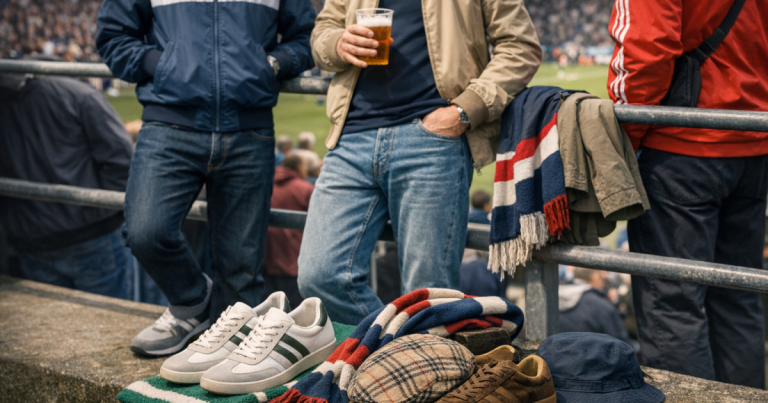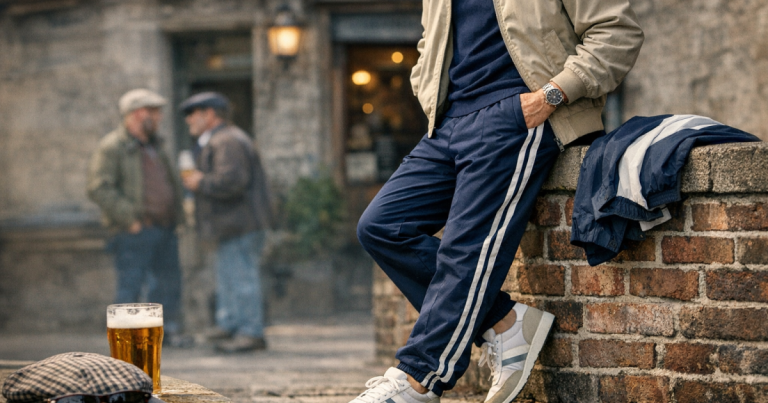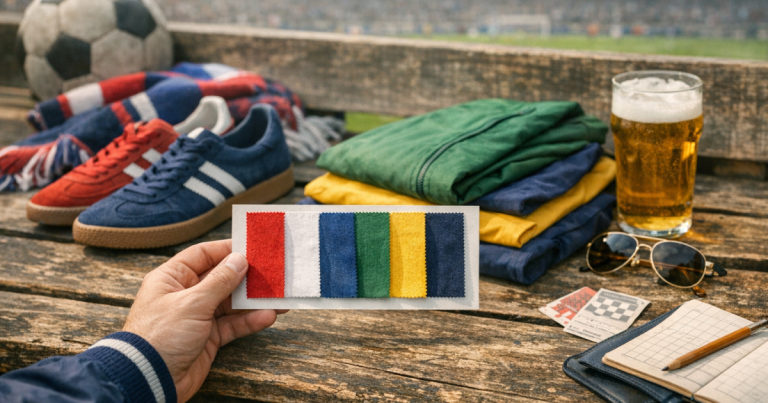
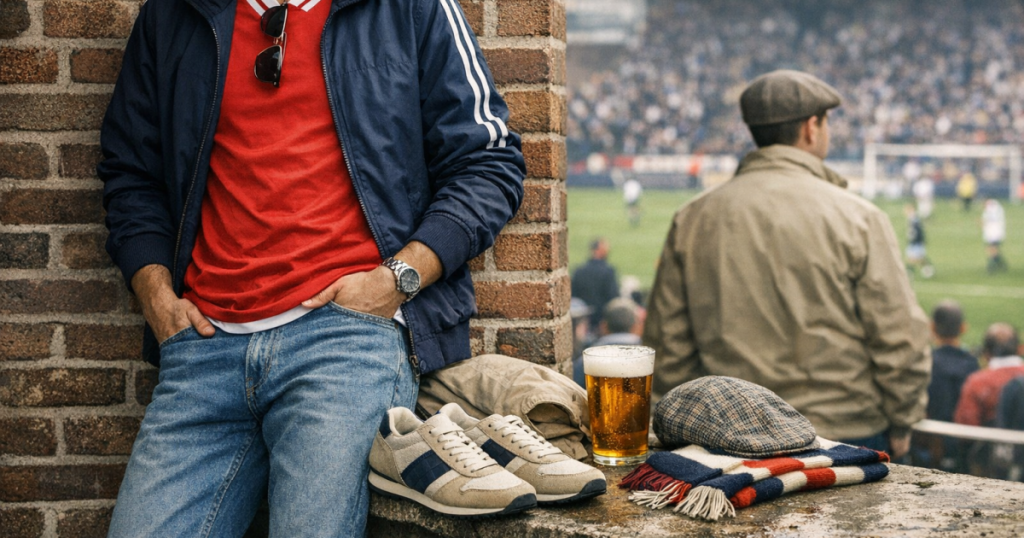
A football shirt can sharpen a matchday outfit or make it look like a full-kit tribute act; the difference is usually in fit, context and restraint. Getting football shirt terrace style right means treating the shirt as one layer in a wider casual code, not the whole personality of the look.
The shirt carries colour, memory and club identity. The rest of the outfit needs to calm it down, frame it properly and keep the silhouette closer to the terraces than the five-a-side pitch.
At a glance
- Wear the shirt as a graphic layer, not as a complete kit.
- Keep the lower half plain: denim, cords, casual trousers or simple track pants work better than matching shorts.
- Choose one club-coded item and let everything else sit in supporting roles.
- Layer with track tops, overshirts, light jackets or knitwear rather than piling on badges.
- Keep footwear grounded in casual culture: suede trainers, terrace classics, clean runners or gum soles.
Step 1: choose the right shirt for the situation
Not every football shirt behaves the same in an outfit. A current home shirt with a loud sponsor, bright trim and modern cut reads differently from an older away shirt, a long-sleeved training top or a toned-down retro reissue. The more graphic the shirt is, the quieter the rest of the outfit should be.
For a matchday pint, a current club shirt can work because the setting gives it purpose. For a record fair, pub garden, gig or casual weekend outfit, a subtler shirt usually travels better: an older template, a less shouty away colour, a training top or a shirt with a cleaner collar shape. It still says football, but it does not demand that every other item explains itself.
Be honest about rival colours and local context too. In some towns, a shirt is not just a fashion choice; it signals allegiance. If you are wearing a shirt away from your own ground, especially on a busy Saturday, think about where you are going and how obvious the badge is. Terrace style has always involved reading the room.
Step 2: get the fit away from the pitch
The easiest way to lose the look is to wear the shirt exactly as it would appear on the pitch: tight, shiny, tucked into sports shorts or paired with performance layers. A terrace outfit generally works better when the shirt has room to sit over a base layer or under a jacket without clinging.
Look for a relaxed but controlled fit. The shoulder seam does not need to be perfect, but the shirt should not balloon around the waist or pull across the chest. If the shirt is modern and athletic, wearing it under an open jacket can soften the shape. If it is boxier and retro, let that cut do some work, but avoid adding baggy trousers and oversized outerwear all at once.
Sleeve length matters more than people think. Short sleeves can look sharp under a Harrington-style jacket, overshirt or track top. Long sleeves give more of a period feel, especially with denim and trainers, but can veer into replica nostalgia if every other piece is also era-specific.
Step 3: build the outfit from the waist down
The lower half decides whether the shirt looks casual or costume. Matching football shorts are almost always the wrong move outside the pitch. They pull the outfit towards training ground rather than terrace, and they make even a good shirt look like part of a set.
Start with plain, structured options:
- Straight-leg denim in mid or dark wash for a grounded, everyday terrace look.
- Cords or casual trousers when the shirt is bright and needs texture around it.
- Navy, black or charcoal track pants if the shirt is retro and the rest of the outfit stays clean.
- Simple chinos for a softer weekend version, particularly with older international shirts.
Trainers should support the era without turning the outfit into a museum display. Gum soles, suede uppers and low-profile shapes usually sit well with football shirts because they echo casual culture without competing with the badge. If your shirt is already high-colour, keep the trainers muted. If the shirt is mostly white, navy or black, you have more room for colour on foot.
Step 4: layer like a casual, not a club shop mannequin
Layering is where a football shirt becomes part of a proper outfit. An open track top, lightweight shell, overshirt, knitted zip cardigan or plain jacket can break up the sponsor, reduce the shine of the fabric and give the look a stronger silhouette.
If you want the wider code behind the look, the guide to what terrace style actually means is a useful foundation. The main point here is that terrace dressing is rarely about wearing the most obvious item from head to toe. It is about signals, restraint, brand memory, fit and how the pieces sit together.
A football shirt under a navy track jacket can look sharp because the jacket frames the colours. A shirt under a plain overshirt works because it turns the badge into a detail rather than a billboard. A shirt under a waxed or casual outer layer can work in colder months, provided the fabric weights do not fight each other. Thin replica polyester under a heavy winter coat can look awkward if the collar and hem bunch up, so check the outfit in a mirror before leaving the house.
Step 5: control the colour story
Football shirts often carry bold colours because they were designed to be seen from distance. Terrace outfits usually look stronger when you pull one colour from the shirt and repeat it quietly elsewhere, rather than matching everything exactly.
For example, a red shirt does not need red trainers, red cap and red jacket. It may work better with navy denim, a dark outer layer and one small red detail. A yellow away shirt can sit well with stone or olive trousers, but it will struggle if every other piece is equally loud. Blue shirts tend to be easier with denim, but watch the shade: three different blues can look accidental unless the textures vary.
Historical reference helps, but do not be trapped by it. The football casuals style timeline shows how brands, fits and codes shifted across eras, which is useful when you are deciding whether a shirt wants a retro track top, a suede trainer, a cagoule shape or a cleaner modern layer.
Step 6: avoid the fancy-dress traps
The danger with football shirts is not that they are too casual. It is that they can make the whole outfit too literal. One shirt, one strong trainer shape and one good layer is usually enough. Add a scarf, bucket hat, old-school track top, vintage jeans, pin badges and a period haircut, and the outfit starts to look like a themed night.
Common mistakes include:
- Wearing the full kit casually, especially with matching shorts and socks.
- Mixing too many club items at once: shirt, jacket, cap, scarf and bag.
- Pairing a tight modern shirt with spray-on jeans, which can look dated rather than sharp.
- Overloading retro references from different decades without a clear reason.
- Ignoring condition: cracked sponsors, pulled fabric and yellowed collars can spoil an otherwise good outfit.
If you like the older terrace mood but do not want to look dressed up for a film extra role, the advice on how to dress terrace without looking like fancy dress applies directly here: reduce the obvious signals and keep the wearable pieces doing most of the work.
Outfit formulas that hold up
The current shirt, toned down
Wear the shirt untucked with straight dark denim, a plain overshirt and simple suede trainers. Keep the jacket open so the badge and colour show, but avoid matching club accessories. This works well for home matchdays because it keeps the allegiance clear without turning the outfit into a club shop display.
The retro away shirt
Older away shirts often have more interesting colour palettes, so give them space. Try neutral trousers, a plain track top or casual jacket, and trainers that pick up one colour from the shirt rather than copying the whole palette. The goal is to let the shirt be the talking point while the rest of the outfit feels lived-in.
The international shirt
International shirts are usually easier away from matchday because they are less tied to local club rivalries. They work well with denim, cords, light jackets and knitwear. England shirts can become very literal around tournaments, so keep the rest of the outfit understated if you want a terrace-adjacent look rather than pub screen uniform.
The long-sleeved shirt
A long-sleeved football shirt can look excellent with denim and a simple jacket, especially when the cuffs sit neatly. Avoid stacking it with too many vintage pieces. If the shirt already has a strong period shape, modern trousers or cleaner trainers can stop it feeling like archive cosplay.
Care checks before wearing it out
Football shirts are often made from synthetic fabrics that show snags, pulls and sponsor damage quickly. Before wearing one as part of a sharper outfit, check the collar, cuffs, sponsor print, badge and hem. Small flaws can look characterful on an old shirt, but heavy cracking or pulls across the front draw attention for the wrong reason.
Wash shirts inside out, avoid harsh heat, and be cautious with ironing around sponsors, numbers and badges. If the care label gives specific instructions, follow that first. A lightly steamed overshirt or jacket can lift the whole outfit, but the football shirt itself should be treated gently because printed details can mark or distort.
Things readers ask
Can a football shirt terrace style outfit work away from matchday?
Yes, but it needs restraint. Choose a less aggressive shirt, keep the rest of the outfit plain, and avoid piling on club accessories when the setting is not football-focused.
Should a football shirt be tucked in?
Usually not for a terrace look. Untucked works better with denim, track pants or casual trousers. A partial tuck can work with heavier trousers, but it is harder to get right.
Can you wear a rival club shirt for style?
You can, but context matters in Britain. In some places, a badge carries real local meaning. If you are unsure how it will read, choose an international, training or sponsor-led shirt instead.
Are modern replica shirts harder to style than vintage ones?
Often, yes. Modern shirts tend to be shinier and more athletic in cut, so they usually need stronger casual layers and plainer trousers to stop them looking too sporty.
What jacket works best over a football shirt?
A plain track top, overshirt, lightweight shell or simple casual jacket usually works. The best choice depends on the shirt’s colour, collar and fit rather than the badge alone.
What to remember
A football shirt should add identity, colour and memory to the outfit, not take control of every decision. Keep the fit relaxed, avoid full-kit signals, use layers to frame the shirt, and let the rest of the outfit stay calm.
The strongest terrace-influenced looks are rarely the loudest. They make the shirt feel worn, understood and placed within a broader casual code: trainers with the right shape, trousers with enough structure, outerwear that earns its place, and just enough football to make the point.