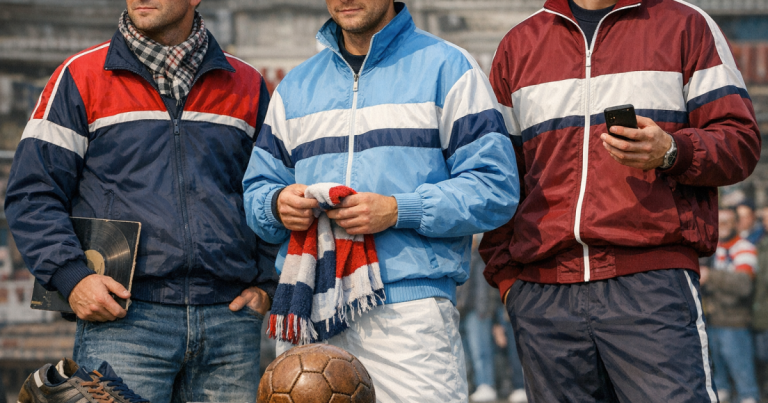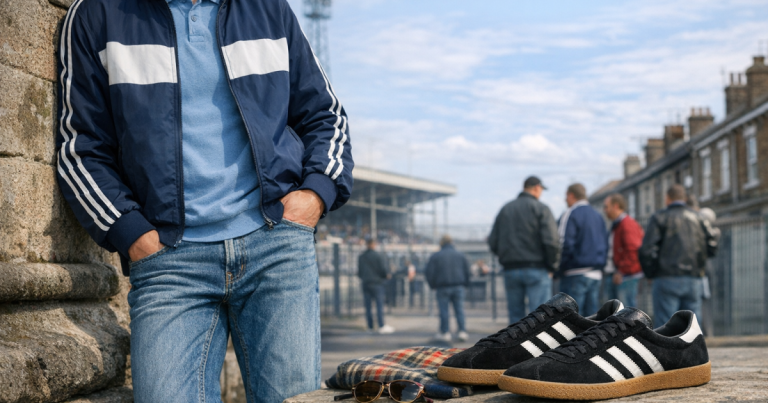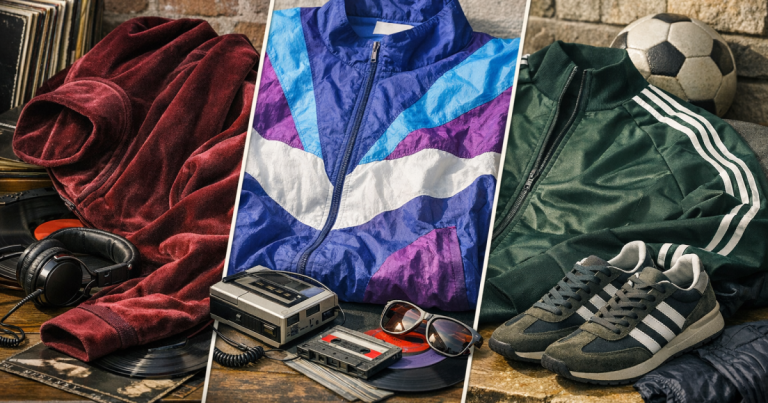
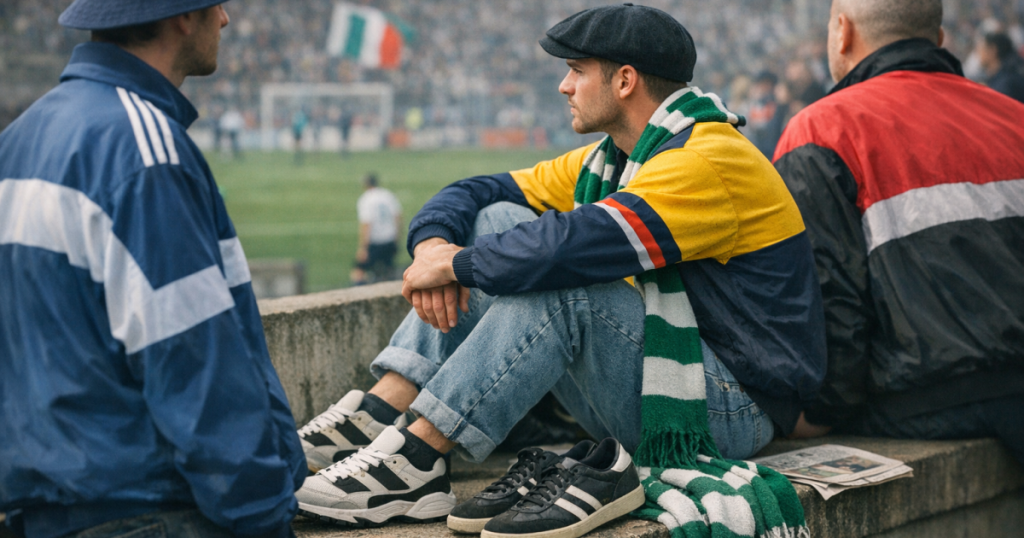
A mid-90s Serie A terrace look is not just a football shirt, a pair of trainers and a memory of Channel 4’s Football Italia. The best version takes the Italian football mood of the period — glossy kits, sharp sportswear, sponsor-heavy visuals and café-bar confidence — and filters it through British terrace restraint.
The aim is to look like you understand the era, not like you are dressing for a retro night. That means choosing one or two strong references, keeping the colours disciplined, and letting the details do the work.
The short version
Start with an Italian sportswear base: a track top, drill jacket, training top or polo in a controlled palette. Add straight or slightly relaxed trousers, low-profile trainers or period-adjacent runners, then keep logos in balance. The look works best when it nods to Serie A’s televised glamour without becoming full kit or fancy dress.
- Key mood: Italian football elegance meeting British awayday practicality.
- Main colours: navy, black, white, burgundy, forest green, royal blue and touches of red or yellow.
- Best fabrics: polyester tricot, nylon, cotton piqué, lightweight shell fabric and soft sweatshirt cotton.
- Logo rule: one strong badge or brand mark, not five competing focal points.
- Footwear direction: clean leather terrace trainers, Italian casual silhouettes or restrained 90s runners.
Step 1: understand the reference before building the outfit
Serie A in the middle of the 1990s reached British living rooms with unusual force. James Richardson reading La Gazzetta dello Sport outside a café, Sunday matches on Channel 4, world-class players in packed Italian stadiums, and kits with bold sponsors all helped give Italian football a different texture from the domestic game.
For terrace style, the important point is not copying players on the pitch. It is taking the spectator’s idea of Italy: sharper colours, premium sportswear, casual elegance and a slightly more continental silhouette. British casual dress was already built on imported labels, status fabrics and coded details, so Serie A fitted the mindset neatly.
If you want to research the period properly, use match footage, programme photos, Panini images, brand catalogues and crowd photography rather than relying only on modern reissues. Gavin Watson’s archive work is useful for understanding how real casual details sit together; the same approach is covered in more depth in using A Casual Look to research terrace tracksuit details.
Step 2: choose your base layer
The easiest starting point is a track top or training jacket. For an Italian-leaning version, look for clean panels, ribbed cuffs, embroidered badges, contrast piping and a slightly boxy shape. Kappa, Diadora, Lotto, Fila, Ellesse and Sergio Tacchini all make sense in this world, but the brand should support the outfit rather than shout over it.
A full tracksuit can work, but it is harder to wear casually now. A jacket with jeans, cords or plain track trousers is usually more natural. If you use matching top and bottoms, keep everything else quiet: no loud cap, no oversized scarf, no replica shirt underneath unless you are deliberately going for a matchday archive feel.
For a modern reference point, the Diadora B. Elite trainer captures the Italian sportswear connection without needing to pretend it is the only correct choice. Treat it as a useful direction: simple, football-adjacent, leather-led and less bulky than many contemporary trainers.
Step 3: get the colour palette right
Colour is where this look either becomes sharp or collapses into costume. The mid-90s Italian football palette had plenty of visual noise — sponsors, club colours, bootleg market stalls, warm-up gear and broadcast graphics — but the terrace version needs editing.
Build around one dark anchor: navy, black, deep green or burgundy. Add white, stone, grey or cream to soften it. Then allow one club-colour accent, such as red trim, yellow piping, royal blue panels or a small maroon detail. If the jacket already has strong contrast stripes, the trousers and trainers should calm it down.
For a more wearable framework, the site’s terrace style colour guide is a useful companion: it explains why navy, stone, burgundy and green still feel right in British casual outfits, even when the reference point is continental football.
Step 4: avoid going full replica kit
A Serie A shirt can be a brilliant piece, but it changes the outfit immediately. Wear one under a jacket and the look becomes more visibly football-led. Wear it on its own with shorts and trainers and it starts to feel like holiday sportswear rather than terrace style.
If you do use a shirt, choose plain layers around it. A black nylon jacket over a Parma, Fiorentina, Milan, Lazio or Juventus-era inspired shirt can look strong, but only if the rest is restrained. Avoid combining a replica shirt, branded track top, logo-heavy cap and bright trainers all at once.
Training tops often work better than match shirts because they carry the mood without the full supporter signal. Long sleeves, quarter zips, ribbed collars and small crests are especially useful. They also sit more easily under overshirts, Harrington-style jackets and lightweight shells.
Step 5: balance the logos
The period was logo-rich, but British terrace dressing has always relied on knowing when to stop. One recognisable sportswear mark can be enough. Two can work if they are from the same language of dress. Three or four usually looks assembled rather than lived-in.
A simple way to control it is to decide which item leads. If the track top has strong branding, use plain trousers and minimal trainers. If the trainers are the statement, choose a quieter jacket. If a club crest is visible, avoid adding a second football badge elsewhere.
This is also where modern outfits often go wrong: a reissue jacket, retro shirt, cap and branded bag may all be good individually, but together they compete. The principles in balancing logos in a terrace style outfit apply perfectly here.
Step 6: choose trousers that keep the shape grounded
For the lower half, avoid anything too skinny or too oversized. The strongest shape is straight, relaxed and clean. Dark denim, stone chinos, plain track pants or softly tapered cords can all work. The trouser should look like it belongs in Britain in 2026 while still letting the Italian reference breathe.
If the top is glossy tricot or nylon, denim can stop the outfit looking too much like sports kit. If the jacket is cotton or sweatshirt-based, plain track pants can bring the athletic edge back. Full shell trousers are harder to wear unless you keep the colours very muted.
Length matters as much as cut. Trousers should sit cleanly over the trainer rather than bunching heavily. A small break is fine; a puddle of fabric can make the outfit look careless rather than relaxed.
Step 7: finish with footwear that fits the era without overplaying it
Footwear should support the whole mood. Low-profile leather trainers, suede football silhouettes and restrained runners all make sense. The Nike Air Max 90 can work if the colourway is controlled, but very bright modern versions may pull the outfit away from Italian football and towards general 90s nostalgia.
Terrace staples such as adidas Gazelle-style shapes, Diadora tennis silhouettes, PUMA indoor-inspired trainers and simple white leather pairs are easier to integrate. Avoid making the trainer the only reference point; the best outfits feel connected from jacket to footwear.
Step 8: add accessories sparingly
A cap, crossbody bag or scarf can help, but restraint matters. A plain navy or black cap feels more natural than something covered in badges. A small shoulder bag can fit the era’s casual practicality, provided it does not look too tactical or festival-led.
Scarves are the most obvious football accessory, so use them carefully. A club scarf with a replica shirt and branded jacket is a lot. A muted scarf with a plain jacket can look more considered. Jewellery should stay minimal: a watch, a chain or nothing at all.
Three outfit formulas that work
The café football version
Navy or black Italian track top, white or cream T-shirt, straight denim, clean leather trainers. This is the most wearable route because it borrows the television-era glamour without leaning too heavily into club identity.
The training-ground version
Quarter-zip training top, stone chinos, dark suede trainers and a lightweight shell. It feels more like a supporter who knows the culture than someone wearing a themed outfit.
The sharper matchday version
Muted replica or training shirt under a plain black jacket, dark track trousers and understated trainers. Keep the shirt as the visual centre and remove anything that competes with it.
Common mistakes to avoid
- Too many club cues: shirt, scarf, badge and colour-matched trainers can quickly become literal.
- Over-bright reissues: modern colours are not always faithful to the atmosphere you are trying to capture.
- Ignoring fit: the right brand in the wrong shape will still feel off.
- Mixing every country at once: Italian jacket, German trainers and British outerwear can work, but only if the colours and logos are controlled.
- Making it too clean: terrace style should look cared for, not showroom-perfect.
FAQ
Do I need an original 1990s Italian track top?
No. Originals are great when the condition, fit and price make sense, but a well-chosen modern reissue or Italian-inspired training top can carry the same mood more comfortably.
Can I wear a Serie A shirt as part of the look?
Yes, but treat it as the main event. Keep the jacket, trousers and trainers quieter so the outfit does not become a full football costume.
Which colours are safest for a first attempt?
Navy, black, white and burgundy are the easiest starting points. Add one Italian club-style accent only if the rest of the outfit is calm.
Are bulky 90s trainers right for this style?
Sometimes, but they are not essential. Many Serie A-influenced terrace outfits look better with cleaner leather or suede trainers that keep the silhouette sharper.
How do I make it feel current rather than nostalgic?
Use one clear era reference, then modernise the fit. Straight trousers, tidy layers and controlled colours stop the look feeling like a costume.
The big picture
The strongest mid-90s Italian terrace outfit is built through editing. Take the glamour of televised Serie A, the confidence of Italian sportswear and the discipline of British casual style, then remove anything that feels too obvious. One good jacket, one careful colour story and the right footwear will do more than a pile of period references.
Think less about recreating a single photograph and more about building a believable language: sharp, relaxed, football-aware and wearable on a British street today.