A second-hand Kappa tracksuit can be brilliant terrace wear: sharp taping, Italian sportswear energy and far more character than a bland new set. The regret usually comes later, when the fit is off, the zip is tired or the “vintage” label is doing more work than the garment.
The aim is not to hunt for perfection. It is to spot the difference between honest wear, easy fixes and problems that will annoy you every time you put it on.
At a glance
- Ask for garment measurements in centimetres, not just the labelled size.
- Check the zip, cuffs, waistband, hems, taping and printed or embroidered logos before buying.
- Be cautious with listings that rely on vague words such as rare, archive or deadstock without clear photos.
- Use sold listings, not asking prices, to judge whether the price feels sensible in £.
- Think about how you will wear it: full set, jacket only, or bottoms with terrace trainers.
Step 1: Know which Kappa look you are actually chasing
Kappa covers several different moods, so decide what you want before scrolling through Vinted, eBay UK, Depop or local selling groups. The classic terrace-friendly lane is usually a clean track jacket, contrast side taping, a neat collar and trousers that sit well over trainers. The more logo-heavy, oversized or football-training styles can work too, but they give a different impression.
If you want something wearable for pub-to-ground use, keep the shape in mind as much as the badge. A jacket that is too long, shiny or boxy can look more fancy-dress than casual. For a wider fit framework, the same principles in choosing a track jacket for pub-to-ground wear apply neatly to Kappa: collar shape, fabric weight, pocket placement and how it layers under outerwear all matter.
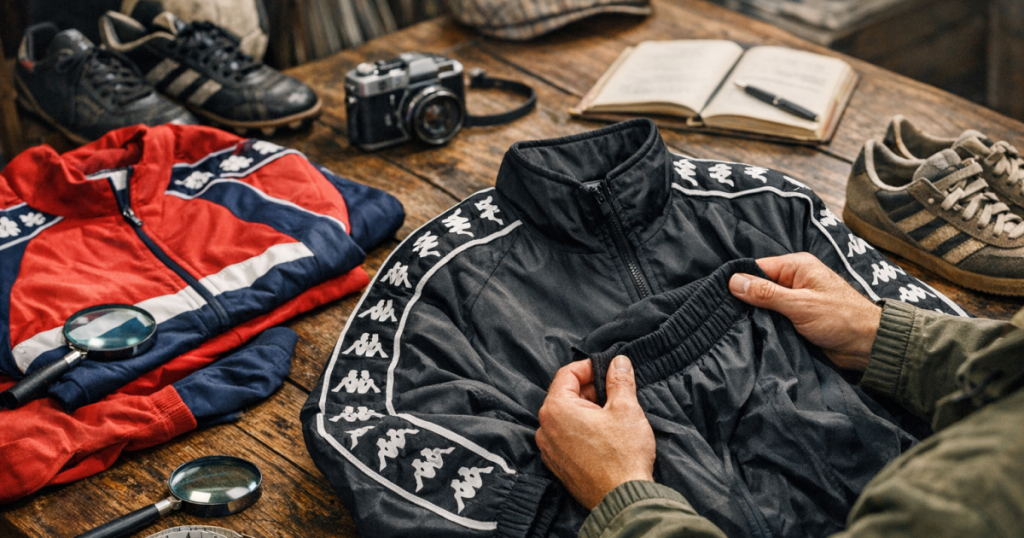
For reference, a Kappa 222 Banda Track Jacket is the kind of piece many buyers use as a visual benchmark because the sleeve taping is instantly recognisable. That does not mean every used listing with side tape is valuable or worth buying. Use known designs as a guide, then judge the actual garment in front of you.
Step 2: Treat sizing labels as clues, not facts
The biggest mistake with a second-hand Kappa tracksuit is trusting the size tag on its own. Older sportswear, European sizing, shrinkage, previous alterations and modern slim-fit cuts can all make a labelled medium feel nothing like another medium.
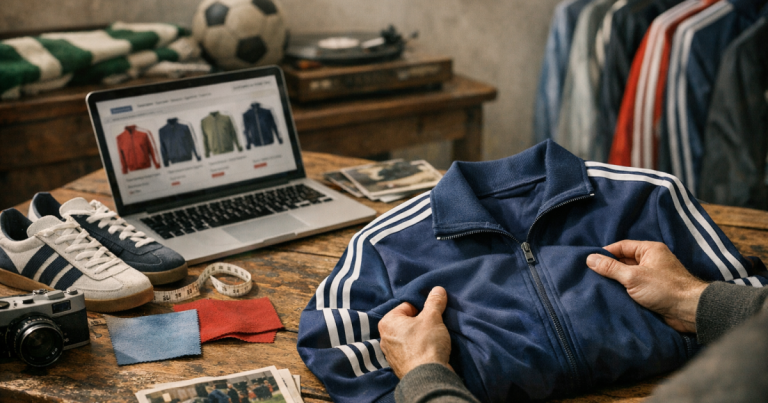
Ask the seller for simple flat measurements in centimetres. For the jacket, request pit-to-pit, shoulder width if the seam is clear, back length from collar seam to hem, sleeve length and hem width. For bottoms, ask for waist laid flat, inside leg, outside leg, thigh width, hem opening and front rise. These numbers matter more than whether the label says S, M, L or XL.
Compare those measurements with a tracksuit or jacket you already wear comfortably. Lay yours flat and measure it the same way. A difference of 2 cm across the chest can change how a jacket sits; a few centimetres on the inside leg can decide whether the trousers stack nicely or drag under the heel.
Step 3: Read the photos like evidence
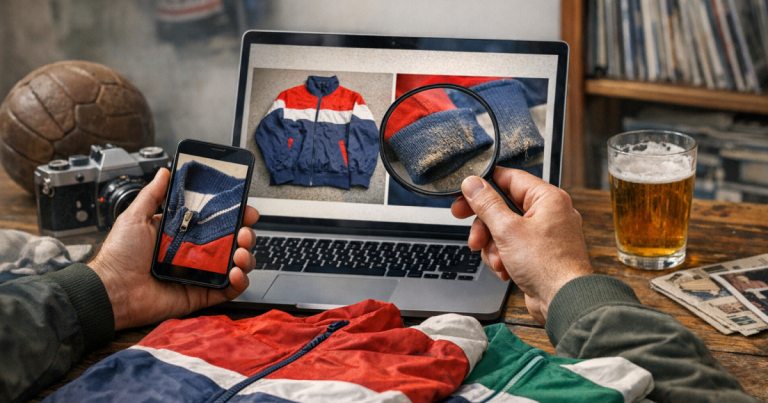
A good listing should show the full front, full back, close-ups of the labels, zip, cuffs, waistband, hems, pockets, taping and any logos. If the seller only shows a moody mirror shot and a badge close-up, ask for more. A genuine seller with a decent garment should not mind taking extra photos.
Look closely at the light. Bright daylight photos usually reveal pulls, shine, bobbling and colour fade better than warm bedroom lighting. Check whether the black is actually black or has faded brown-grey. Red, navy and royal blue can also lose depth unevenly, especially around shoulders, knees and seat areas.
For trousers, ask for photos of the crotch seam, inner thigh and back hem. These are the areas that take the most wear. For jackets, look at sleeve ends, collar edges, pocket openings and the lower back. Small signs of use are normal. Fraying, loose seams and stretched elastic are bigger warnings.
Step 4: Check the details that make or break the buy
Kappa’s appeal is often in the details: the tape, the Omini logo, the collar line and the sporty cut. Those details are also where poor condition becomes obvious.
- Zip: Ask whether it runs smoothly from bottom to top. Missing pullers, bent teeth or a zip that separates can be awkward to repair neatly.
- Taping: Check for lifting, cracking, missing sections, loose stitching or discolouration along the sleeve or leg tape.
- Elastic: Waistbands and cuffs can relax over time. If they look wavy or stretched flat, expect a looser fit.
- Logos: Embroidery can snag and printed logos can crack. Decide whether that patina suits you or whether it will bother you.
- Lining: Some pieces have mesh or part-lining. Ask for photos inside the jacket and trousers if the listing does not show them.
- Smell: Smoke, damp and heavy fragrance can be stubborn in synthetic sportswear. A seller may not mention it unless you ask directly.
Do not assume every flaw is a deal-breaker. A small pull near a pocket may disappear when worn; a weakened waistband will affect the whole outfit. Prioritise faults that change fit, structure or comfort.
Step 5: Be realistic about authenticity and labels
With used sportswear, authenticity checks are useful but not absolute. Labels vary by era, market and product line, and many Kappa pieces were produced for different regions. A label that looks unfamiliar is not automatically fake; a convincing label is not automatic proof either.
Ask for clear photos of the neck label, wash label, care symbols and any product or style codes present. Compare the design language with reputable references and sold listings, not just current asking prices. Watch for obvious red flags: poor stitching around logos, inconsistent spacing in the taping, badly printed care labels, or branding that looks unlike known Kappa typography.
If a seller claims a piece is rare, vintage, deadstock or match-issued, ask what supports that claim. Deadstock should normally mean unworn old stock, not simply a clean used item. Match-issued or player-issue claims need stronger evidence than a confident caption.
Step 6: Judge the price by condition, not nostalgia
Second-hand prices can be all over the place because sellers often price the memory, not the garment. Search sold items where possible and compare similar Kappa pieces by condition, size, colour, completeness and era. Asking prices are only what someone hopes to receive; sold prices show what buyers have actually paid.
A full set usually deserves closer checking than a jacket alone because both pieces need to work. If the jacket is strong but the bottoms are tired, do not pay as though you are getting a pristine set. Likewise, a less hyped colourway in excellent condition may be better value than a famous-looking piece with stretched cuffs and stained hems.
Build in cleaning and repair costs. If you need a specialist alteration, a replacement zip or careful stain treatment, that affects the real cost even if the listing looks cheap in £. A bargain that needs work you will never get round to is not really a bargain.
Step 7: Ask the seller the right questions
Good questions save awkward returns and disappointing parcels. Keep them direct and easy to answer.
- Are there any stains, pulls, holes, loose seams or zip issues not visible in the photos?
- Does the garment have any smell from smoke, damp storage or strong fragrance?
- Can you provide flat measurements in centimetres for the jacket and bottoms?
- Has it been altered, repaired or shortened?
- Are the cuffs, waistband and hems still elastic and secure?
- Is it a full matching set, or have the top and bottoms been paired together later?
That final question matters. Some sellers combine a jacket and trousers because the colours are close enough. It may still look good, but it should be priced and described honestly.
Step 8: Plan the outfit before you buy
One reason buyers regret retro tracksuits is that they buy a striking set without knowing how it fits their actual wardrobe. Kappa can be bold, so decide whether you want the full set look or a more controlled terrace outfit built around one piece.
A navy or black Kappa track jacket is easy with straight-leg jeans, a plain tee and low-profile trainers. Brighter colour blocking can work better when the rest of the outfit stays quiet. Full sets need more confidence and better fit; if the trousers are baggy at the ankle or too long, the whole thing can look sloppy rather than sharp.
If the bottoms are slightly long but otherwise good, styling can help. The advice on cuffing tracksuit bottoms with terrace trainers is useful before you dismiss a pair that only needs a cleaner break over the shoe.
Step 9: Think about cleaning before committing
Most second-hand synthetic sportswear is easy enough to freshen, but some problems are stubborn. Sweat marks, old deodorant, mildew smells and oil-based stains can be difficult. Always read the care label and avoid high heat, harsh scrubbing or aggressive stain treatment on printed logos and taping.
If the garment is creased from storage, do not attack it with a hot iron. Nylon and polyester can mark, shine or warp under heat. A cautious steam from a suitable distance, a gentle wash according to the label and air drying on a hanger are usually safer starting points. For more detail, use the guide to removing creases from a nylon track jacket before trying anything heavy-handed.
If you regularly buy used sportswear, a garment steamer such as the Philips 3000 Series Handheld Garment Steamer can be useful, but always test cautiously and follow the garment care label. The tool is only as good as the care you take with heat-sensitive fabrics.
Step 10: Know when to walk away
Walking away is part of buying well. Avoid listings where the seller will not provide measurements, hides key areas, dodges condition questions or uses pressure language about instant sell-outs. There will be another tracksuit.
Be especially careful with pieces described as vintage but photographed poorly. True age is not the same as quality. A clean recent reissue may serve you better than an older garment with weak elastic and tired fabric, particularly if you actually want to wear it rather than collect it.
The best buy is the one you will reach for repeatedly: correct fit, honest condition, fair price and enough Kappa character to feel distinct without becoming costume.
Helpful questions
Is it better to buy a full Kappa set or just the jacket?
Buy the full set if both pieces fit well and the condition is consistent. If the trousers are weak, the jacket alone is often the more wearable terrace option.
How should a retro Kappa track jacket fit?
It should sit cleanly through the chest and shoulders, with enough room for a tee or thin knit underneath. Overly long sleeves or a baggy hem can make it look less intentional.
Are small pulls in the fabric a problem?
One or two minor pulls are normal on used synthetic sportswear. Walk away if there are clusters of pulls, damaged seams or snags across prominent areas.
Can stretched cuffs or waistbands be fixed?
Sometimes, but repairs can cost more than expected and may alter the look. Price the garment as flawed unless you already know who will repair it.
What is the safest way to judge value?
Compare sold listings in £, then adjust for condition, size, colour, completeness and any cleaning or repair work needed after delivery.
What stands out
Buying used Kappa well is about discipline. The badge and taping may catch your eye, but the measurements, zip, cuffs, hems and seller evidence decide whether it becomes a regular part of your rotation.
Approach every listing with the same routine: define the look, verify the fit, inspect the wear points, question big claims and only pay what the actual garment deserves. That is how you end up with a tracksuit that feels like terrace style rather than a lesson learned.