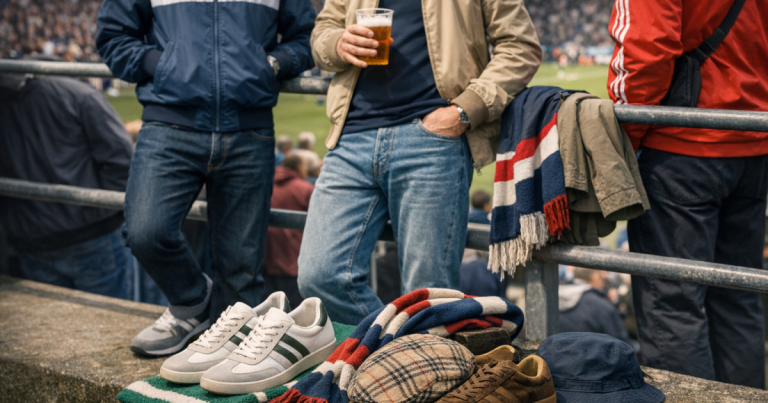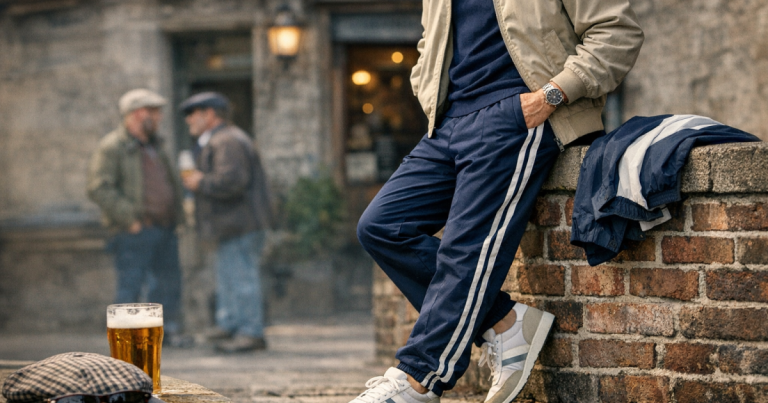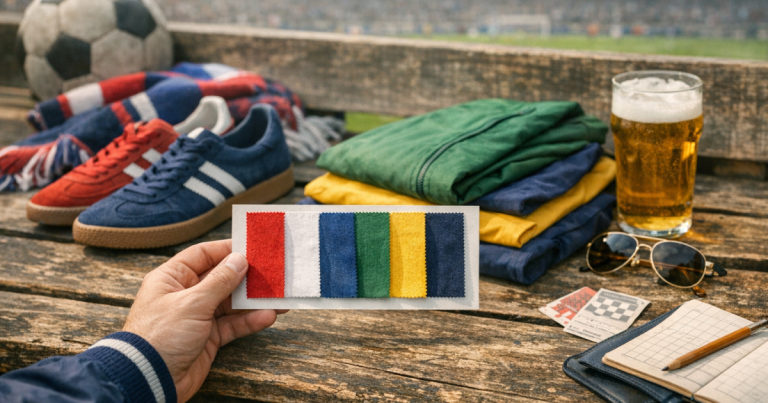
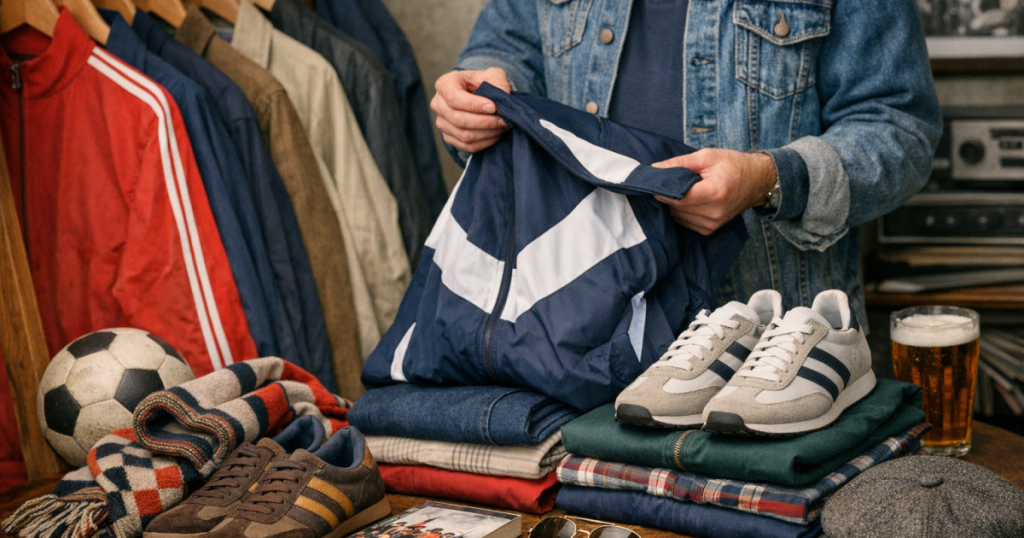
The strongest terrace outfits rarely look assembled from a checklist. An authentic terrace wardrobe works because the pieces speak the same language: football-casual restraint, music-scene confidence, and enough modern wearability to survive the pub, the train and the stands.
The trick is not to dress like a museum display or copy a film still too literally. It is to understand the cues, edit them down, and build a rotation that looks lived-in rather than staged.
The big picture
A convincing terrace wardrobe is built around five things: era awareness, proportion, fabric, footwear and restraint. Get those right and even newer pieces can sit naturally beside vintage track tops, waxed outerwear and suede trainers.
- Pick a lane: late 70s casual, 80s Italian sportswear, acid house crossover, 90s Britpop, or 2000s matchday practicality.
- Keep the silhouette believable: not everything needs to be oversized, shiny or logo-heavy.
- Let one piece lead: a track top, jacket or trainer should set the tone, while the rest supports it.
- Mix old and new carefully: archive originals bring character, but modern reissues are often easier to wear and care for.
- Avoid fancy dress: too many obvious references at once can flatten the look.
Start with the era, not the logo
Brand names matter in terrace style, but era matters more. A Fila track jacket, an adidas zip top and an Ellesse sweatshirt can all look right, yet each points to a slightly different mood. Italian tennis influence, European away-day glamour, football training wear, rave colour and Britpop utility all sit under the wider terrace umbrella, but they do not always blend cleanly in one outfit.
If you are unsure where your taste sits, work backwards from the references you genuinely like. A late 80s look might mean brighter panels, looser track trousers and trainers with a sportier profile. A 90s look may lean into track tops with straight-leg denim, cagoules, parkas or bucket hats. Early 2000s casual style often becomes cleaner, darker and more outerwear-led.
For a deeper read on period signals, use this guide to UK subculture cues across retro tracksuit eras before buying pieces that might clash. It will help you spot whether a garment feels 80s, 90s or more modern revival.
Build around three anchor pieces
You do not need a huge rail of sportswear to look convincing. three anchor pieces can carry most of the wardrobe: a track top, a weatherproof outer layer and a trainer that matches the era you are borrowing from.
The track top
The track top is the obvious starting point because it carries colour, shape and brand history in one hit. A vintage original has the most character, but condition varies heavily: check zips, elastic, cuffs, stains and whether the fabric has gone shiny or brittle. A reissue can be the smarter everyday choice if you want the look without constantly worrying about damage.
Current archive-leaning examples such as the adidas Originals Firebird Track Top or Fila Settanta Track Jacket give you a useful reference point for shape and colour blocking, even if you later decide to hunt vintage. The important question is not whether the top is famous; it is whether it fits the rest of your wardrobe.
The outer layer
British terrace dressing is shaped by weather. A good jacket makes a tracksuit or track top feel plausible outside a sunny lookbook. Think waxed jackets, cagoules, casual rain shells, Harringtons, parkas and lightweight overshirts. The outer layer should not fight the track top; it should calm it down or give it context.
A muted jacket over a loud track top often works better than stacking two statement pieces. Navy, olive, black, stone and dark brown are easy to wear with classic sportswear colours, while bright jackets need more discipline underneath.
The trainers
Footwear is where many outfits either click or collapse. Terrace trainers should look connected to sport, travel and everyday wear rather than pristine fashion styling. Suede and gum soles are reliable, but do not ignore leather court shoes, retro runners or indoor handball-style silhouettes if they fit your chosen era.
Keep them clean, not showroom-perfect. A bit of use helps, but collapsed heels, ruined suede and dirty laces quickly make the whole outfit look careless rather than authentic.
Get the proportions right
Fit is the quiet difference between “knows the culture” and “bought the costume”. Track tops should usually sit comfortably over a T-shirt or polo without ballooning at the waist. Track trousers need enough movement, but if they swamp the trainer completely the shape can look lazy rather than casual.
For most modern wardrobes, a slightly relaxed top with straighter trousers works better than extreme bagginess. If the jacket is bulky, keep the leg cleaner. If the track top is slim and sharp, wider denim or looser track pants can balance it. For more detail, the terrace fit guide to silhouettes and matchday proportions breaks down how layers should sit together.
One useful rule: stand in the outfit without posing. If it only works when the zip is half-done, the cuffs are pulled perfectly and the trousers are arranged over the trainer, it probably needs editing.
Use colour like a casual, not a costume designer
Terrace style can handle colour, but it rarely looks convincing when every shade is shouting. Start with a base of navy, grey, black, cream, stone, burgundy, forest green or chocolate brown, then add one louder piece. A red track top under a navy jacket. A green sweatshirt with dark denim. A sky-blue panelled top with plain trousers.
Matching full tracksuits can work, especially if the set has a strong archive feel, but they are harder to wear casually. Break the set with a plain jacket, polo or simple trainer if it feels too coordinated. The best looks often have one point of nostalgia and several points of normality.
Layering that feels British
Authenticity often comes from practical layering rather than rare labels. A polo under a track jacket, a sweatshirt under a wax jacket, or a cagoule over a zip top all feel rooted in real UK wear. The Fred Perry Twin Tipped Polo Shirt is a familiar reference because it bridges football, music and everyday pub dressing without needing much explanation.
Caps, scarves and bags should be treated with the same restraint. A New Era 9Forty Cap can work with a cleaner modern terrace outfit, but avoid piling on every accessory at once. One cap, one good jacket, one strong trainer is usually enough.
Vintage, reissue or modern inspired?
There is no single correct route. Vintage gives you patina, label detail and the pleasure of finding something with a bit of history. Reissues give you easier sizing, cleaner condition and less anxiety in bad weather. Modern inspired pieces can be useful if they borrow the silhouette without pretending to be archive originals.
When buying vintage, learn to read the small details: care labels, country of manufacture, zipper brands, embroidered versus printed logos, fabric composition and stitching. The guide on dating a vintage tracksuit by labels and details is worth keeping open when browsing listings or rails.
Be wary of vague listing language. “Rare”, “casuals”, “90s style” and “terrace” are often used loosely. Ask for clear photos of labels, cuffs, hems, lining and any damage. If measurements are missing, request them; size tags alone can be misleading on older sportswear.
Where to shop without losing the plot
UK readers have a decent mix of options: vintage shops, charity shops, specialist resellers, online marketplaces, brand reissues and mainstream sportswear retailers. Each has trade-offs. Vintage shops usually offer better curation, but prices can reflect that. Online marketplaces offer depth, but require more checking. Reissues are simple and wearable, but can lack the odd details that make old pieces interesting.
Do not buy solely because a brand has heritage. Ask whether the garment fills a real gap: a darker track top for winter layering, a clean trainer for denim, a jacket that works in rain, or a polo that tones down louder sportswear. The aim is a wardrobe that gives you combinations, not a pile of isolated statement pieces.
Care makes the difference
Old synthetic sportswear can punish rough washing. Use care labels where present, wash gently, avoid high heat and let garments air dry. Do not assume every vintage track top can handle the same routine as a modern gym top. If a piece has flocked lettering, delicate print or fragile elastic, treat it carefully.
A handheld garment steamer can help relax creases in some synthetic pieces, but test cautiously and avoid holding heat too close to prints, badges or damaged fabric. For trainers, separate suede, leather and mesh care rather than using one product on everything.
Common mistakes that make it look forced
- Too many logos: one major sportswear logo is usually stronger than four competing ones.
- Era confusion: acid house colours, Britpop parkas and 2000s technical shells can work together, but not automatically.
- Box-fresh everything: terrace style should feel worn in, even when the pieces are new.
- Ignoring the weather: a UK outfit that only works indoors rarely feels believable.
- Buying for labels, not outfits: a famous track top is only useful if it pairs with your trousers, jacket and trainers.
Helpful questions
Can a terrace wardrobe be authentic if most pieces are new?
Yes. Authenticity comes from proportion, references and restraint, not only age. New reissues and modern pieces can look right if they respect the era and are styled naturally.
Should I start with trainers or a track top?
Start with whichever you will wear most. If you already live in denim and jackets, trainers may anchor more outfits. If you want the look to read instantly, choose the track top first.
Are full tracksuits too much for everyday wear?
Not always, but they need confidence and context. For easier everyday use, split the set and wear the top or trousers separately before going full matching.
How do I avoid looking like I am copying football casual stereotypes?
Keep the outfit personal and wearable. Mix in normal staples, avoid aggressive styling clichés, and treat the culture as a reference point rather than a uniform.
Final thoughts
The best terrace wardrobes look collected over time. They have a few strong references, a practical understanding of British weather, and enough restraint to feel natural outside the matchday bubble. Build slowly, check details, care for the pieces properly and let your own routine shape the final edit.
An authentic terrace wardrobe is not about owning every legendary brand. It is about knowing why a piece works, where it comes from, and how to wear it without turning subculture into costume.