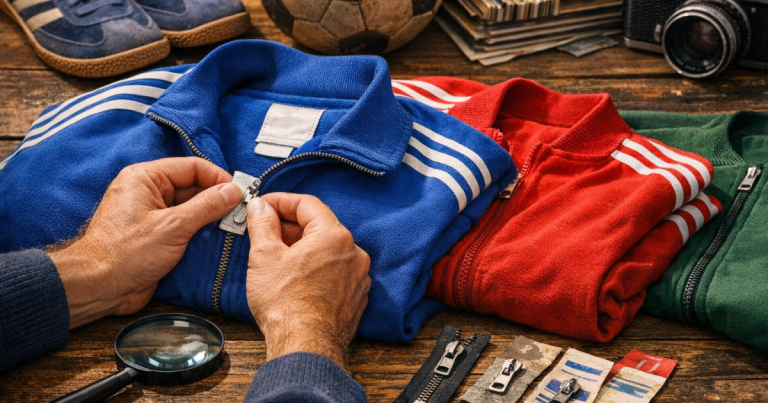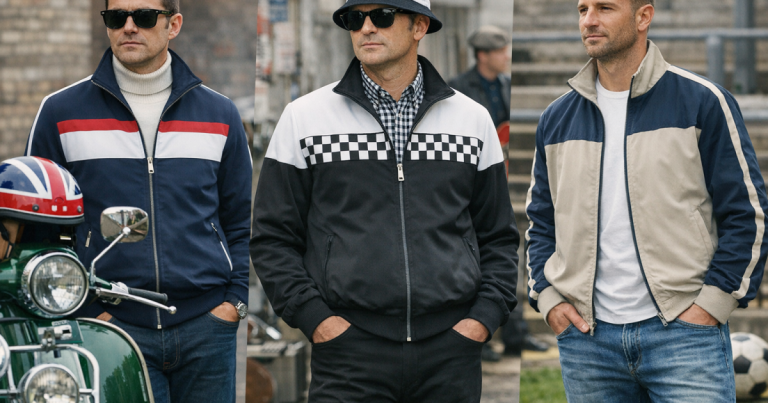
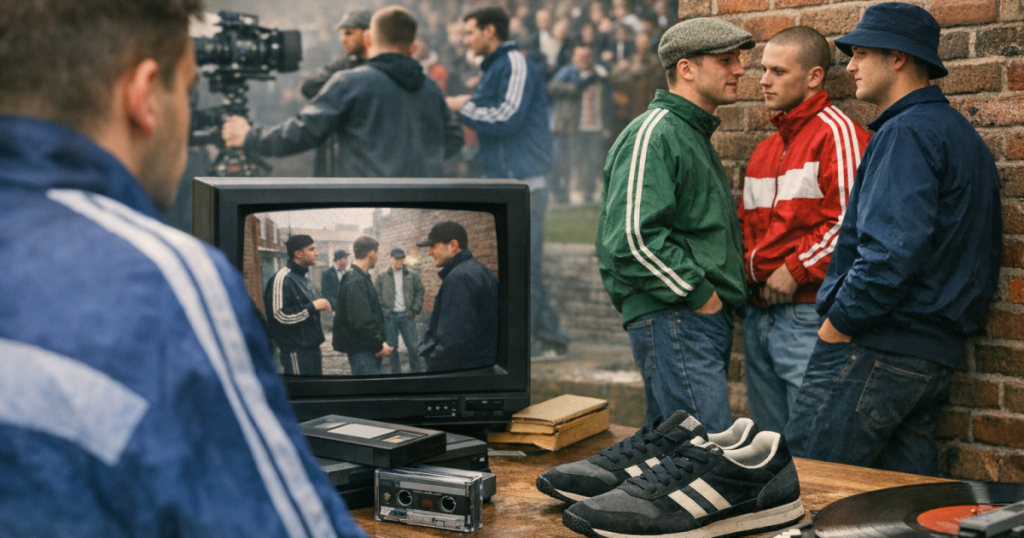
British music videos are one of the best visual archives for reading sportswear as culture, because they show clothes moving rather than sitting in a lookbook. To trace terrace tracksuit influences, start with the scene around the artist, then read the cut, branding, colour, footwear and setting together. A track top in a video rarely means one thing on its own; the evidence comes from how it sits among football, rave, grime, indie and everyday street references.
In brief
- Start with the year, region and scene before naming the style.
- Look for proportion: short boxy track tops, fuller trousers, shell layers, polos and trainers all change the meaning.
- Separate football-casual influence from general sportswear, dancewear or American hip-hop styling.
- Use repeated cues across several videos, performances and photos rather than relying on one freeze-frame.
- When translating the look today, borrow the structure rather than copying every colour and logo.
Step 1: place the video in its scene, not just its year
The same tracksuit can read differently depending on the artist and setting. A zip track top in an acid house-adjacent clip suggests a different lineage from a similar jacket in a grime video, even if both share bright colour blocking and sportswear branding.
Start by asking where the artist sits culturally. Are they connected to rave, Madchester, Britpop, UK garage, grime, indie, football terraces, estate style or club culture? The stronger the overlap with football crowds, away-day clothing, all-weather jackets and trainer culture, the more likely you are seeing terrace influence rather than generic leisurewear.
For late 1980s and early 1990s visuals, compare the music-video outfit with broader rave and football-casual references. The crossover is especially clear when loose sportswear, bold colour, bucket hats, trainers and outdoor layers appear together. For more era-specific context, the guide to building a late 80s acid house tracksuit look is useful because it shows how dancefloor energy and terrace sportswear could share the same wardrobe language.
Step 2: read silhouette before logos
Logos attract attention, but silhouette tells the deeper story. Terrace styling is rarely just about wearing a branded tracksuit. It is about proportion: how the jacket sits on the shoulders, where the hem lands, whether trousers stack over trainers, and how outerwear changes the shape of the whole outfit.
Use these visual checks when pausing a music video:
- Track top length: cropped and boxy often feels more archive-led; longer, looser cuts can point towards later streetwear or performance sportswear.
- Trouser shape: tapered cuffs, straight legs and baggier nylon bottoms each point to different eras and scenes.
- Layering: a polo, knit, shell jacket or waxed outer layer can pull a tracksuit towards terrace style rather than pure gym wear.
- Footwear: low-profile gum-sole trainers suggest a different mood from chunky running shoes or basketball shapes.
- Headwear and bags: caps, bucket hats and cross-body bags can help place the look in rave, football or later streetwear territory.
If the silhouette feels too clean, too modern or too performance-focused, the video may be borrowing sportswear aesthetics without leaning heavily on terrace codes.
Step 3: identify brands without overclaiming
British music videos often contain quick cuts, low lighting and movement, so avoid declaring a brand unless the logo, stripe pattern, badge shape or colour layout is visible enough. Many archive-inspired pieces resemble each other, and videos are not catalogues.
Terrace-coded sportswear often centres on European football and tennis-adjacent labels, classic three-stripe track tops, Italian sportswear, football training gear, shell suits and understated casual outerwear. But the trick is to note what you can verify. Write down observations like “navy track top with white sleeve stripes” or “full zip top with contrast chest panel” before naming a label.
This matters because music-video styling can mix genuine vintage, contemporary reissues, borrowed wardrobe, costume styling and everyday clothing. A video released now may use archive shapes to evoke an earlier scene, while an older video may simply show what people around the artist were already wearing.
Step 4: watch the setting as closely as the outfit
Terrace influence becomes easier to read when the clothes appear in recognisable British settings: streets, estates, pubs, clubs, car parks, rehearsal rooms, seaside towns, away-day travel, underpasses and concrete spaces. These locations do not prove football-casual influence on their own, but they give the clothes social context.
Ask what the video is trying to project. Is the tracksuit used for movement, swagger, anonymity, regional pride, nostalgia, club energy or everyday realism? A full tracksuit in a dance-heavy video may be practical and scene-led. A track jacket under a parka or worn with a polo and trainers can carry a different message: casual, observant, and rooted in British street style.
Step 5: compare across eras rather than chasing one perfect clip
The best method is to build a small reference set. Watch several videos from the same artist, then compare them with live performances, magazine shoots and fan photos from the same period. Terrace style is a pattern, not a single item.
Late 1980s into early 1990s: rave, Madchester and casual crossover
Look for oversized tops, bright panels, nylon, loose trousers, bucket hats and trainers. The terrace link often sits in the shared sportswear vocabulary: practical, recognisable, easy to move in, and close to football-crowd dressing without becoming a replica kit look.
Mid to late 1990s: indie, Britpop and everyday sportswear
Here the clues can be subtler. Track tops, cagoules, polos and trainers often appear as everyday British clothing rather than styled costume. The terrace influence is most convincing when sportswear is mixed with casual outerwear and understated trainers instead of looking like a stage uniform.
2000s: garage, grime and estate realism
Grime-era videos often show a harder, more localised sportswear language: tracksuits, hoods, caps, puffers, shells and trainers worn with directness rather than nostalgia. The lineage is not always terrace in a football-casual sense, but it shares the British habit of turning sportswear into social identity. For a deeper look at that shift, read the piece on 2000s grime tracksuit style.
Step 6: separate influence from costume
Modern videos often reference old subcultures deliberately. That can be brilliant visually, but it changes how you read the clothes. A present-day artist in an archive-style track top may be quoting the past, not documenting it.
Use three questions:
- Is the look lived-in? Natural creases, mixed layers and imperfect matching often feel closer to real terrace dressing.
- Is the styling too exact? Head-to-toe era copying can signal costume or editorial styling.
- Does the outfit match the artist’s wider image? If similar pieces appear in interviews, live footage and candid photos, the influence is more credible.
Turning the research into wearable style
The point of tracing these cues is not to dress like a paused video still. It is to understand why the outfit works. A modern terrace-informed look usually lands better when you take one strong reference and quieten the rest: a vintage-style track top with plain trousers, a shell jacket over a polo, or classic trainers with a less obvious top half.
If you are using old videos as outfit research, build from proportion first. Choose whether the outfit is boxy and cropped, loose and rave-adjacent, sharp and casual, or tracksuit-heavy in a grime-influenced way. Then add colour and branding last. The article on mixing vintage track tops with modern terrace style is a sensible next step once you have identified the reference you want to borrow from.
Common mistakes when reading music-video sportswear
- Calling every tracksuit terrace: Some looks are purely dance, gym, streetwear, pop styling or label-led.
- Ignoring regional context: Manchester, London, Liverpool, Birmingham and Glasgow scenes have different visual rhythms.
- Overvaluing the logo: A famous badge does not automatically make the outfit culturally specific.
- Forgetting the trainer shape: Footwear often anchors the outfit more strongly than the jacket.
- Reading modern nostalgia as original evidence: Contemporary videos can be useful, but they may be referencing the archive rather than representing it.
FAQ
Can you identify a terrace look from one music video?
Sometimes, but it is safer to treat one video as a clue. Confirm the influence by checking other footage, photos and the artist’s wider scene.
Are football shirts necessary for terrace influence?
No. Much terrace style moved away from obvious replica shirts and towards tracksuits, trainers, polos, knitwear and outerwear.
Do grime videos count as terrace tracksuit references?
They can, but not always directly. Grime shares British sportswear codes with terrace culture, though its roots also sit in pirate radio, estates and youth streetwear.
What should I pause on first: jacket, trousers or trainers?
Start with the full silhouette, then check trainers and layering. Logos should come after shape, colour and context.
How do I avoid making a modern outfit look like fancy dress?
Use one era cue at a time. Keep the fit current, avoid overmatching, and let the track top or trainers carry the reference.
What to remember
British music videos are valuable because they show sportswear in motion, in place, and inside real cultural scenes. The strongest readings come from repeated evidence: the artist, the year, the setting, the silhouette, the trainers and the wider subculture all lining up. Once you can spot those terrace tracksuit influences, you can borrow the attitude and proportions without flattening the history into costume.