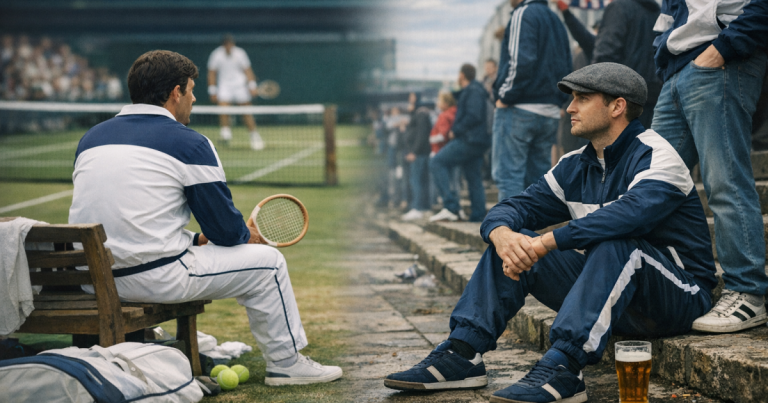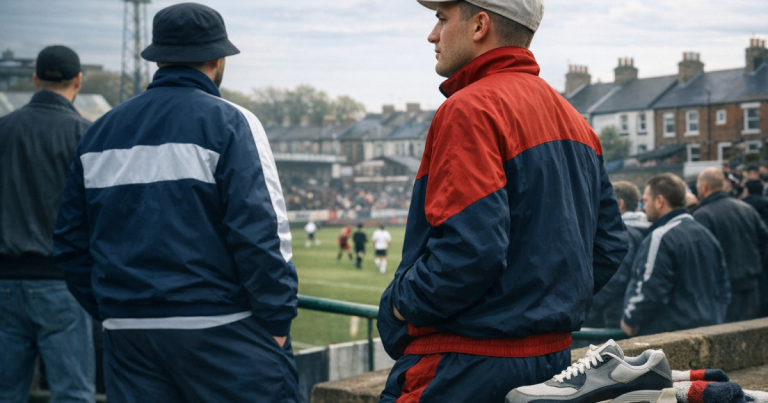
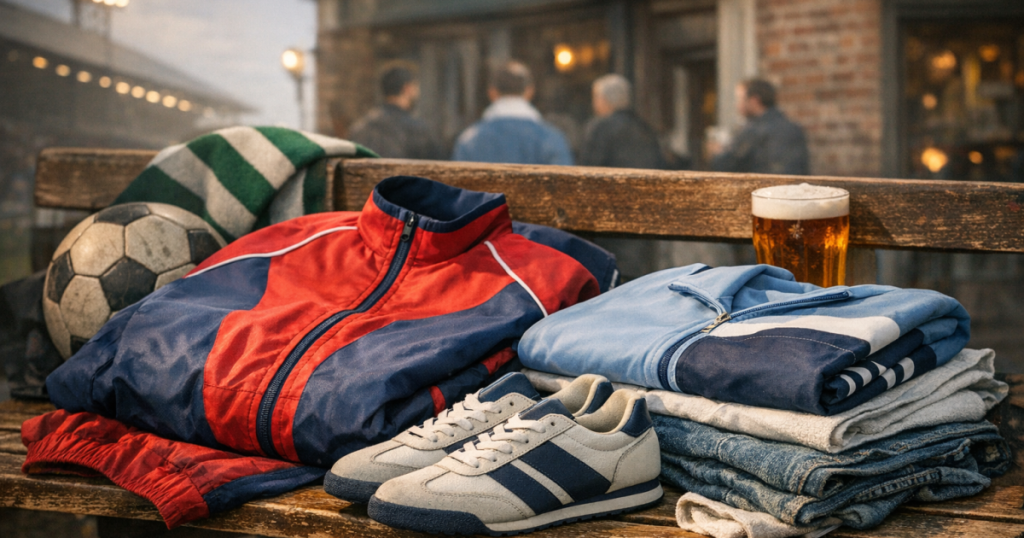
Umbro’s place in British style was earned on muddy pitches, school playing fields and televised cup weekends before it ever became a terrace reference. Understanding Umbro terrace sportswear means looking at how football kit, training gear and casual adoption blurred into one recognisable British uniform. The story is less about hype and more about familiarity: diamonds on a sleeve, a drill top under a coat, and clothes that felt local before they felt retro.
The short version
- Umbro shaped British terrace sportswear because it was deeply embedded in football at club, schoolboy and national-team level.
- Its influence sits less in luxury status and more in authenticity: training tops, drill layers, shells, shorts, boots and matchday-adjacent kit.
- The strongest Umbro looks usually work when they keep football detail but avoid looking like a full replica-kit outfit.
- For modern wear, focus on proportion, fabric condition, logo scale, colour restraint and how the piece sits with trainers, denim, cords or track pants.
- Vintage and reissue Umbro can both work, but each needs a different check: originals for condition and era cues, reissues for shape, branding and fabric feel.
Step 1: Start with Umbro as a football brand, not just a retro logo
Umbro was founded in England and built its reputation through football kit supply, which matters when you are reading the brand through a terrace lens. Its double-diamond mark did not arrive in British casual culture as an imported fashion symbol first; it was already present in changing rooms, cup finals, PE bags, Sunday league pitches and national-team memory.
That gives Umbro a different tone from Italian tenniswear or alpine-influenced sportswear brands that became prized for their foreignness. On a British terrace, Umbro often reads as local, practical and emotionally tied to football rather than exotic. That does not make it less stylish. It makes the styling rules slightly different.
The most convincing Umbro pieces usually carry some evidence of their original sporting purpose. Look for ribbed cuffs, contrast piping, embroidered diamonds, drill-top collars, woven labels, club-colour palettes, training-ground silhouettes and lightweight shells. If you want to place those details in a wider casual timeline, the UK subculture cues behind retro tracksuit eras help show where Umbro sits alongside adidas, Fila, Sergio Tacchini and Ellesse.
Step 2: Read the garment by where it came from
Umbro’s terrace relevance makes most sense when you separate the brand’s football output into a few recognisable lanes. Each lane creates a different look and a different level of subtlety.
Replica and national-team kit
England shirts and tournament-era training wear carry the most obvious football reference. A piece such as an Umbro England 1990 home shirt is instantly recognisable, but that recognition can make it harder to style casually unless you tone down the rest of the outfit. Wear it as the statement piece rather than adding too many football-coded accessories at once.
Club training wear
Training tops, bench jackets and drill layers are often easier to wear than replica shirts because they suggest football without becoming a full supporter look. They are where Umbro’s practical design language really crosses into terrace sportswear: zips, high collars, sleeve diamonds, colour blocking and a cut that works under a jacket.
Grassroots and school-sport pieces
Some of Umbro’s strongest cultural pull comes from ordinary sportswear: shorts, training tops, warm-up jackets and tracksuit pieces that many people remember from school, five-a-side or local teams. These are not always rare or glamorous, but they carry the lived-in Britishness that makes Umbro feel different from more image-led heritage brands.
Football boots and pitch credibility
Umbro’s boot heritage also supports its clothing story. The Umbro Speciali football boots line, for example, is part of the brand’s wider football memory rather than a terrace clothing staple in itself. You do not need to wear boots to reference that heritage; the point is that Umbro’s clothes are backed by a genuine playing-field history.
Step 3: Understand why the terraces adopted it
Terrace style has always worked by taking functional sportswear and giving it social meaning. Umbro fitted that process because it was already visible in British football, affordable enough to circulate widely, and varied enough to offer both obvious and understated options.
It also appealed because it avoided a single fixed image. An Umbro shell jacket could feel very different from an England training top, which could feel different again from a plain navy track jacket with a small diamond on the chest. That range allowed the brand to move between youth culture, matchday wear and everyday casual dressing without needing a complete reinvention.
The football-casual relationship was never only about wearing what players wore. It was about recognising codes: club colours, away-day practicality, continental influence, trainer choice, and the ability to look put together without seeming overdressed. Umbro’s contribution was to keep those codes close to British football itself.
Step 4: Spot the details that make an Umbro piece terrace-ready
Not every old Umbro item automatically works as terrace sportswear. The best pieces tend to have a clear visual link to football heritage while still being wearable away from the ground. Use these checks before buying, keeping, or styling one.
- Logo scale: small embroidered diamonds are easier to wear daily; large sponsor-style graphics or oversized branding need a more restrained outfit around them.
- Colour discipline: navy, red, white, black, green and club-influenced palettes often age better than very busy training patterns.
- Collar shape: funnel necks, zip collars and drill-top shapes give a strong football-training feel without requiring a full tracksuit.
- Fabric condition: check for pulls, bobbling, cracked prints, tired elastic, zip damage and shine from heavy wear.
- Era clues: labels, country of manufacture, logo style and garment cut can all help date a piece, but avoid overclaiming unless the evidence is clear.
- Fit: a slightly relaxed track top can look right; a shapeless oversized one can look like forgotten PE kit.
Proportion is where many Umbro outfits either land or fall flat. A boxier drill top can work well with straight denim or relaxed track pants, but it needs the right trouser length and footwear shape. The same is true of shells: too much volume in both top and bottom can quickly look accidental. The site’s terrace fit guide is useful here because it explains how silhouette, layering and matchday proportions change the whole read of an outfit.
Step 5: Build a modern outfit around the football reference
The easiest way to wear Umbro now is to let one item carry the heritage and keep the surrounding clothes grounded. That approach respects the football source without turning the outfit into fancy dress.
For a subtle matchday look
Try a navy or black Umbro track top under a wax jacket, overshirt or lightweight casual jacket. Pair it with straight-leg trousers or dark denim and low-profile terrace trainers. The logo gives the nod; the outer layer keeps it wearable in a pub, on a train, or around town.
For a stronger retro football look
Use a club-coloured Umbro training top or shell as the main piece, then simplify everything else. Avoid adding a replica shirt, scarf and heavy football graphics together unless you are deliberately dressing for a match. In everyday styling, one football cue is usually sharper than four.
For a 1990s-inspired sportswear outfit
A brighter Umbro shell can work with relaxed track pants, a plain T-shirt and classic trainers. The check is balance: if the top is loud, keep the bottom half calmer. If the jacket is minimal, you can afford more texture in the trousers or a stronger trainer colour.
If you are trying to modernise an older piece, the same principles used when mixing vintage track tops with modern terrace style apply especially well to Umbro: clean base layers, better trouser break, restrained colour choices and no need to recreate the entire decade.
Step 6: Choose vintage or reissue with different expectations
Vintage Umbro has the strongest cultural texture, but it also brings condition trade-offs. Older synthetics can hold odours, prints can crack, zips can fail and elastic can lose shape. A rare piece is not automatically a better buy if it sits badly or feels too fragile to wear.
Reissue and archive-inspired Umbro pieces can be easier for regular use, particularly when you want a cleaner fit or fresher fabric. The trade-off is that some modern versions may not have the same label details, proportions or material character as older football gear. That does not make them wrong; it just means they serve a different purpose.
A sensible wardrobe can include both. Use vintage for character pieces, especially jackets or tops with strong era cues. Use newer Umbro-inspired pieces when you want the football reference without worrying about delicate fabric, stretched cuffs or irreplaceable trims.
Practical checks before you commit
- Ask what role the piece plays: is it the main football reference, a quiet layer, or part of a full sportswear fit?
- Check the collar and shoulder line: Umbro pieces can look sharp when the shoulder sits naturally, but awkward when the top is too wide and the sleeves collapse.
- Look beyond rarity: condition, colour and wearability matter more than a seller’s claim that something is scarce.
- Verify the details: compare labels, badges, stitching and care tags with trustworthy reference images before paying a premium.
- Think about footwear: terrace trainers, plain leather trainers or suede casual shoes can all work, but overly technical running shoes may pull the outfit away from the football-casual mood.
- Avoid over-layering logos: Umbro works best when the diamond has room to register rather than competing with multiple big-brand marks.
Common questions
Is Umbro a terrace brand in the same way as adidas or Fila?
Not quite. Adidas and Fila often carry a strong fashion-and-status association in British casual culture, while Umbro’s authority comes from football proximity. That makes it less about imported glamour and more about home-ground credibility.
Are Umbro replica shirts good for terrace style?
They can be, but they are more direct and supporter-coded than training wear. If you want a casual outfit rather than a match kit look, a drill top, shell jacket or understated track top is usually easier to style.
What colours work best for Umbro heritage pieces?
Navy, white, red, black, royal blue and green are usually the safest starting points because they connect naturally to British football palettes. Brighter tournament-style colours can work too, but they need a calmer base.
What to remember
Umbro matters because it gives British terrace sportswear a football-first identity. Its strongest pieces are not just nostalgic; they explain how training gear, kit culture and everyday sportswear crossed into casual dressing. If you want Umbro terrace sportswear to look right in 2026, start with the heritage, choose one clear football cue, and keep the rest of the outfit measured. The diamond logo works best when it feels worn with understanding rather than treated as a costume prop.