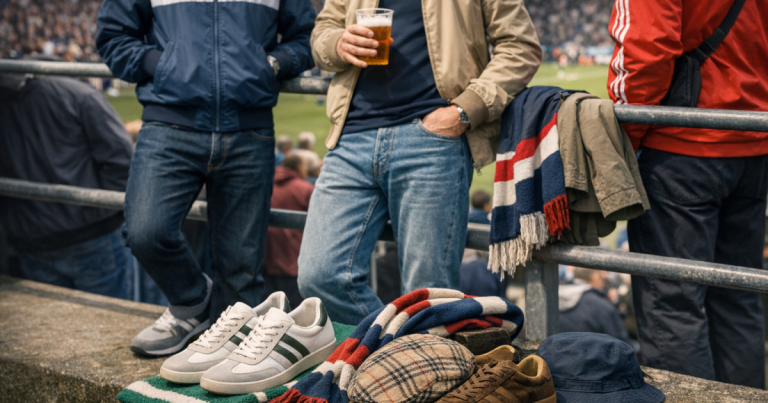
Getting the proportions right is the difference between looking like you know the codes and looking as if you have borrowed a costume. This terrace fit guide is about silhouette first: how the track top sits, where the trouser falls, how layers behave under a jacket, and why matchday practicality still matters when the look is built on nostalgia.
The best terrace outfits rarely look overworked. They usually have one strong sportswear reference, one practical layer, clean trainers and a shape that feels deliberate. That might be a zipped track top under a Harrington, a full tracksuit softened with an overcoat, or a polo and track jacket worn with jeans when a full set feels too much.
In brief
- Start with the jacket or track top: it sets the line of the outfit across the shoulders and chest.
- Keep trousers clean over trainers. Too much pooling ruins the sharpness; too short can make the outfit look cropped rather than casual.
- Use layers for British weather, not just decoration: zip necks, polos, thin knits, shell jackets and wax jackets all change the feel.
- Match the era carefully. A slim 2000s grime-inspired track set asks for a different trainer shape from a looser late 1970s or early 1980s casual look.
- Choose one loud element. If the track top has strong colour blocking, keep the rest quieter.
The silhouette starts at the shoulders
Terrace style has never been one fixed uniform. It has moved between neat Italian sportswear, boxier archive adidas, nylon shells, denim, knitwear, technical outerwear and full tracksuits. The common thread is control: the outfit looks relaxed, but the proportions are not accidental.
A track top should usually sit cleanly across the shoulders without dragging down the arm. Too narrow and it pulls when zipped; too wide and it can look like a borrowed warm-up jacket. Ribbed cuffs help shape the sleeve, so check where the cuff lands when your arms are relaxed. If the sleeve bunches heavily over the hand, the whole outfit can look sloppy, even if the jacket itself is good.
Classic archive-inspired tops such as the Adidas Originals Firebird Track Top work best when the fit is relaxed but not shapeless. Sergio Tacchini and Fila-style track jackets often carry a more leisurewear-led line, so they can look stronger with plain trousers or dark denim rather than always being worn as a full set. If you are drawn to the older adidas shape, the story behind why Beckenbauer tracksuits became terrace icons is useful background because it explains why that neat, athletic profile still reads so clearly in Britain.
Track pants, jeans and the trouser break
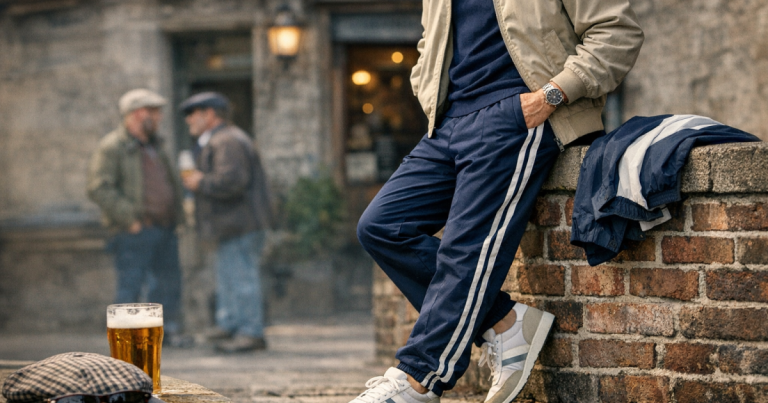
The lower half decides whether the outfit looks terrace, gym, skate or festival. Track pants need enough ease through the leg to move naturally, but the hem is where most outfits succeed or fail. A straight or lightly tapered leg that touches the trainer without swallowing it is the safest place to start.
With terrace trainers, avoid a huge stack of fabric over the tongue unless the whole outfit is deliberately oversized. On the other hand, an exposed ankle can look too styled if the rest of the outfit is built around old-school sportswear. The sweet spot is usually a small break at the front, with the hem sitting cleanly at the back. For a deeper explanation, see our guide to getting the right trouser break for terrace trainers.
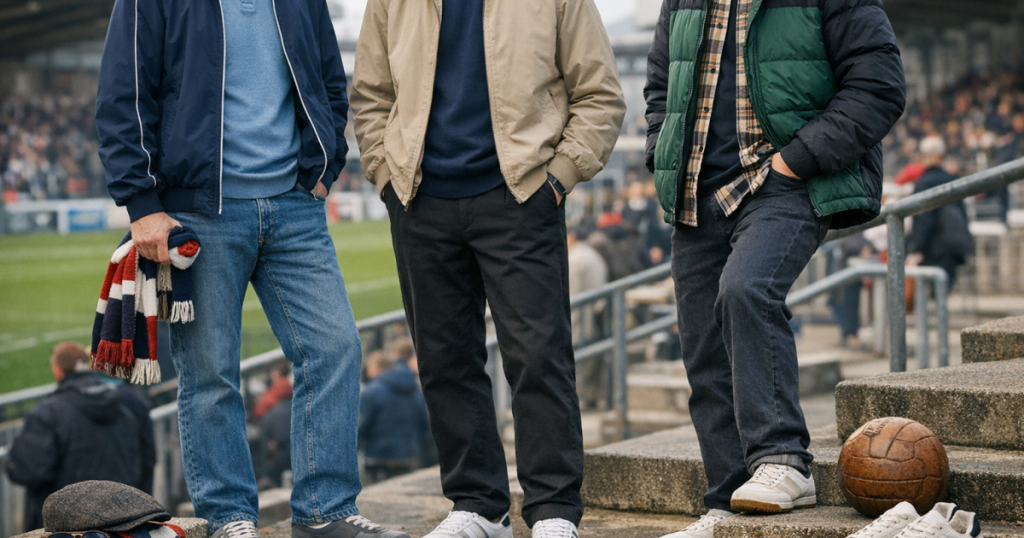
Jeans shift the mood. Dark straight-leg denim under a track top brings the outfit closer to matchday casual than full sportswear. Light wash denim can work, but it is less forgiving with bright track jackets. Black jeans are sharp, though they can flatten a colourful top if the trainers are also dark. If the track jacket is already doing the cultural heavy lifting, the trouser choice should support it rather than compete.
Layering without losing the line
British matchdays make layering more than a style choice. Early kick-offs, cold platforms, wet concourses and standing around before or after the game all affect what actually works. The trick is to add warmth without turning a clean sportswear silhouette into a bulky pile-up.
A polo under a track top is one of the easiest combinations because the collar gives structure without adding much bulk. A thin knit works when the track top has a little room in the body. A hoodie can look right for a 1990s or 2000s-leaning outfit, but it changes the shape quickly: the hood adds volume behind the neck, and the sweatshirt hem can fight with the ribbed hem of the track jacket.
Outerwear should match the mood of the outfit. A Harrington keeps things neat and classic. A lightweight shell leans more casual and weather-ready. A wax jacket gives a British countryside-to-terrace crossover, especially with muted tracksuit colours underneath. Longer coats can work over track tops, but the contrast needs intention: if the coat is too formal and the tracksuit too bright, the outfit can look like two separate ideas.
Matchday proportions that actually work
A good matchday fit has to survive movement. You are walking to the ground, sitting on transport, standing in queues, taking a jacket on and off, and dealing with weather. That is why the cleanest looks often use a compact top half and a controlled lower half rather than lots of heavy pieces.
For a track top and jeans, keep the jacket hem around the waistband rather than hanging far below it. For a full tracksuit, make sure the top and bottoms look like they belong together in cut as well as colour. Wearing a very slim top with baggy bottoms, or the reverse, can look unintentionally mismatched unless you are deliberately referencing a specific era.
Trainers should sit in proportion with the leg opening. Low-profile terrace trainers work well with straighter trousers and track pants that fall neatly. Chunkier trainers can take a wider hem, but they can also pull the outfit away from classic terrace codes. If you are building around familiar silhouettes such as Gazelle-style trainers, the shape is as important as the colourway.
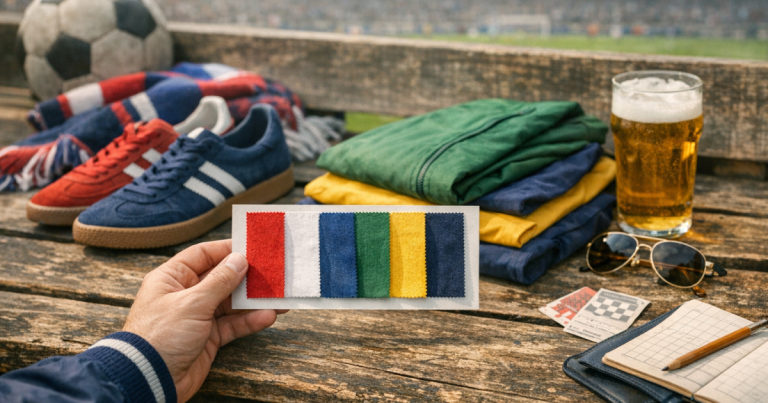
Colour also affects proportion. A bright red or royal blue track top will make the upper body feel visually heavier. Dark trousers and simple trainers can anchor it. A dark tracksuit can look sleek, but it may need a white trainer, scarf or cap to stop the outfit becoming flat.
Era cues without costume dressing
One of the easiest mistakes is to copy an era too literally. A full retro tracksuit, period-correct trainers, vintage scarf and old-school cap can be fun, but it may read like fancy dress away from a themed setting. Modern terrace dressing usually works better when one or two references carry the story.
For a late 1970s or early 1980s feel, think neat track tops, clean trainers, straight jeans and restrained colour. For a Britpop-leaning shape, allow a slightly looser jacket, denim, polos and parkas. For a 2000s influence, slimmer tracksuits, darker palettes, caps and sharper trainer choices make more sense. None of these are rigid rules, but they stop the outfit becoming a jumble of references.
The cultural side matters because clothes carried meaning on the terraces, in town centres and across music scenes. If you want the deeper language behind brands, fit and matchday identity, our piece on terrace tracksuit codes gives the context behind why certain shapes still feel loaded.
Useful pieces to build around
You do not need a huge wardrobe to get the proportions right. A small set of reliable pieces will cover most outfits without pushing you into over-styled territory.
- A track top with structure: something with a defined collar, ribbed cuffs and a hem that sits cleanly at the waist. The Sergio Tacchini Damarindo Track Top is a recognisable reference point for that leisure-sport crossover.
- A darker full tracksuit: navy, black, forest green or burgundy is easier to wear than a very bright set, especially if you are not going full vintage.
- Straight-leg denim: dark or mid-wash jeans let a bold top take focus without losing the casual shape.
- A classic football-casual trainer: low-profile trainers such as the Adidas Gazelle Indoor suit neat trouser breaks and archive-inspired track jackets.
- A practical outer layer: a Harrington, shell jacket or wax jacket gives weather cover without fighting the sportswear underneath.
When buying vintage, check labels, zips, stitching, fabric condition and whether the elastic still has life in it. With reissues, check the current size chart, return policy and whether the cut is genuinely archive-inspired or simply using retro colours. A good fit matters more than chasing the rarest badge.
Common proportion mistakes
- Too many logos: one strong brand mark is enough. Multiple large logos can make the outfit look less considered.
- Heavy top, tiny trainer: a bulky jacket and very slim shoe can throw the balance off. Either reduce the outerwear or choose a trainer with a bit more presence.
- Untamed hems: if the trouser fabric collapses over the trainer, the whole look loses its line.
- Era clash: a 2000s slim tracksuit with a 1980s-style chunky overcoat can work, but only if colour and proportion are controlled.
- Ignoring the weather: a perfect indoor outfit can fail quickly on a wet February away day. Build in a layer you can actually wear.
Things readers ask
Should a terrace track top be fitted or loose?
It should be relaxed enough to zip comfortably over a polo or thin knit, but not so loose that the shoulder seam drops far down the arm. Neat rather than tight is the safest rule.
Can you wear a full tracksuit without looking like you are going to training?
Yes, but keep the trainers clean, avoid overly technical gym pieces, and choose a set with a heritage shape or colour. A proper coat or scarf can also move it away from sportswear-only territory.
What trainers work best with track pants?
Low-profile terrace trainers usually work best with straight or lightly tapered track pants. The hem should meet the shoe cleanly rather than bunch heavily over the laces.
Are bright track jackets harder to style?
They are less forgiving, but not difficult. Keep trousers dark, trainers simple and accessories minimal so the jacket remains the main feature.
Is vintage always better than a modern reissue?
No. Vintage can have better character and era detail, but reissues are often easier for sizing, returns and regular wear. Check condition, fabric feel and fit before deciding.
Main lessons
Terrace style works best when the shape is controlled and the references feel lived-in. Start with the shoulder line, manage the trouser break, layer for real British weather and avoid cramming every subcultural cue into one outfit. The strongest matchday proportions usually look simple at first glance, then reveal the detail: the right collar, the right hem, the right trainer and just enough nostalgia to make the outfit mean something.