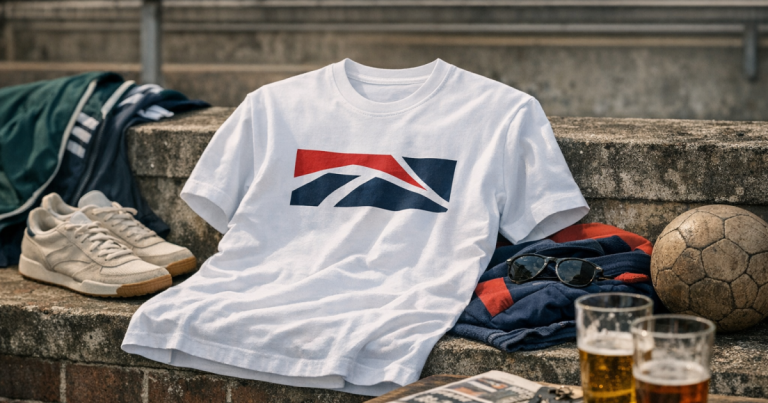

Some films about football culture date because they chase the noise. The Firm BBC film review is different because Alan Clarke’s drama still feels uneasy, stripped back and suspicious of easy myth-making. For anyone interested in terrace style, retro tracksuits and the way casual culture has been flattened into fancy dress, it remains a difficult but useful watch.
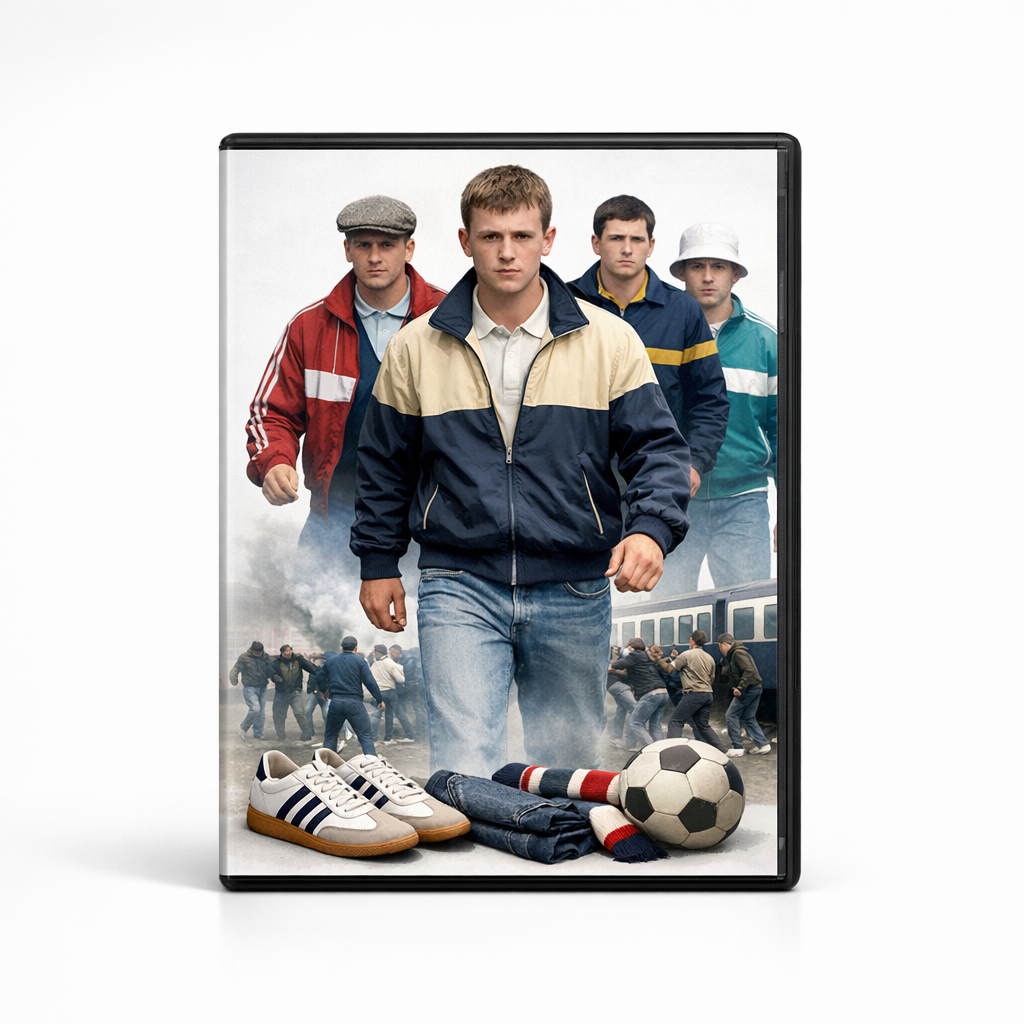
The Firm — BBC — film — Documentaries and films connected to football casual and sportswear culture
A sharp, culturally important watch for anyone separating terrace influence from empty costume nostalgia
The short version: this is not a shopping-list film, and it should not be treated like one. Its value is in atmosphere, social detail, performance and warning signs. The clothes matter, but the film is sharper when it shows how status, masculinity and group identity become part of the uniform.
If you are looking for a physical copy or a legal viewing option, search carefully for The Firm BBC film and check the listing details before buying. The title is easily confused with other unrelated films, so verify the BBC version, cast, format, region compatibility and condition.
Product overview
The Firm is a British television drama produced by the BBC and directed by Alan Clarke, with Gary Oldman in the central role as Clive “Bex” Bissell. It is a fictional drama, not a documentary, but it has become one of the most commonly referenced screen works around football firms, late twentieth-century casual culture and the darker edge of British terrace mythology.
For a site audience interested in retro sportswear, its relevance is not just “what jacket is that?” or “what trainers are on screen?” The bigger pull is how the film frames clothes as social signalling. Track tops, sportswear, knitwear and smart-casual layers are part of a code, but Clarke refuses to romanticise that code. The result is far more useful than a glossy nostalgia piece: it helps you separate terrace influence from costume.
That distinction matters if you wear archive-inspired sportswear today. A modern adidas Originals track top or Sergio Tacchini piece can nod to a culture without copying its worst theatre. For a deeper style-specific follow-up, the site’s separate piece on why The Firm still influences terrace style wardrobes looks more directly at the clothing language and its afterlife.
Key specs
- Reviewed product: The Firm BBC film.
- Product type: British television drama film.
- Producer/broadcaster: BBC.
- Director: Alan Clarke.
- Lead performance: Gary Oldman as Bex Bissell.
- Core subject: Football firm culture, status, violence, group identity and class-coded masculinity.
- Best format to verify before buying: DVD, streaming rental, digital purchase or broadcaster availability, depending on what is currently offered in the UK.
- Important buying check: Confirm it is the BBC Alan Clarke version, not the later remake or an unrelated film with the same title.
- Style relevance: Strong cultural reference point, but not a simple outfit guide.
Pros and cons
Pros
- Still culturally sharp: The film understands that the “firm” is not just about matchday violence; it is about status, belonging and performance.
- Gary Oldman’s performance carries real menace: Bex is charismatic, petty, insecure and frightening without becoming a cartoon villain.
- Useful for terrace-style context: It shows how sportswear and smart-casual codes operate socially, not just visually.
- No glamour varnish: Alan Clarke’s direction keeps the drama blunt, awkward and claustrophobic.
- Good reference point for modern styling restraint: It reminds you why copying a period look too literally can tip into parody.
Cons
- Not an easy comfort watch: The tone is abrasive, and the subject matter is deliberately unpleasant.
- Limited as a pure fashion reference: If you only want clean shots of jackets and trainers, you may find it too dramatic and morally loaded.
- Availability can be awkward: UK viewing and physical formats can vary, so buyers need to check current legal options rather than assume it is easy to stream.
- The title causes confusion: Several other productions share the name, which makes careless buying risky.
- Its influence is often misunderstood: Some viewers treat it as terrace glamour when the film is clearly more critical than celebratory.
Performance in real use
As a viewing experience, The Firm works because it is lean, confrontational and uncomfortable. Clarke’s style does not linger in the way a modern prestige drama might. Scenes feel clipped, conversations turn sharp quickly, and Bex’s domestic life is not presented as a soft counterbalance so much as another place where control and image matter.
For terrace-style readers, the film’s most useful quality is its refusal to isolate clothing from behaviour. A track top is never just a track top in this world. It sits alongside posture, language, group loyalty, aggression and social aspiration. That makes the film a better cultural reference than many more visually generous productions, because it shows why the look carried weight rather than simply presenting the look as cool.
That said, it is not a catalogue of wearable ideas. You will not come away with a neat modern outfit formula in the way you might from studying current archive-inspired pieces such as the adidas Originals Firebird line or a Sergio Tacchini track top. Instead, you get the background pressure behind the aesthetic: why certain sportswear felt loaded, why labels became shorthand, and why understatement often beats dressing like you have raided a prop department.
The film also performs well as a corrective to lazy football-casual nostalgia. British casual culture is regularly softened into trainers, track jackets, away-day photographs and pub stories. The Firm keeps the edge visible. That does not mean every terrace-inspired wardrobe has to carry that baggage, but it does mean a thoughtful wearer should understand where some of the signals came from.
Its weakness, from a practical review perspective, is discoverability. Because the title is common, you need to inspect product pages and listings properly. Look for the BBC connection, Alan Clarke’s name, Gary Oldman’s role, format details, region compatibility for discs, subtitles if you need them, and seller condition notes. Do not rely on cover art alone, and do not assume every listing uses the same cut, packaging or release details.
In terms of rewatch value, it depends what you want from it. As drama, it remains bracing. As sportswear inspiration, it is best used sparingly. Watch it to understand mood, social coding and why the look became mythic; then build your own wardrobe with modern restraint, better fit and less theatrical aggression.
Who it’s best for / who should skip it
Best for: viewers who want a serious screen reference for British football-casual culture, not a soft-focus nostalgia reel. It suits readers interested in why terrace clothing became symbolic, why certain sportswear brands gained status, and how film helped freeze parts of that image in the public imagination.
It is also worthwhile if you are building a modern retro sportswear wardrobe and want to avoid looking like you are wearing a costume. The film gives you enough context to see why one good track top, a clean pair of trainers and a restrained colour palette usually land better than a head-to-toe re-enactment.
Skip it if: you want an upbeat style documentary, a trainer-spotting feature, or a clean buying guide to specific jackets and bottoms. The Firm is dramatic, tense and morally uncomfortable. It is not there to flatter the subculture or make every item on screen look desirable.
You may also want to skip a physical purchase unless you are confident about the edition. With older BBC material, listings can vary, and the name overlap makes misbuying easy. Check the title, cast, director, region and seller photos before committing.
Alternatives
If you want another fictional angle on British football identity, I.D. is a logical next watch. It leans into undercover policing and group psychology rather than terrace style as such, but it belongs in the same wider conversation about belonging, performance and violence around football culture.
Awaydays offers a different route, with a stronger visual emphasis on clothes, music and youth identity. It is more stylised, and that makes it useful for mood, but also easier to misread as a lookbook. The Firm is harsher and less seductive; Awaydays is more visually approachable but needs the same critical eye.
If you would rather turn screen influence into wearable decisions, combine films with written sources and archive photography. The guide on how to read sportswear history books for terrace outfit ideas is a good next step because it helps translate culture into outfits without copying a scene too literally.
Questions people ask
Is The Firm a documentary?
No. It is a fictional BBC television drama directed by Alan Clarke. Its value for terrace culture comes from its social observation and lasting influence, not documentary footage.
Is it mainly worth watching for the clothes?
Not mainly. The clothing is important, but the film is stronger as context for status, identity and how sportswear became part of a wider code.
Which version should I look for?
Look for the BBC Alan Clarke version starring Gary Oldman. Check listings carefully because the title is shared by unrelated films and a later remake.
Does it glamorise football violence?
The film is often quoted by style and football-culture fans, but its tone is critical and uncomfortable rather than celebratory.
Can it help with modern terrace styling?
Yes, but indirectly. Use it for cultural understanding and restraint, then choose modern pieces for fit, condition and wearability.
Verdict + score
The Firm remains one of the most important British screen references for anyone trying to understand football-casual culture beyond the surface of track tops, trainers and hard-man mythology. It is not cosy, and it is not a fashion manual, but that is exactly why it still works. As a cultural reference point for terrace style, it is sharp, troubling and unusually resistant to empty nostalgia. Score: 8.8 out of 10.
Final thoughts
Overall, The Firm BBC film earns a score of 8.8/10. It is a strong option for readers who want the benefits discussed above, while still being worth comparing against the alternatives before buying.
The Firm — BBC — film — Documentaries and films connected to football casual and sportswear culture
A sharp, culturally important watch for anyone separating terrace influence from empty costume nostalgia
You might also like: Sergio Tacchini Damarindo Track Top review: terrace heritage without the costume feel.