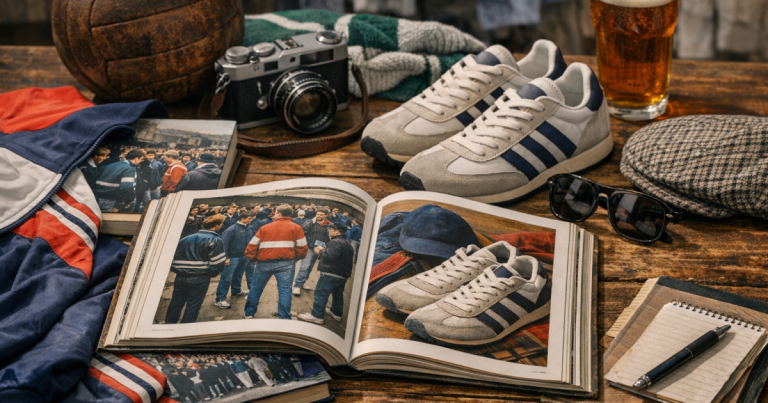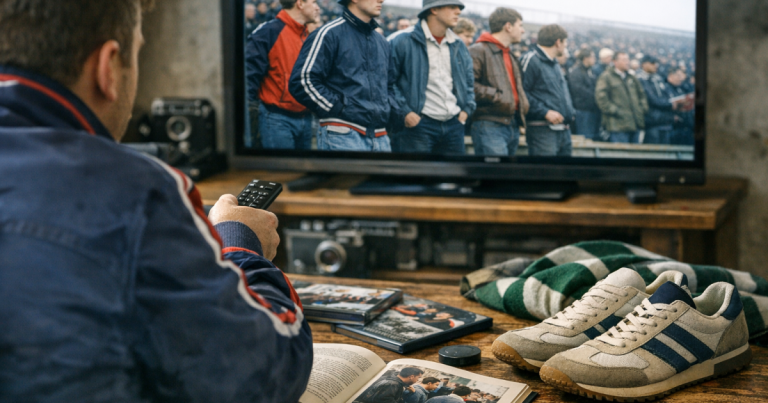
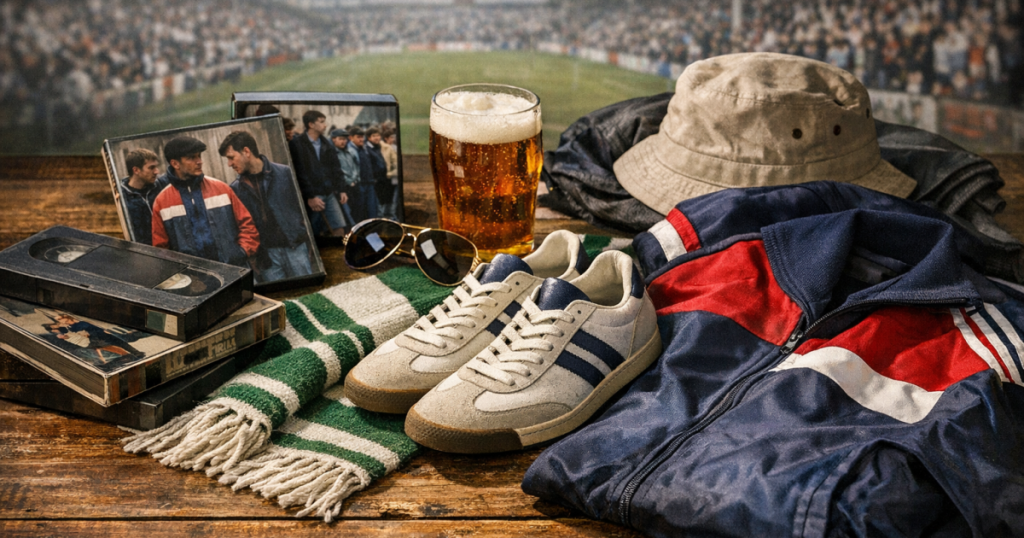
The lasting pull of The Firm terrace style is not really about copying a film costume. It is about how Alan Clarke’s sharp, uncomfortable drama fixed a particular image of football-casual dress in British memory: clean sportswear, status labels, neat hair, and a look that could be read before a word was spoken. For modern wardrobes, its value is less imitation than understanding — what to borrow, what to leave alone, and how to keep the references wearable.
The film is fiction, not a documentary, and its violence should not be romanticised. Its clothing still matters because it shows how dress, class, masculinity, football allegiance and social signalling became tangled together in British casual culture.
The short version
-
The Firm remains influential because it made casual clothing feel coded. A track top, polo, clean trainer or sharp jacket was never just clothing in that world; it showed belonging, confidence and status.
-
The look is memorable because it is controlled rather than loud. Neat fits, recognisable sportswear, tidy layering and deliberate trainer choices still translate better than fancy-dress imitation.
-
The useful lesson is restraint. One strong terrace cue is usually enough: a navy track jacket, a heritage trainer, a knitted polo, or a cap worn with purpose.
-
The cultural lesson matters as much as the outfit. The film shows a darker side of football identity, so modern styling should borrow the visual discipline without celebrating the behaviour.
Step 1: Separate the clothes from the conduct
Any useful reading of The Firm has to start here. Gary Oldman’s Bex is charismatic in the way dangerous screen characters often are, but the film is not a style advert. It is tense, bleak and critical. The wardrobe works because it sits inside that tension: ordinary-looking sportswear becomes part of a social uniform.
That distinction matters for terrace style now. The point is not to dress like a hooligan caricature. It is to understand why certain garments still carry a charge in British football culture. A zip track top, a neat polo, a clean pair of trainers and a short jacket can suggest confidence without needing heavy branding or theatrical aggression.
When you use the film as a reference, ask what the clothing is doing in the scene. Is it showing group identity? Is it showing money, taste or nerve? Is it deliberately tidy because the person wearing it wants to appear in control? Those answers are more useful than freezing a single outfit and trying to copy it exactly.
Step 2: Read the silhouette before the labels
The biggest mistake is treating the influence as a brand checklist. The shape comes first. The most enduring terrace wardrobe cues are compact, clean and practical: jackets that sit close to the body, track tops that do not swamp the frame, trousers that break neatly over trainers, and colours that look deliberate rather than chaotic.
This is why a navy track jacket remains such a dependable starting point. It has the right balance of restraint and recognition, especially with a white tee, a plain polo or a fine knit underneath. If you want to build around that centrepiece without slipping into costume, the advice in building a terrace outfit around a navy track jacket is a natural next step.
Think in layers rather than slogans. A film-influenced look might mean a zipped track top under a casual jacket, or a polo under a lightweight shell, or a block-colour sportswear layer with dark denim. The silhouette should look sharp enough for the pub before a match, but not so styled that it feels like a drama-school reconstruction.
Step 3: Understand why status labels had power
One reason The Firm still sticks is that it shows how quickly clothing becomes social language. In casual culture, a label could signal taste, access and nerve. The point was not always giant logos; often it was the right garment in the right context, worn by someone who knew exactly why it mattered.
That is still relevant today, even if the stakes are different. Modern retro wardrobes often mix archive-inspired sportswear with contemporary fits, because full vintage accuracy is not always practical. Original pieces can be fragile, expensive or awkward to wear daily. Reissues and heritage lines can be more comfortable and easier to maintain, provided they keep the right proportions.
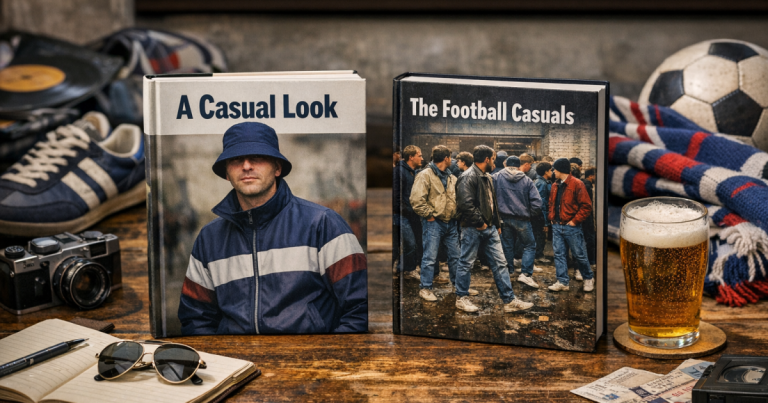
For a deeper visual and historical grounding, it is worth looking beyond the film itself. Photo books and casual histories help separate lived style from screen mythology, and the comparison between A Casual Look and The Football Casuals is useful if you want to know where to start. The film gives you drama; the books give you texture, faces, streets and the messier detail around the clothes.
Step 4: Bring the influence into a wearable outfit
The most practical way to use The Firm as a wardrobe reference is to reduce it to cues, not costumes. Pick one dominant idea and let the rest of the outfit support it.
-
The controlled track top: Choose a heritage-style track jacket in navy, burgundy, bottle green, black or cream. Wear it with a plain tee or polo, not five competing logos.
-
The tidy trainer line: Low-profile terrace trainers keep the outfit grounded. A suede or leather trainer with a clean shape usually reads more authentic than a chunky fashion trainer.
-
The pub-to-ground layer: A lightweight casual jacket over sportswear gives the look a British match-day rhythm without making the tracksuit do all the work.
-
The non-costume trouser choice: Straight denim, dark casual trousers or well-cut track bottoms can work, but the break over the trainer needs attention. Too much stacking makes the outfit look accidental.
-
The restrained colour palette: Two main colours and one accent is usually enough. If the track top has contrast piping, let that be the detail.
Trainer choice is where many outfits either click or drift. If the rest of the outfit is sharp and period-leaning, a slim adidas shape can reinforce the mood without shouting. For a closer look at how two terrace staples behave with retro sportswear, see the breakdown of adidas Samba vs Gazelle with retro tracksuits.
Step 5: Avoid the costume trap
The Firm’s influence is strongest when it is suggested, not performed. If every part of the outfit is trying to announce the same reference, the result can look like a themed night rather than personal style.
Use these checks before heading out:
-
Would the outfit still work without the film reference? If yes, it is probably wearable. If no, remove one obvious cue.
-
Is the fit current enough? A retro mood does not require baggy shoulders, awkward lengths or trousers pooling over trainers.
-
Are the brands fighting each other? Mixing sportswear labels can work, but too many statement pieces weaken the look.
-
Does it suit the setting? A full tracksuit may work for a casual day, but a track top with denim or a polo can be more flexible for pubs, trains and everyday wear.
-
Is the attitude wrong? The clothes should feel confident, not menacing. Modern terrace style is at its best when it carries history without acting it out.
Why the film still feels visually modern
The Firm endures because the clothes are not presented as museum pieces. The characters wear them as everyday kit: practical, recognisable, slightly aspirational and deeply tied to identity. That makes the visual language easier to translate than many more stylised screen wardrobes.
There is also a useful plainness to it. The film does not rely on flamboyant fashion moments. Its style is built from ordinary garments made meaningful by context: jackets, polos, tracksuit tops, trainers, denim, haircuts and posture. That is exactly why it continues to feed modern terrace wardrobes. You can update the fit, soften the edges and still keep the core signal.
For UK readers, there is another layer. The film sits close to the memory of commuter towns, railway platforms, pubs, estates, high streets and football grounds. Even if your own match-day routine is calmer and more considered, those settings still shape how the clothes are read. Terrace style has always been about movement through real places, not just posing for a photograph.
Straight answers
Is The Firm a good starting point for understanding casual style?
It is a useful starting point, but not the whole story. Watch it as a dramatic interpretation of a scene, then balance it with photo-led books, interviews and wider football-casual histories. That stops the film becoming the only reference point.
Should you copy an outfit from the film exactly?
No. Exact copying usually looks too theatrical. Borrow the discipline instead: clean trainers, a sharp jacket, controlled colours and clothing that appears chosen rather than thrown together.
What is the easiest modern cue to use?
A well-fitting track jacket is the simplest. It carries the sportswear heritage without forcing you into a full retro set. Keep the rest plain and let the jacket set the tone.
Does the influence only work for match day?
No. The stronger lesson is how to wear casual sportswear with intent. The same principles can work for a weekend outfit, a gig, the pub or a relaxed day in town, as long as the styling stays restrained.
The big picture
The Firm still influences terrace wardrobes because it captured something deeper than a few recognisable garments. It showed how sportswear could become a social code: neat, aspirational, competitive and loaded with meaning. That code still shapes how people wear track tops, trainers and casual jackets today.
The best modern response is not nostalgia for the film’s violence or a head-to-toe recreation of its wardrobe. It is a more thoughtful version of the same visual grammar: strong layers, tidy proportions, considered trainers and enough restraint to make the reference feel lived-in. Used that way, the influence remains sharp, wearable and unmistakably British.