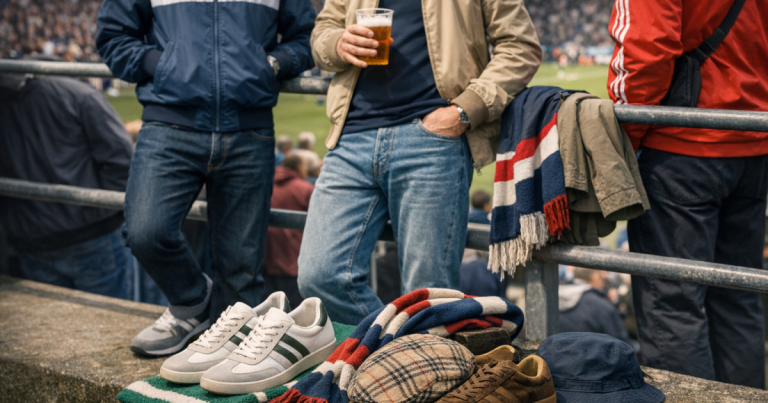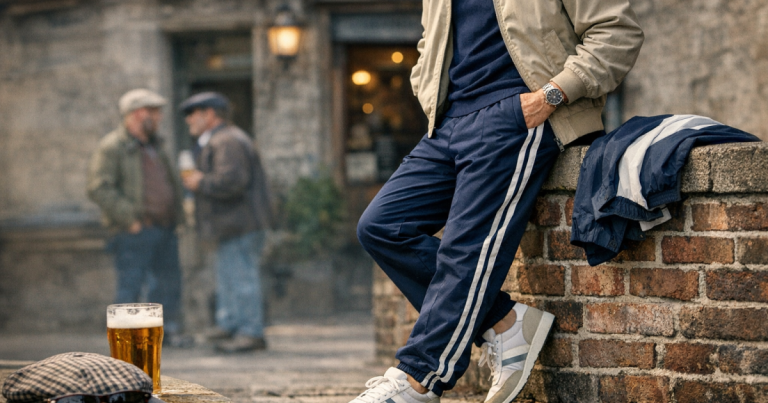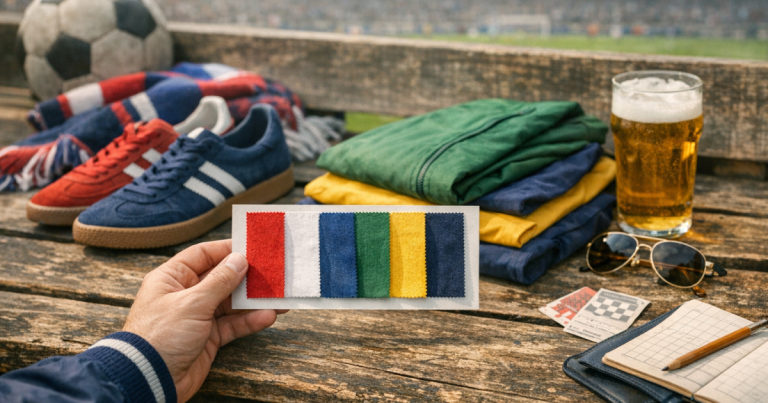
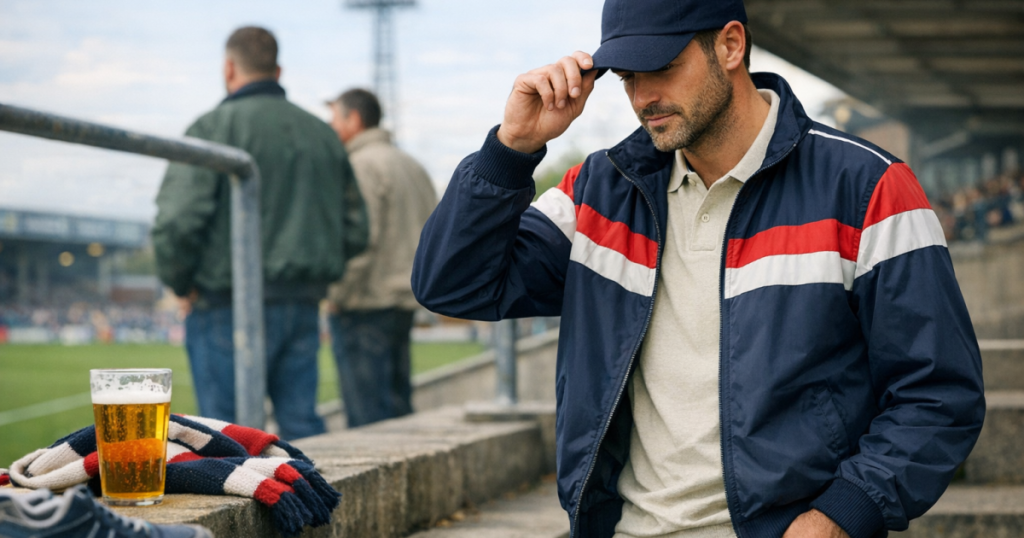
A cap can sharpen a jacket outfit or make it look like sportswear fancy dress. The trick when styling a cap with a terrace jacket is to balance shape, era, colour and attitude, so the headwear supports the jacket rather than shouting over it. Think less matchday mascot, more clean casual detail.
In UK terrace-inspired outfits, the cap is rarely just sun protection. It changes the silhouette, softens or hardens the jacket, and can pull trainers, cuffs and colour accents together.
At a glance
- Match the cap structure to the jacket: sharper jackets take cleaner cap shapes, while relaxed track tops can handle softer caps.
- Keep logos controlled. One obvious badge is usually enough across cap, jacket and trainers.
- Use colour as a link, not a loud clash. Pick up a stripe, zip tape, trainer detail or neutral tone.
- Avoid dressing head-to-toe from one era unless you are deliberately going for a period look.
- Check the full outline in a mirror: peak angle, collar height, jacket length and trouser break all affect the final read.
Step 1: Start with the jacket’s shape
The jacket sets the tone. A glossy track jacket, a lightweight shell, a Harrington-style casual jacket and a heavier coach jacket all ask different things of a cap. Before choosing the cap, look at the collar, shoulders and hem.
A high zipped collar already frames the face, so a tall, boxy cap can make the top half look crowded. In that case, a lower-profile curved peak or a softer six-panel shape usually sits better. A flatter, cleaner jacket with a simple collar can take a more structured cap without looking overbuilt.
Track tops with ribbed cuffs and a fitted waist often work well with caps that have a bit of curve and wear-in. Shell jackets and cagoule-style layers can handle a more technical or structured cap, but only if the rest of the outfit is restrained. If the jacket is loud, the cap should calm it down.
For a deeper read on why collar shape, cuffs and decade-specific cuts change the whole outfit, the guide to jacket shapes by era is a useful next stop.
Step 2: Pick a cap profile that suits the jacket
Cap shape matters more than most people admit. A cap that looks good on its own can still fight the jacket once the collar is up, the zip is half open, or a hood sits behind it.
Curved peak caps
A curved peak is the safest route for most terrace jackets. It keeps the outfit casual, wearable and less self-conscious. It works particularly well with track jackets, overshirts, Harrington-style jackets and light outerwear. The curved shape also sits naturally with trainers and straight-leg trousers.
A cap such as the New Era 9FORTY Cap is a familiar reference point for that structured-but-wearable curved peak look. The key is not the brand alone, but the balance: enough shape to look intentional, not so much height that it dominates the jacket.
Flat peak and snapback shapes
A flatter peak can work, but it changes the attitude. It leans more noughties, streetwear and away-day casual than understated retro sportswear. That can be exactly right with a Kappa-style full zip, a bolder shell jacket or a roomy track top, but it needs control elsewhere.
If you go flatter, avoid piling on too many other statement details. Let the cap be the sharper edge and keep the jacket, tee and trainers simpler. For more on how structured caps behave in this space, the site’s structured cap review covers the snapback shape in a terrace-inspired context.
Unstructured and vintage-feel caps
Unstructured caps feel softer and less styled. They suit faded track tops, worn-in casual jackets and outfits where you want the jacket to look lived in rather than displayed. This is a good route if your terrace jacket has a strong logo or bold colour blocking, because the cap brings the energy down.
The trade-off is that very soft caps can look too outdoorsy or shapeless with a crisp sportswear jacket. If the jacket is clean and graphic, the cap needs enough form to hold its own.
Step 3: Use colour like a terrace regular, not a mannequin
The easiest mistake is matching too literally. A navy jacket with a navy cap can look tidy, but it can also flatten the outfit if every other piece follows the same rule. Terrace style works best when the colours feel connected rather than copied.
Use one of these methods:
- Echo a detail: choose a cap that picks up the jacket stripe, zip pull, embroidered logo or trainer accent.
- Stay neutral: navy, black, stone, charcoal and olive caps are easier to wear with retro sportswear than bright novelty shades.
- Break up a tracksuit: if the jacket and trousers match, a neutral cap can stop the outfit looking too set-like.
- Anchor a bright jacket: with red, royal blue or green jackets, a dark cap often keeps the look grounded.
- Avoid badge overload: if the jacket has a large chest logo, choose a cap with minimal branding or tonal embroidery.
Colour also changes the cultural read. Navy and black feel more matchday practical. Stone and beige can push the look towards casual outerwear. Bright caps can work, but they need confidence and a quieter jacket.
Step 4: Match the era without becoming a costume
Terrace dressing borrows from different periods: late seventies track tops, eighties casual labels, nineties Britpop sportswear and noughties logo-heavy tracksuits. The cap can either reinforce that era or modernise it.
With a retro track jacket, a simple curved cap often keeps things current. With a nineties-style shell jacket, a slightly bolder cap can make sense, especially if the trousers are relaxed and the trainers are chunky. With a clean Harrington or waxed casual jacket, the cap should probably be quieter, because the jacket already brings a traditional British casual feel.
The best approach is to reference one era strongly and let the rest of the outfit breathe. A full vintage-style jacket, period trainers, old-school cap and heavily branded bag can tip into fancy dress. One or two references are usually enough.
Step 5: Check the collar, peak and face line
The most practical test is simple: put the jacket on fully, then adjust the cap. Do not judge the cap with the jacket hanging open if you plan to wear it zipped on a cold platform or outside the ground.
Look for these details:
- Peak angle: a slightly downward peak sharpens the face; too low looks closed off, too high looks careless.
- Collar height: high collars need lower cap crowns to stop the head and neck looking boxed in.
- Hood bulk: if the jacket has a hood, avoid caps that push the hood out awkwardly at the back.
- Hair and side profile: the cap should sit naturally rather than floating above the ears.
- Glasses or sunglasses: keep the peak curve comfortable and avoid crowding the bridge of the nose.
This is where styling becomes practical rather than nostalgic. A cap that works in a product photo may not work once you add a zipped collar, a scarf, drizzle and a train home.
Step 6: Keep the rest of the outfit disciplined
A cap and terrace jacket already create a strong top half. The lower half should support that rather than compete with it. Straight-leg jeans, relaxed track pants, cords or understated cargos can all work, depending on the jacket. Extremely skinny trousers often jar with older sportswear cuts, while very baggy trousers can pull the outfit into a different streetwear lane.
Trainers are the finishing signal. Low-profile suede styles tend to make the outfit feel classic and casual. Chunkier trainers lean more nineties and noughties. White leather trainers can clean up a bolder jacket, while darker footwear keeps the look more grounded for matchday weather.
If the jacket and cap are doing the talking, keep the trainers familiar rather than flashy. If the jacket is plain, trainers can carry a bit more heritage interest. The broader trainer choices for terrace outfits guide explains how footwear shifts the tone of the whole fit.
Step 7: Avoid the common mistakes
Most failed cap-and-jacket outfits are not wrong because of one item. They fail because every item is trying to be the main character.
- Too many logos: cap, jacket, tee and trainers all competing makes the outfit look assembled rather than worn.
- Over-matching colours: exact colour matching can feel more like a uniform than casual style.
- Wrong cap scale: a huge crown with a slim jacket looks top-heavy; a tiny soft cap with a bulky shell can disappear.
- Ignoring weather: in GB, drizzle, wind and low winter light matter. A cap that keeps its shape and sits securely is more useful than one that only works indoors.
- Forcing heritage: terrace influence works best when it feels lived in, not explained by every garment at once.
Common questions
Should the cap match the terrace jacket exactly?
Not usually. Exact matching can work with neutrals, but it often looks too deliberate. Echoing a stripe, logo colour or trainer detail tends to feel more natural.
Can you wear a flat peak with a retro track jacket?
Yes, but it gives the outfit a sharper noughties or streetwear edge. Keep the rest of the look simpler so the cap does not clash with the jacket’s branding or colour blocking.
What cap colour works with most terrace jackets?
Navy, black, charcoal, stone and olive are the easiest colours to rotate. They work with common jacket shades and do not pull too much attention from the rest of the outfit.
Is a cap too casual for a smarter terrace-inspired jacket?
Not if the cap is clean and low-profile. With a Harrington-style jacket or smart casual outerwear, choose minimal branding, a controlled shape and a colour that sits quietly with the jacket.
Should the cap logo match the jacket brand?
It does not have to. In fact, mixed brands often look more authentic. The important thing is scale: avoid several large logos fighting across the outfit.
What stands out
The strongest cap and terrace jacket combinations look considered without looking staged. Start with the jacket’s shape, choose a cap profile that respects the collar and shoulders, then use colour to connect rather than copy. Keep logos controlled, trainers compatible and the overall outline relaxed.
That is the difference between wearing terrace influence well and looking like you are dressed for a themed night. The cap should finish the outfit, not explain it.