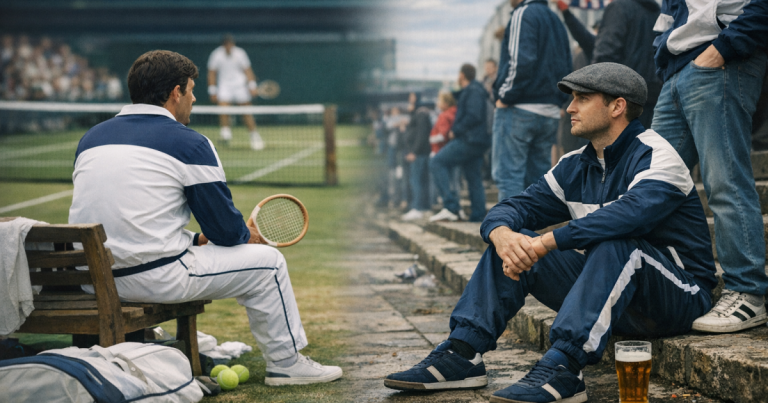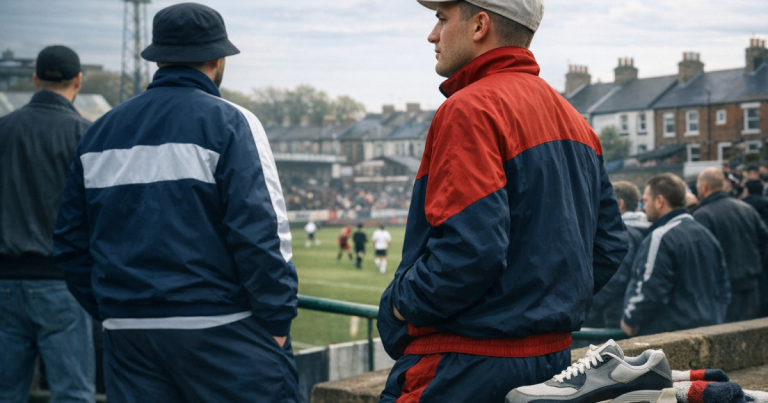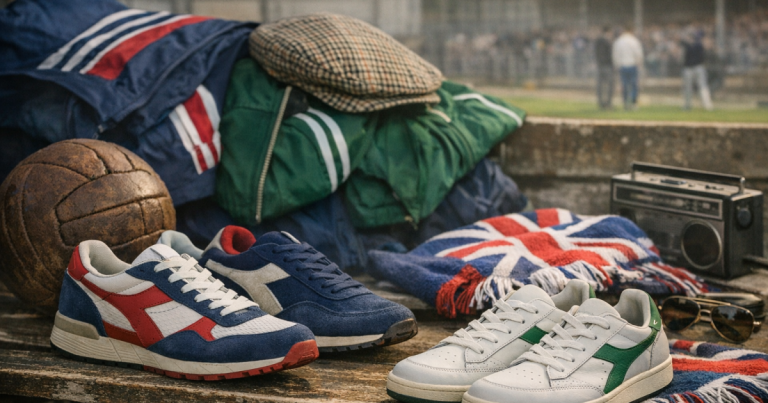
British retro tracksuit culture was never built by one label, one club, or one neat timeline. It came from a mix of football travel, Italian sportswear, German training kit, tennis style, running shoes, high-street availability, music scenes and the constant terrace instinct to spot something before everyone else did.
The important point is not simply which brands were popular. It is why certain names carried weight. A badge mattered, but so did cut, colour blocking, fabric shine, rarity, country of origin and whether the garment looked sharp under a jacket on a wet Saturday in Britain.
The big picture
The brands that defined the look fall into a few clear groups. adidas gave the scene its football and training language. Fila, Sergio Tacchini and Ellesse brought tennis and Italian leisurewear glamour. Diadora and Kappa added continental football credibility. Nike and PUMA complicated the picture through running, basketball, suede trainers and later streetwear crossovers. Lacoste and Fred Perry were not tracksuit-first brands, but their polos and knitwear helped finish the uniform.
For a wider grounding in the scene itself, our explainer on terrace style and tracksuit culture is the best next step. Here, the focus is specifically on the labels: what they contributed historically, what still feels wearable in 2026, and what to check before buying vintage or reissued pieces.
adidas: the backbone of the British terrace wardrobe
If one brand sits at the centre of the British casual imagination, it is adidas. The appeal was not just the three stripes. It was the way the brand moved naturally between football boots, training tops, track jackets and low-profile trainers. adidas could look athletic, continental and street-ready without feeling overdesigned.
On the tracksuit side, adidas gave British dressers a recognisable template: ribbed cuffs, contrast stripes, trefoil branding, clean colour blocking and a fit that could work with denim, cords, track pants or a smart casual jacket. Modern archive-led pieces such as the adidas Originals Firebird Track Top are useful reference points because they show how a familiar silhouette can still work without needing a full costume look.
The brand’s trainer archive also helped anchor the outfit. Gazelle, Samba, Spezial and other terrace-friendly silhouettes built a bridge between sport and everyday wear. For readers putting outfits together now, the lesson is simple: adidas works best when the proportions are calm. Let the stripes do the work rather than stacking too many loud heritage cues at once.
Fila: tennis prestige turned terrace status
Fila’s British appeal came from contrast. It was not born as a football terrace brand, yet its tennis heritage translated perfectly into a culture that valued clean lines, bold panels and expensive-looking sportswear. The Björn Borg association, the Italian styling and the crisp red, navy and white palette made Fila feel more refined than ordinary training kit.
Track tops and Settanta-style jackets became part of the casual language because they looked dressed rather than scruffy. A Fila top could sit under a coat, above straight-leg denim, or with matching track bottoms for a more period-correct look. The Fila Settanta Track Jacket remains a recognisable example of why the brand still resonates: it is sporty, but it has enough structure and colour discipline to feel intentional.
When buying Fila today, pay attention to the panel layout and collar shape. The magic is often in the restraint. Oversized logos, overly glossy fabrics or exaggerated modern cuts can push the look away from terrace heritage and towards fancy dress.
Sergio Tacchini: Italian confidence without shouting
Sergio Tacchini occupies a slightly different place in the story. Like Fila, it carried tennis prestige, but its terrace appeal leaned into clean colour blocking, stand collars, zip track tops and a particular sort of Italian ease. It looked sharp without needing to be formal.
The brand became attractive to British casuals because it suggested travel, taste and selectiveness. A Tacchini top was not just sportswear; it hinted at knowing where to look. That still matters when styling it now. The strongest outfits keep the rest of the look grounded: simple trainers, neat trousers, a plain T-shirt and minimal accessories.
Current archive-inspired Tacchini pieces are worth comparing by fabric weight, cuff tension and zip quality rather than badge alone. If the cut balloons at the waist or the sleeve length overwhelms the hand, the old-school elegance gets lost quickly.
Ellesse: ski slopes, tennis courts and British terraces
Ellesse is one of the great examples of a brand being reinterpreted by British subculture. Its roots in Italian skiwear and tennis gave it a different texture from standard football kit. The semi-palla logo, bright colour panels and relaxed leisurewear energy helped it stand out in pubs, stations and away-day crowds.
Its British terrace presence came partly from the way it balanced sport and display. Ellesse was never invisible. The best pieces used colour confidently, but the shape remained wearable: zip necks, track jackets, shell tops and warm-up pieces that could be layered under a cagoule or coat.
For more depth on that journey, the brand’s move from alpine performance to UK casualwear is covered in our piece on how Ellesse moved from Italian skiwear to British terraces. When shopping now, look for pieces that keep that balance: bold enough to feel like Ellesse, but not so loud that they dominate the whole outfit.
Diadora: the connoisseur’s sportswear label
Diadora’s place in British casual culture is subtler than adidas or Fila, but that is part of the point. The Italian brand’s football, tennis and running heritage appealed to people who wanted something recognisable to those in the know, not necessarily to everyone on the high street.
Its trainers are often discussed first, but Diadora’s tracksuit and training-wear history deserves attention too. The brand’s appeal lies in slightly off-mainstream colourways, continental associations and a less obvious badge hierarchy. On the terraces, that could be powerful: wearing Diadora suggested you were not just following the most visible crowd.
There is more to the label than its most famous trainer, and our article on Diadora’s wider British casuals legacy digs into that broader influence. In practical terms, Diadora works well when you want a softer, more collector-led take on the retro tracksuit look.
Kappa: football energy and the bold side of retro
Kappa brought a different kind of attitude. Where Tacchini could feel polished and Fila refined, Kappa often felt more direct: football-facing, graphic and unapologetically sporty. The Omini logo tape became instantly recognisable, especially on track pants and jackets.
In the British context, Kappa is tied strongly to football culture and the later overlap between terrace wear, clubbing and streetwear. It can look brilliant when styled with restraint, but it is also one of the easier brands to overdo. Full logo-tape sets make a strong statement; they need clean trainers and little else.
For modern wear, the best Kappa pieces are usually the ones that keep the silhouette relaxed without becoming sloppy. Check whether the leg shape suits your footwear. A narrow trainer can disappear under a wide hem, while a chunkier retro runner can make the outfit feel more balanced.
Nike and PUMA: not the original centre, but impossible to ignore
Nike’s role in British retro tracksuit culture is more complicated than adidas. It became deeply important through running shoes, Air Max lines, football training kit and later streetwear, but it does not occupy the same early terrace mythology in every region or generation. That said, by the time tracksuit culture had absorbed rave, hip-hop and broader street style, Nike was everywhere.
PUMA also deserves a serious mention. The brand’s suede trainers, football heritage and clean casual silhouettes gave it a place in the wardrobe even when the full tracksuit was not the headline. Modern shoes such as the PUMA Palermo show why the brand still works with track tops and retro sportswear: low-profile enough for casual wear, but with enough colour and football-adjacent character to feel connected to the scene.
With both brands, the key is era control. A Nike windrunner, a PUMA suede trainer and an Italian tennis track top can all be excellent pieces, but not every combination tells the same story. Decide whether you want 80s casual, 90s rave-adjacent sportswear, Britpop-era tracksuit ease, or a cleaner modern heritage outfit.
Lacoste and Fred Perry: the finishing layer
Lacoste and Fred Perry did not define the tracksuit in the same way as adidas, Fila or Sergio Tacchini, yet British terrace style would look incomplete without them. Their polos, knitwear and collars helped give sportswear a smarter edge. They allowed a track top to be part of a considered outfit rather than just gym kit.
A twin-tipped polo under a track jacket, or a clean Lacoste polo with track pants and trainers, changes the tone immediately. It adds mod, tennis and casual references without making the outfit too busy. For many UK dressers, that mix is exactly the point: sportswear sharpened by subcultural detail.
What to look for when buying now
The strongest modern pieces are not always the most logo-heavy. Whether you are buying vintage, reissue or current archive-inspired sportswear, focus on the details that made these brands matter in the first place.
- Cut: A track top should sit cleanly at the shoulder and not balloon excessively at the waist. Track pants need enough drape to feel relaxed, but not so much fabric that trainers vanish.
- Fabric: Shiny polyester can be authentic, but poor-quality shine can look cheap. Handle vintage with care and check for pulls, thinning and tired elastic.
- Colour: Navy, burgundy, bottle green, cream, red and royal blue are easier to wear than neon-heavy combinations unless you are deliberately leaning into rave influence.
- Logo scale: Big branding can work, especially with Kappa or Ellesse, but it needs space. Avoid piling logo tape, chest badges, loud caps and graphic tees into one outfit.
- Era consistency: Mixing decades can look modern, but mixing too many references at once usually weakens the outfit.
If you are unsure why two similar track tops feel completely different on body, our guide to fit, fabric and detailing cues explains the small differences that change the whole look.
Where the brands sit today
In 2026, the best approach is not to chase one “correct” brand. The original culture was built on discovery, scarcity and taste. That means a wearable modern version should still feel selective. adidas gives you the safest heritage base. Fila and Sergio Tacchini add tennis-era polish. Ellesse brings bolder colour and Italian leisurewear energy. Diadora gives a quieter collector feel. Kappa brings graphic football confidence. Nike and PUMA help connect the look to running, streetwear and everyday trainers.
For vintage buyers, condition matters as much as the badge. Check zips, cuffs, lining, stains and whether the garment has been stretched or shrunk. For reissues, check whether the piece preserves the right silhouette rather than simply applying an old logo to a modern generic cut. Returns policies are worth reading carefully, especially with full tracksuits where jacket and trouser proportions can differ.
FAQ
Which brand is most important to British terrace tracksuit style?
adidas is the clearest answer because its football, training and trainer heritage runs through so many parts of the scene. Fila, Sergio Tacchini and Ellesse are just as important for the Italian sportswear side.
Are full matching tracksuits essential?
No. A full set can look strong, but many of the best terrace outfits use one statement track top with denim, cords or plain track pants. Separates often feel more wearable day to day.
Is vintage better than a modern reissue?
Vintage can offer better character and rarer details, but condition and fit are unpredictable. Reissues are easier to wear and return, though you should check whether the cut and fabric feel close to the original spirit.
Can Nike be part of British retro tracksuit culture?
Yes, particularly through running shoes, football training gear and later streetwear influence. It is not always the first name in early casual mythology, but it became a major part of the wider look.
What is the easiest brand to start with?
adidas is usually the easiest because the archive language is familiar and versatile. A simple track top, understated trainers and a plain tee give you the look without overcomplicating it.
What to remember
The brands that defined the scene did so because they carried meaning beyond sport. They suggested travel, taste, football knowledge, music culture, regional identity and the pleasure of noticing details before they became obvious. The smartest way to wear them now is not to copy an old photograph exactly, but to understand what each label contributed and choose pieces that still feel sharp on British streets today.