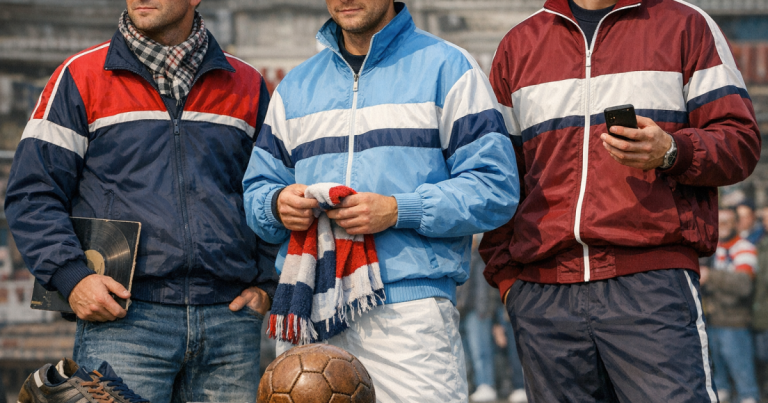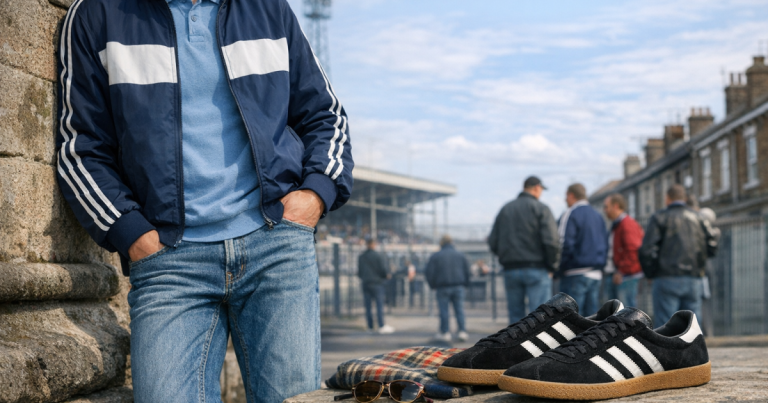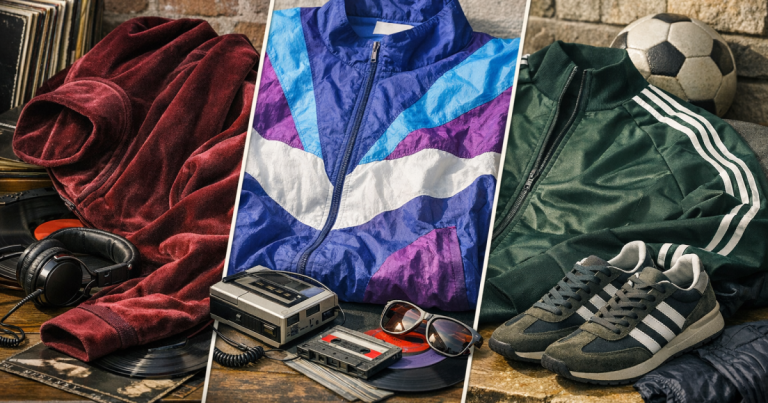
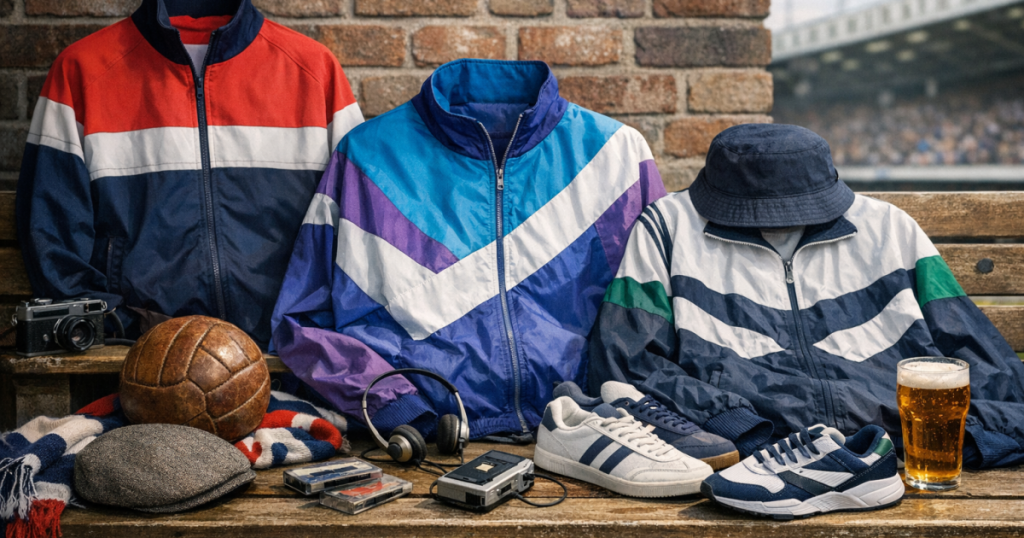
A strong terrace wardrobe is rarely built by copying one decade head to toe. The better move is to find the retro tracksuit era that suits your build, colours, local weather and the way you already dress. A glossy tennis-style top, a roomy shell suit jacket and a neat late-90s track jacket all carry different signals, even before you add trainers, denim or a cap.
The trick is knowing which references feel wearable now, rather than chasing nostalgia for its own sake. UK terrace style has always been about detail: fit, brand language, confidence and restraint.
The big picture
Most retro tracksuit looks that work today fall into a handful of recognisable lanes. Early casuals leaned into imported sportswear, Italian tennis brands and clean status pieces. The late 80s and early 90s brought louder nylon, brighter colour blocking and music-scene overlap. The mid-to-late 90s made things neater again, with football training tops, Britpop layering and trainer culture taking a more everyday shape.
That matters because an era is not just a date range. It is a silhouette, a fabric feel, a colour palette and an attitude. If you normally wear straight-leg jeans, plain tees and classic trainers, you may find a 1980s tennis-influenced track top easier than a full early-90s shell suit. If you already like oversized outerwear, bucket hats and bolder colours, the Madchester lane may feel natural rather than fancy dress.
For a deeper look at how club culture and music shaped that baggier early-90s look, the guide to styling early 90s Madchester tracksuits is a useful next step once you know whether that era actually suits you.
Late 70s to early 80s: tennis luxe and early casual codes
This is the era for readers who like sportswear with polish. Think neat track tops, rich but not shouty colours, polo collars, contrast piping, tennis and continental leisurewear influences. The mood is less “gym kit” and more “smart casual with a sporting alibi”.
It suits a terrace wardrobe built around slim or straight denim, suede trainers, polos, knitted layers and simple outerwear. The silhouette tends to be cleaner than later shell-suit styles, so it works well if you want retro energy without looking oversized or rave-adjacent.
What to wear from this era
- Track tops with stand collars, contrast trims or subtle chest branding.
- Polo shirts under zip tops, especially in navy, cream, burgundy, bottle green or white.
- Suede or leather terrace trainers rather than chunky running silhouettes.
- Lightweight jackets worn open over sportswear rather than full matching sets.
Brands such as Fila, Sergio Tacchini and Ellesse sit comfortably here, especially when the piece feels connected to tennis or leisurewear rather than modern gymwear. A track jacket like the Sergio Tacchini Damarindo Track Top can give you a useful reference point for that clean, continental side of terrace dressing, though colours and cuts vary by season and retailer.
Mid-to-late 80s: football casual confidence
The mid-to-late 80s lane is stronger, sharper and more club-aware. This is where sportswear becomes a visible badge of taste. The look is still wearable, but the confidence level rises: bolder panels, fuller track tops, branded sweatshirts, football away-day energy and trainers chosen with care.
If your wardrobe already includes track jackets, regular-fit jeans, casual trainers and outerwear with a bit of shape, this era may be the easiest step into proper terrace style. It gives you heritage without requiring the full neon, bucket-hat or rave silhouette of the early 90s.
Umbro belongs in this conversation too, particularly for readers who connect terrace clothing to British football kit culture rather than only Italian leisurewear. The piece on Umbro tracksuit history and terrace style explains why the brand’s football roots still matter when people talk about authentic UK sportswear references.
When this era suits you best
- You prefer recognisable sportswear heritage but do not want to look overly themed.
- You like navy, red, royal blue, grey, forest green and white more than pastel or fluorescent tones.
- You wear trainers most days and want the track top to feel like part of the outfit, not a costume.
- You are happy with visible branding, but only when the shape and colour are right.
Early 90s: Madchester, shells and baggier energy
The early 90s version is the loudest and most music-coded of the main terrace tracksuit eras. It picks up Manchester, indie-dance, rave-adjacent outerwear, oversized shells, bright blocks and a looser shape. Done well, it looks relaxed and confident. Done badly, it can look like stag-do fancy dress.
This era suits you if you are comfortable with volume. The jacket should have space; the trousers or jeans underneath should not be spray-on; the trainers can be chunkier or more visible. A cap, bucket hat or casual outer layer can work, but avoid stacking every reference at once unless you genuinely live in that look.
How to keep it modern
- Choose one statement piece: shell jacket, patterned track top or bold colour-blocked upper.
- Balance it with plain trousers, dark denim or understated track pants.
- Keep logos and graphics under control if the colours are already loud.
- Use modern grooming and clean trainers so the look feels intentional rather than archival.
A good early-90s terrace outfit often works because one element is playful and everything else is grounded. If the jacket has teal, purple, yellow or red in it, let that be the headline. Do not add five more colours just because the period allowed it.
Mid-to-late 90s: Britpop, training tops and everyday wearability
The mid-to-late 90s is the era for readers who want retro sportswear that feels easy on a normal Saturday. The silhouette is often less inflated than early-90s shellwear. Football training tops, track jackets, zip-neck tops, nylon layers and casual trainers sit neatly with jeans, cords or relaxed trousers.
This is also a good lane if your references come through music, pubs, matchdays and Britpop rather than archive collector culture. The outfits can be simple: track top, plain tee, denim, trainers, lightweight jacket. The interest comes from proportion and brand memory, not from shouting the whole outfit across the street.
Pieces in the Adidas Originals orbit often make sense here because they are easy to wear without needing the whole outfit to be vintage. For example, the Adidas Originals Firebird Track Top is a familiar modern reference for readers comparing a clean, heritage-style track jacket against louder shell-suit shapes. Check the cut, fabric and colourway rather than assuming every reissue lands the same way.
2000s revival: low-key nostalgia and mixed wardrobes
The 2000s-inspired terrace wardrobe is less about one perfect period and more about mixing sportswear with streetwear, trainers, hoodies, caps and everyday jackets. It is useful if you want retro influence without looking like you are dressed for a specific archive photo.
This lane suits readers who already wear branded tees, casual caps, zip hoodies, track tops and trainers in a mixed way. The risk is blandness: too many black joggers, generic hoodies and shapeless trainers can remove the terrace character completely. To avoid that, keep one recognisable heritage element in the outfit, whether that is a track top, trainer shape, football-coded jacket or colour palette.
A terrace wardrobe in this mode can carry one older influence at a time. A tennis-style track top with modern denim works. A shell jacket with a plain tee works. A football training top under a clean jacket works. What usually fails is trying to make every layer speak a different decade.
Match the era to your actual wardrobe
The easiest way to choose is to start with what you already wear, not what looks best in old photos. A good terrace wardrobe should survive everyday use: train platforms, matchdays, pubs, wet pavements, cool evenings and the casual judgement of mates who notice when something looks forced.
If you mostly wear denim
Go for late-70s to late-80s references first. Tennis-style track tops, modest colour blocking and classic trainers work naturally with straight-leg denim. Avoid overly shiny full-shell sets unless you are deliberately leaning into an early-90s look.
If you like oversized jackets
The early 90s will probably suit you best. Shell jackets, windbreakers and roomier track tops need confidence and space. Keep trousers plainer if the jacket has strong colour blocks.
If you prefer minimal outfits
Choose a mid-to-late 90s or modern revival approach. A single track jacket over a plain tee, worn with clean trainers, gives you enough reference without making the outfit too theatrical.
If you are drawn to football kit heritage
Look at 80s and 90s training wear, British kit brands and track tops linked to club culture. This is where the overlap between football clothing and casual style feels strongest, especially when the outfit is built around real matchday practicality.
Colour, fit and fabric matter more than the date
Two pieces from the same decade can feel completely different. A navy track top with white piping is not the same proposition as a purple and turquoise shell jacket, even if both can sit under the broad retro umbrella. Before committing to an era, look at three things: colour, shape and surface.
- Colour: muted navy, burgundy, cream and green are easier to wear; bright teal, red, yellow and purple are more scene-specific.
- Fit: neat track tops suit denim and polos; oversized shells need relaxed trousers or at least a looser lower half.
- Fabric: cotton-blend and smooth polyester feel cleaner; shiny nylon and crinkly shells feel more early-90s and more obvious.
- Branding: small chest logos are versatile; large sleeve, back or leg branding quickly changes the mood.
Outerwear is often the bridge between archive influence and day-to-day wear. If you are trying to understand how Harringtons, windbreakers and track tops sit together, the guide to terrace style jackets gives useful context without locking you into one decade.
Vintage, reissue or modern inspired?
Original vintage can be brilliant, but it is not automatically better. Older zips, elastic, linings and synthetic fabrics can vary a lot in condition. Reissues and modern archive-inspired pieces are usually easier to size, return and wear regularly, though they may change details from the original patterns.
For many wardrobes, the best route is mixed. One vintage track top can carry the character; newer trainers, a current jacket or fresh basics keep it wearable. If you are buying used, check the cuffs, waistband, zip, lining, bobbling, odour and fabric shine carefully. If you are buying new, look beyond the logo and ask whether the colour and cut genuinely fit the era you want.
Trainer choice also nudges the decade. Slim suede terraces point towards classic casual codes; chunkier runners can push the outfit later; clean court shoes can soften louder track tops. A pair such as the Diadora B. Elite gives a tennis-linked reference point, while adidas terrace staples or PUMA suedes can pull the outfit in a different direction depending on colour and styling.
Common questions
Which era is easiest for beginners?
The mid-to-late 90s is usually the easiest starting point because it works with jeans, plain tees and familiar trainers. It gives a terrace feel without demanding a full vintage wardrobe.
Can I mix eras in one outfit?
Yes, but keep one era dominant. A late-80s track top can work with modern trainers, or an early-90s shell can sit over plain contemporary basics. Avoid mixing too many loud references at once.
Are full tracksuits wearable now?
They can be, but fit and setting matter. A full set looks stronger when the colours are controlled, the trainers are clean and the styling is relaxed. For most people, separating the jacket and trousers is easier.
Which retro tracksuit era suits a low-key wardrobe?
Late-70s tennis style, mid-80s casual references and mid-to-late 90s track tops are safest. They offer heritage shapes and colours without the volume or brightness of early-90s shellwear.
Should I prioritise brand authenticity or wearability?
Wearability comes first. A respected brand in the wrong cut or colour will still sit badly in your wardrobe. Choose the piece that fits your clothes, not just the name on the chest.
Key takeaways
The right era is the one that makes your existing wardrobe sharper, not the one with the loudest nostalgia. Tennis-influenced early casual style is best for cleaner, smarter outfits. The 80s works well if you want confident football-casual energy. Early-90s Madchester and shellwear suit bolder dressers who like volume and colour. Mid-to-late 90s track tops are the easiest everyday option for most modern terrace wardrobes.
If you are unsure, start with one track top rather than a full set. Wear it with the jeans, trainers and jacket you already trust. If it feels natural after a few outings, you have found your lane; if it feels like costume, shift the decade rather than forcing the look.