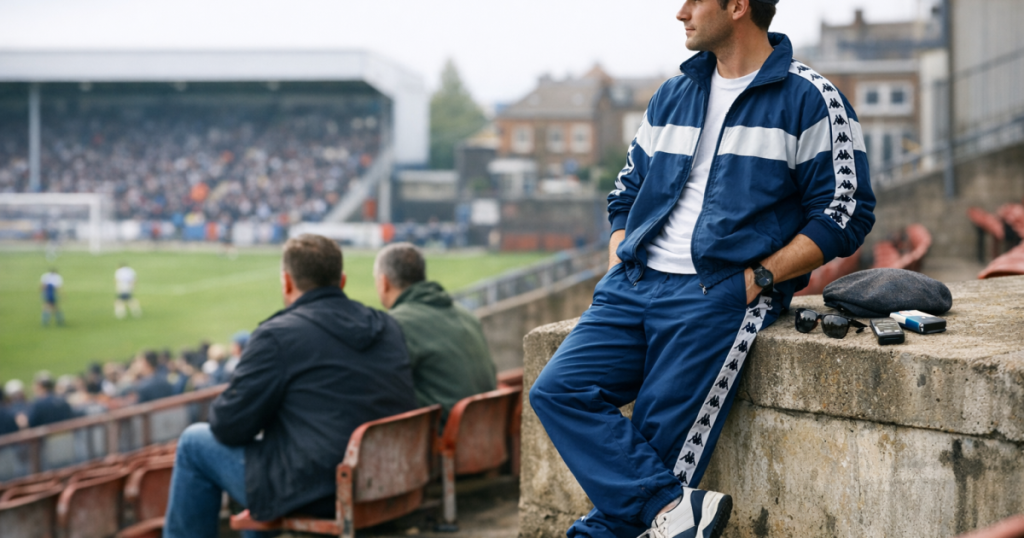
A 2000s Kappa tracksuit can look sharp in terrace style when the fit, colour and footwear feel intentional rather than fancy dress. The trick is to keep the recognisable Kappa energy — side taping, sporty lines, a slightly flash Italian-sportswear attitude — but calm everything around it.
Think less full retro costume, more matchday-ready sportswear with a bit of archive bite. The best version feels wearable in a pub, on the train, outside the ground or at a weekend gig, not like you are dressing for a themed night.
At a glance
- Keep the tracksuit as the main statement; avoid piling on too many loud logos.
- Choose a fit that sits cleanly rather than oversized for the sake of nostalgia.
- Use trainers to define the mood: terrace classic, football-casual, or sportier 2000s revival.
- Be careful with club colours, especially around matchdays and away travel.
- Layer with plain tees, polos, lightweight jackets or caps rather than competing graphics.
Step 1: understand what makes the Kappa look feel 2000s
The 2000s version of Kappa terrace style is not the same as a 1970s tennis-track-top look or an 1980s casuals silhouette. It has a bolder, more visible sportswear feel: taping down the arms and legs, contrast panels, zip-through tops, sometimes a shinier synthetic finish, and a shape that can sit close without being skin-tight.
That matters because the outfit needs the right frame. A 1970s Fila Settanta-type jacket wants a different pace: neater, more retro, more tennis-club-meets-terrace. Kappa from the 2000s can handle a bit more swagger, but it also punishes overstyling. Too many accessories, too many colours and too much logo-on-logo will tip it towards parody.
Once you understand why a 2000s Kappa tracksuit reads the way it does, the rest becomes easier: make the Kappa tape the visual line, keep the base pieces simple, and use your footwear to decide whether the outfit leans football casual, streetwear or full sportswear revival.
Step 2: get the fit right before anything else
Fit is what separates a decent terrace outfit from a lazy throwback. A Kappa set should have movement, but it should not swamp you. The jacket should sit neatly across the shoulders, zip without pulling, and finish around the hip rather than hanging like a parka. Track pants should break cleanly over the trainer rather than puddling heavily at the ankle.
If you are wearing an original 2000s piece, expect variation. Some older tracksuits have a boxier top, a higher rise on the trousers, or elastic that has relaxed over time. Reissues and modern versions may be cut differently, so judge the garment in front of you rather than assuming the label tells the full story.
Quick fit checks
- Jacket length: aim for hip-length or just below; too long can kill the athletic shape.
- Sleeves: the cuff should meet the wrist without covering your hand.
- Trouser line: a clean taper or straight fall usually works better than a baggy stack.
- Waistband: it should hold comfortably without constant adjustment.
- Zip position: half-zipped often looks more relaxed than fully zipped to the neck.
If you want a modern reference point, the Kappa 222 Banda Tracksuit shows how the brand’s repeated Omini taping can carry a whole outfit without needing much else. For more background on why that side-tape language still matters, read our piece on why Kappa’s 222 Banda tracksuits still carry terrace credibility.
Step 3: choose colours with terrace awareness
Kappa tracksuits often work best when the colour story is disciplined. Navy, black, charcoal, bottle green, royal blue and burgundy all sit naturally within terrace dressing. White taping or contrast piping can be enough detail on its own, especially if the full set already has a strong branded line down the body.
Brighter colours can work, but they need more restraint. A red full tracksuit, for example, carries a very different energy from a navy set with red detailing. On a normal weekend it might simply look bold; near a ground, certain colour combinations can be read through a football lens whether you intend that or not.
That does not mean dressing nervously. It means knowing the codes. If you are going to a match, travelling to an away fixture, or wearing colours strongly associated with a club, think about context. Our guide to decoding club colours in terrace tracksuit culture goes deeper into how colour can shift meaning depending on place, fixture and crowd.
Safer colour routes
- Navy tracksuit, white taping: clean, classic and easy to ground with understated trainers.
- Black tracksuit, tonal detailing: more urban, less obviously matchday-coded.
- Blue jacket, neutral trousers: useful if a full set feels too strong.
- Green or burgundy accents: adds period flavour without shouting.
- White T-shirt underneath: breaks up heavy colour and keeps the outfit fresh.
Step 4: decide whether to wear the full set or split it
A full Kappa tracksuit is the most direct version of the look, but it is also the easiest to overcook. It works best when the fit is clean, the trainers are right, and the rest of the outfit is quiet. If the jacket and trousers both carry strong side taping, avoid loud bags, oversized graphic tees and competing branded outerwear.
Splitting the set is often more wearable. The jacket can sit over straight-leg jeans, plain track pants or technical trousers. The bottoms can work with a simple sweatshirt, plain hoodie or fitted tee. This is a good route if you like the 2000s reference but do not want to look like you have stepped out of an old music channel rotation.
For matchday, the full set has impact. For everyday wear, the jacket alone is usually easier. For nights out, a tracksuit top with dark denim and clean trainers can keep the terrace nod without making the whole outfit feel too sporty.
Step 5: use trainers to set the era
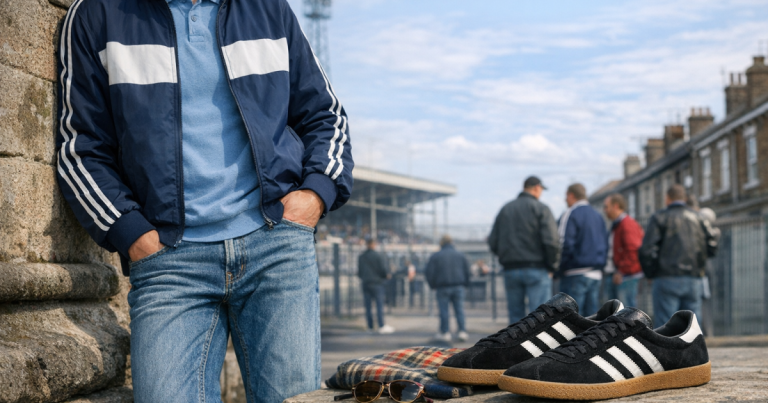
Trainers do a lot of the work. With a Kappa set, the wrong pair can make the outfit feel confused: too modern and it loses the terrace thread; too retro and it can feel staged. The safest route is a low-profile terrace trainer or a clean runner that does not fight the side tape.
For a sharper football-casual angle, look towards suede or leather trainers with a slim profile and gum or neutral sole. For a more 2000s sportswear mood, chunkier runners can work, provided the trousers fall cleanly over them. Avoid box-fresh white trainers if the tracksuit is heavily vintage-worn; the contrast can make the whole outfit look mismatched.
If footwear is the part you are still working out, our terrace style footwear guide breaks down trainer choices by brand, mood and matchday setting.
Trainer checks
- Shape: slim trainers sharpen the look; bulkier trainers make it sportier.
- Colour: pick up one colour from the tracksuit rather than adding a new one.
- Condition: clean but not precious usually feels most authentic.
- Sole: gum, off-white or black soles are easier to style than bright contrast soles.
- Hem interaction: trousers should sit naturally, not catch awkwardly on the tongue.
Step 6: keep the layers plain and useful
The easiest underlayer is a plain white, black or grey T-shirt. It gives the tracksuit space and stops the logos competing. A polo shirt can work if you want a more casuals-informed look, especially under a half-zipped jacket. A hoodie can also sit well under a track top, but keep the hood neat and avoid heavyweight bulk that distorts the jacket.
Outerwear depends on the weather. A lightweight shell or a simple coach jacket can sit over a Kappa top without dragging the outfit too far away from sportswear. A wax jacket creates a more British casuals contrast, but it needs a quieter tracksuit underneath. If both pieces are fighting for attention, remove one.
Caps can finish the look, but they should not feel like a costume prop. A curved-peak cap is usually easier than a very stiff snapback. A New Era 9FORTY Cap is a recognisable example of the kind of simple structured cap that can work with retro sportswear when the colour is restrained.
Step 7: avoid the common mistakes
The biggest mistake is treating the tracksuit as a fancy-dress shortcut. Terrace style has always been about detail: fit, footwear, brand literacy, context and how the clothes sit in real life. Simply wearing a loud Kappa set with random trainers does not automatically make the outfit work.
- Too many logos: Kappa tape is already distinctive, so let it breathe.
- Overly tight styling: close-fitting can work, but strained fabric looks wrong.
- Ignoring colour context: certain combinations carry football associations in the UK.
- Wrong footwear mood: running shoes, terrace trainers and fashion trainers all send different signals.
- Over-polishing the look: terrace outfits should feel lived-in, not showroom-staged.
Step 8: care for the tracksuit so it keeps its shape
Older synthetic sportswear can lose its appeal quickly if it is overheated, roughly washed or stored badly. Always follow the care label on the garment itself, especially with vintage pieces, printed logos, contrast taping and elasticated cuffs. If in doubt, use cooler washes, avoid aggressive tumble drying, and let the fabric dry naturally on a hanger where possible.
A handheld steamer can help relax creases without pressing shiny marks into synthetic fabric. Something like the Tefal Access Steam Easy is the type of garment steamer people use for quick freshening, though you should still test carefully and keep direct heat away from delicate prints, badges or worn taping.
Storage matters too. Do not leave the jacket crushed at the bottom of a gym bag for weeks. Hang it, zip it partly, and keep the trousers folded along their natural line. Small habits make a big difference to whether the set looks intentionally retro or just tired.
Questions people ask
Can you wear a Kappa tracksuit to a football match?
Yes, but be aware of colour, fixture context and how heavily branded the outfit is. A restrained Kappa set with clean trainers is easier to wear than a loud full-colour look that mirrors club colours too closely.
Is a full tracksuit too much for everyday terrace style?
Not necessarily. A full set works when the fit is clean and the rest is simple. If it feels too strong, wear the jacket with jeans or the trousers with a plain sweatshirt.
Should a 2000s Kappa fit be baggy?
It should have movement, but it does not need to be baggy. The strongest terrace version usually sits relaxed through the body, neat at the cuff, and clean over the trainer.
Can you mix Kappa with other sportswear brands?
You can, but keep it controlled. One strong logo story is usually enough. If the Kappa tape is prominent, choose plainer trainers, tees and outerwear.
Are vintage Kappa tracksuits better than reissues?
Vintage pieces can have more period character, while reissues may be easier to wear regularly. Check condition, fit, fabric feel and care labels rather than assuming either is automatically better.
Final thoughts
Wearing a 2000s Kappa tracksuit well is about restraint as much as nostalgia. Let the tape, colour and silhouette do the talking, then use trainers and layers to make the outfit feel current. Get those details right and the result is unmistakably terrace-informed without looking trapped in the past.