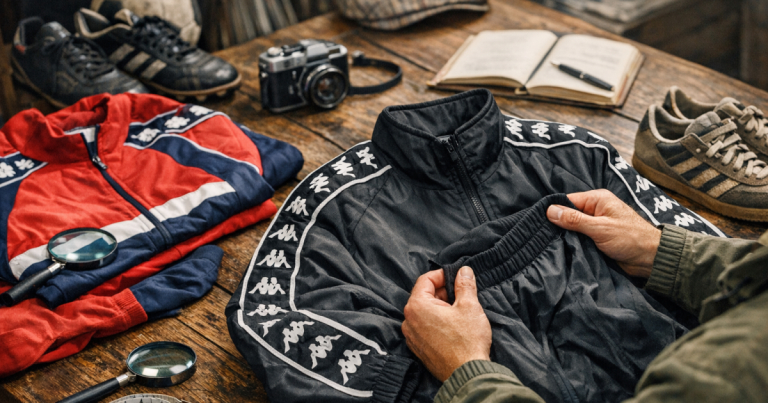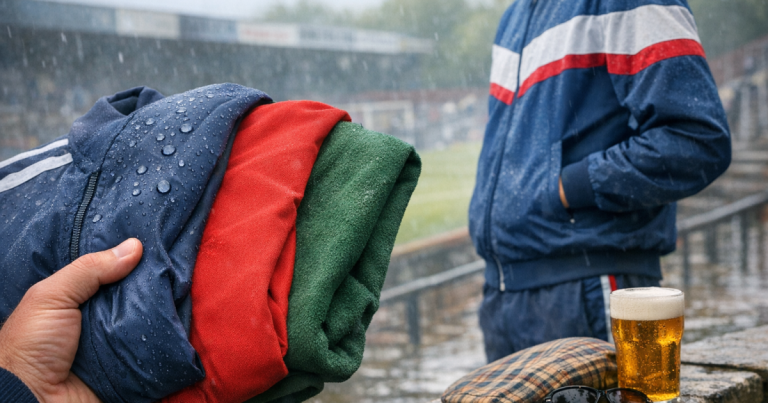
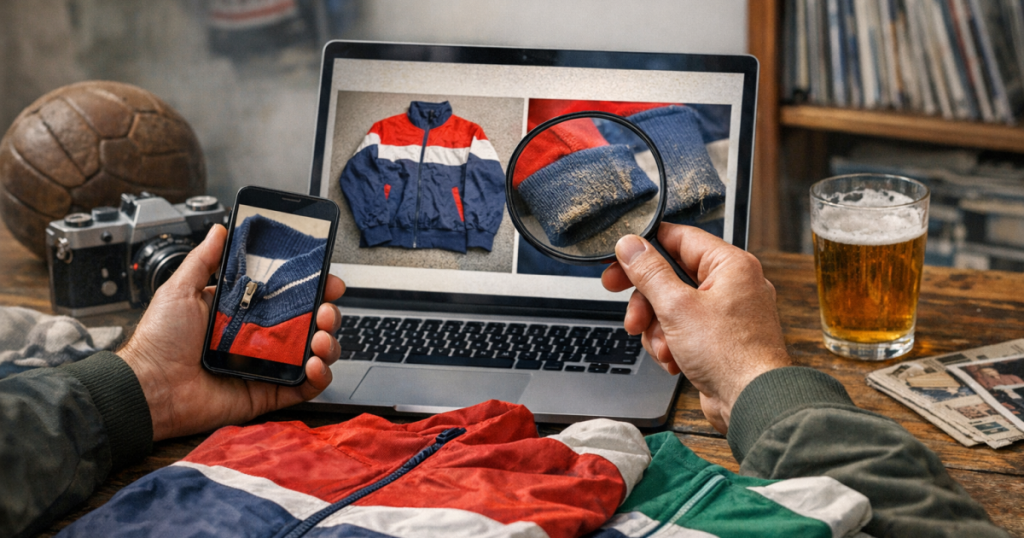
A retro tracksuit can look perfect in a moody listing shot and still arrive with bagged knees, tired ribbing or a zip that has seen better Saturdays. The trick is to check seller photos like you are handling the set in person: shape first, details second, then anything the camera is trying to hide.
The quick read
Good listing photos should answer four things before you even message the seller: does the tracksuit look correctly shaped, is the condition honest, do the labels and details make sense, and can you judge the fit from actual measurements rather than a size tag alone?
- Look for full front and back shots of the jacket and trousers laid flat or hung straight.
- Zoom in on cuffs, waistband, hems, zip, pockets, logos and label stitching.
- Check whether colour, shine and fabric texture look consistent across all photos.
- Be wary of over-filtered, heavily cropped or single-angle listings.
- Ask for extra daylight photos when the listing hides the usual wear points.
Step 1: judge the overall shape before the details
Start with the silhouette. A retro tracksuit is not just a logo and a colourway; the cut is a big part of the appeal. Terrace-friendly sets tend to look best when the jacket hangs cleanly, the shoulders are not badly distorted, and the trousers have not twisted through years of washing and wear.
In the main front photo, look at whether the jacket sits evenly from shoulder to hem. If one side drops lower, it could simply be the way it is hanging, but it can also suggest stretched fabric, a poor repair or an awkward previous wash. On trousers, compare both legs. If one leg spirals or the side stripe wanders, the pair may never sit cleanly on the body.
Do not judge everything from a hanger shot. Hangers can make shoulders look sharper than they are and can hide a sagging waistband. Flat-lay photos are often better for seeing symmetry, while worn photos help you understand drape. Ideally, you want both.
Step 2: inspect cuffs, hem and waistband
Ribbing tells you more about use than almost any other part of a retro track top. Loose cuffs, a wavy hem or a tired waistband can make an otherwise strong piece feel sloppy. Zoom in and look for stretched ribs, fraying, bobbling and areas that no longer spring back.
The jacket hem matters for terrace wear because it controls how the top sits over jeans, track pants or a polo. If the hem has lost tension, the jacket may flare out rather than holding the classic blouson shape. That can still work for a relaxed 90s look, but it is different from the neat, slightly boxy shape many buyers are after.
If the ribbing is the only issue, it might not be a deal-breaker. Some wear is part of the charm. For a repair-minded buyer, our guide to fixing loose ribbing on a retro track jacket explains what is realistic before you take a punt on a tired cuff.
Step 3: zoom in on labels, logos and zip pulls
Labels are not magic proof of authenticity, but they are useful evidence. A careful listing should show the neck label, care label and any inside production or sizing labels if they are still present. Look for sharp stitching, sensible placement and text that matches the age and brand style claimed by the seller.
For Adidas, Fila, Sergio Tacchini, Ellesse, Kappa and similar heritage sportswear, small details matter: logo embroidery, printed branding, zip pull shape, pocket construction and stripe alignment. A blurry badge photo is not enough if the asking price relies on the piece being original, rare or era-specific.
Be cautious when every photo is slightly out of focus except the most flattering full-body shot. Genuine sellers can take poor photos, of course, but a listing that avoids close-ups of the badge, labels and zip deserves questions. If you are looking at an Adidas top in particular, compare the listing with our more detailed notes on spotting fake Adidas Originals track tops online.
Step 4: read the fabric condition from light and texture
Retro sportswear often uses synthetic fabrics that change character with age. Some pieces develop a soft, broken-in handle; others go shiny, thin or bobbled in the wrong places. Seller lighting can exaggerate or hide this, so compare the brightest and darkest photos carefully.
Watch for shiny patches on elbows, seat, knees and pocket edges. On a full set, compare the jacket and trousers. If the jacket is vivid and the trousers look washed out, they may not have started life together, even if the colours are close enough for a quick listing shot.
Colour is especially tricky on navy, bottle green, burgundy, red and black tracksuits. Indoor lighting can warm up white stripes and make faded panels look richer than they are. Daylight photos are more useful than bedroom lighting, and a close-up of the fabric beside the label can reveal fading more honestly than a mirror selfie.
Step 5: look for the missing angles
A good listing usually shows the boring bits. That means the back of the jacket, inside collar, trouser seat, hems, pockets and any damaged areas. When those angles are missing, ask why before buying.
- Back of jacket: check for pulls, snags, sun fade and shoulder distortion.
- Inside collar: sweat marks, label wear and fabric thinning often show here first.
- Armpits: look for discolouration, seam strain and fabric stress.
- Trouser seat: shine, thinning and seam wear can be hard to fix.
- Hems: dragging, fraying and trainer scuff marks are common on longer track pants.
- Pockets: stretched openings or broken zips affect how wearable the set feels.
If the photos skip several of these areas, message the seller with a short, specific request. A decent seller will usually understand why a buyer wants the back, cuffs, labels and trouser hems shown clearly.
Step 6: use photos to test the sizing claim
Size tags on vintage and retro sportswear can mislead. Older cuts, international sizing, shrinkage, relaxed fits and brand differences all affect how a tracksuit actually wears. A tagged medium might fit like a modern small, while an oversized 90s jacket might look better one size up than the label suggests.
The most useful photos show a tape measure across the pit-to-pit, shoulder width, sleeve length, jacket length, waist, inside leg and hem opening. Measurements should be taken flat and clearly photographed. If a seller only writes “fits medium” with no measurement evidence, treat that as an opinion, not a fact.
For full sets, check proportions as well as numbers. A jacket that suits your chest measurement may still be too short in the body, and trousers with the right waist may have a rise or taper that changes the look completely. Before committing, compare the listing against a tracksuit or jacket you already own, and use our guide to checking vintage tracksuit sizing before you buy for the measurements worth asking for.
Step 7: decide whether the flaws suit the price and the look
Not every flaw ruins a retro tracksuit. Light bobbling, a small pull or mild label wear can be perfectly acceptable if the shape, colour and branding are right. In terrace style, a piece that looks worn in can feel more natural than something that looks box-fresh and costume-like.
The question is whether the flaw changes how often you will wear it. A tiny mark under the sleeve is different from a blown waistband. A missing drawcord might be easy to live with; a broken main zip on the jacket affects the whole outfit. A faint storage smell can often be treated, but heavy discolouration or fabric thinning is harder to reverse.
This is where photos stop being just evidence and become a buying filter. If the seller’s images show wear clearly and the condition matches your expectations, you can make a calmer decision. If the photos hide wear, crop out labels or avoid measurements, the risk has to be reflected in whether you proceed at all.
A simple photo checklist before you buy
Use this sequence whenever you check seller photos on eBay, Vinted, Depop, Facebook Marketplace or a specialist vintage seller. It keeps emotion out of the decision, which helps when the colourway is exactly the one you have been chasing.
- Full front view of jacket and trousers.
- Full back view of both pieces.
- Close-up of chest logo, leg logo and any sleeve or side branding.
- Neck label and care label, photographed clearly enough to read.
- Cuffs, waistband, jacket hem and trouser hems.
- Main zip, pocket zips, poppers or drawcords.
- Armpits, collar, knees and trouser seat.
- Daylight colour photo, ideally without heavy filters.
- Flat measurements shown with a tape measure.
- Clear photo of any flaw mentioned in the description.
Questions people ask
How many photos should a retro tracksuit listing have?
There is no fixed number, but fewer than five photos is usually thin for a full tracksuit. You want enough images to see the front, back, labels, wear points and measurements.
Should I avoid listings with only modelled photos?
Not automatically. Modelled photos help with drape, but they should be backed up with flat-lay shots and close-ups. A styled outfit photo alone is not enough to judge condition.
Can photos prove a tracksuit is genuine?
Photos can support authenticity, but they rarely prove it on their own. Labels, stitching, logos, zip details, seller history and consistency with known brand designs all matter.
What should I ask the seller for if the photos are poor?
Ask for daylight photos of the front, back, labels, cuffs, hems, zip and any flaws. Keep the message polite and specific so the seller knows exactly what to send.
Is a faded retro tracksuit still worth buying?
Sometimes. Even fading can suit a casual, worn-in look, but patchy fading across panels or mismatched jacket and trouser colour should make you pause.
Key takeaways
Seller photos are your first defence against disappointment. Treat them as a condition report: shape, fabric, labels, wear points and measurements should all be visible before money changes hands.
The best buys are rarely perfect; they are honest. A retro tracksuit with clear flaws, accurate measurements and well-lit photos is often a safer purchase than a supposedly mint set shown in three flattering angles. If the images leave you guessing, ask for better ones or wait for a cleaner listing.