Loose cuffs, a baggy collar or a rippled waistband can make even a great old track top look tired rather than lived-in. The good news: you can repair loose ribbing on many retro track jackets with patient hand-stitching, sensible elastic checks and a light touch that respects the garment’s age.
The aim is not to make a 1980s or 1990s track jacket look factory-new. It is to restore shape, stop further pulling, and keep that clean terrace outline without erasing the character that made the jacket worth saving in the first place.
At a glance
- Best easy fix: restitch a loose seam where the ribbing joins the shell fabric.
- Best for stretched cuffs: steam, reshape and dry flat before deciding whether elastic needs replacing.
- Best for visible holes: secure the edge first, then use discreet darning or a small internal patch.
- Biggest mistake: pulling the ribbing tight while sewing, which creates puckering and a twisted cuff.
- When to stop: if the ribbing is brittle, badly sun-faded or crumbling, a specialist alteration may be the cleaner route.
Work out what has actually gone wrong
Ribbing can look loose for several different reasons. Before you pick up a needle, identify the fault. A cuff that has come away from the sleeve seam needs a different repair from ribbing that has lost its stretch across the whole circumference.
Lay the jacket flat on a clean towel and compare both sleeves, the collar and the hem. On a classic adidas, Sergio Tacchini, Fila, Ellesse or Kappa-style track top, the ribbed sections are part of the silhouette: cuffs should sit neatly at the wrist, the hem should not flare like a skirt, and the collar should hold enough shape to frame the neckline.
Common ribbing problems
- Loose seam: the ribbing is still springy, but the stitching has popped where it meets the jacket body.
- Stretched rib: the fabric has lost recovery, often from repeated washing, hanging or being pulled over watches and rings.
- Frayed edge: the rib knit is starting to unravel at one point, usually near a seam or fold.
- Broken elastic inside: some waistbands or cuffs include internal elastic that has perished or snapped.
- Distorted shape: the ribbing is not torn, but it has dried unevenly or been stored under tension.
If the jacket also carries stale storage smells, smoke or damp wardrobe odours, clean that issue before repair. Stitching grime into the seam only makes the job less pleasant and can leave marks around the ribbing. For that stage, use the separate guide to getting smoke smells out of a retro track top before you start handling the fabric closely.
Tools worth setting up before you start
You do not need a full tailoring bench for a small ribbing repair, but you do need the right basic kit. A rushed repair with thick cotton, a blunt needle and random tension can be more obvious than the original fault.
- Fine sewing needle: for hand repairs around cuffs, collars and hems.
- Ballpoint or jersey needle: useful if using a sewing machine on knitted ribbing, as it is designed to pass between fibres rather than cut them. One common option is Hemline Ball Point Sewing Machine Needles.
- Matching thread: polyester thread is often suitable for sportswear because it has strength and a little give. Gütermann Sew-All Thread is a familiar example to compare against your jacket colour.
- Small sharp scissors: for trimming loose threads cleanly, not hacking into the rib knit.
- Clips or fine pins: clips are safer on delicate nylon shells; pins can leave tiny holes if used carelessly.
- Tailor’s chalk or a washable fabric marker: for marking the repair zone lightly.
- Clean towel: to support the jacket and stop zips or badges scratching the surface.
- Optional temporary tape: a narrow sewing aid such as Prym Wonder Tape can hold a fold while you stitch, but always test that it removes cleanly from the fabric.
Match the thread in daylight if possible. Under warm indoor bulbs, navy can look black, off-white can look cream, and bright red ribbing can be hard to judge. Terrace pieces often rely on bold contrast panels, so a slightly wrong thread can catch the eye quickly.
Step 1: clean, dry and relax the ribbing
Never repair ribbing while it is damp, dirty or still stretched from wear. Wash or freshen the jacket according to its care label, then let it dry flat. Hanging a wet or heavy track jacket can pull the hem and cuffs down, especially on older pieces where the ribbing has already lost some recovery.
Once dry, gently pat the ribbing into shape. Do not yank it shorter. If the cuff or hem is simply distorted, a little steam held at a safe distance can help the fibres relax, but avoid pressing a hot iron directly onto nylon, polyester sheen panels, flock logos or printed details. If creasing is also part of the problem, read the guide to removing creases from a nylon track jacket without damage before introducing heat.
Step 2: secure a loose seam without changing the shape
This is the most common fix. The ribbing has not failed; the stitch line has. Turn the jacket inside out and find the point where the original stitching has come loose. Do not cut away the old thread unless it is hanging free and likely to snag.
How to restitch the join
- Lay the sleeve, collar or hem flat with the ribbing sitting naturally against the shell fabric.
- Line up the original seam holes if they are visible. They are your best guide for a discreet repair.
- Clip the ribbing in place without stretching it.
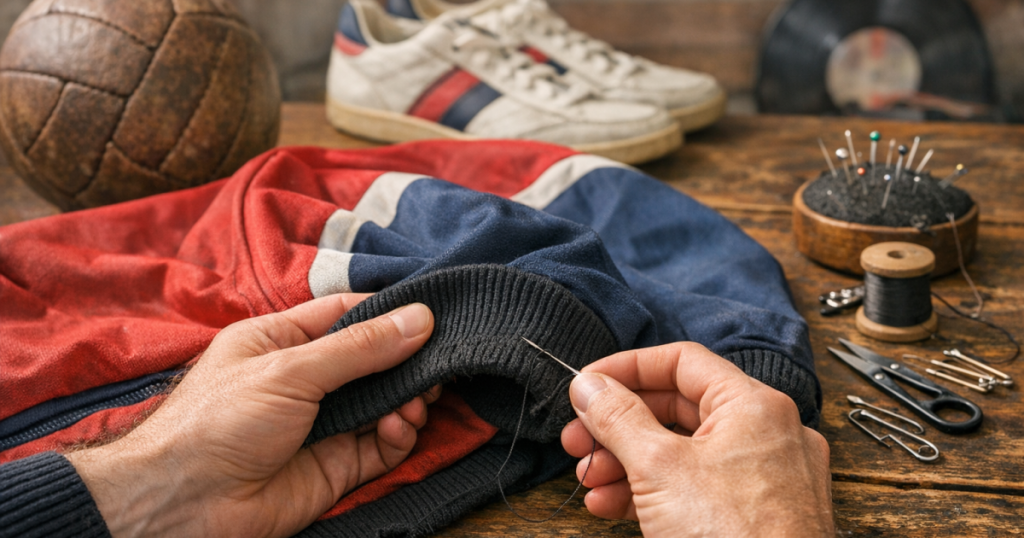
- Use small backstitches by hand, following the original seam line for around 5 cm beyond each side of the loose area.
- Knot the thread inside the garment, then bury the tail between layers so it does not rub against the wrist or neck.
The key is to support, not tighten. If you pull the ribbing shorter than the sleeve opening, the repair may look tidy on the table but twisted when worn. Put the jacket on after a few stitches and check the hang before finishing the whole section.
Step 3: deal with stretched cuffs or a sagging waistband
When ribbing has lost its spring, stitching the seam will not solve the real issue. First, check whether the rib knit itself still has recovery. Stretch it gently and let go. If it returns reasonably well, reshaping and drying flat may be enough. If it stays wide, the fibres or internal elastic have weakened.
For a cuff, you can sometimes improve the fit by opening a short section of the inside seam and inserting a narrow elastic support, then closing the seam again. This should be done cautiously. Too much elastic gives the cuff a modern sportswear squeeze rather than a relaxed retro shape. Too little makes no difference.
If the waistband is the problem, take even more care. A track jacket hem affects the whole line of the outfit, particularly with straight-leg track bottoms, denim or terrace trainers. A hem that is tightened aggressively can ride up and bunch around the middle, which looks wrong with the easy, confident shape associated with classic casual styling.
Step 4: stop fraying before it spreads
Fraying ribbing needs stabilising before cosmetic repair. If one loop has pulled, do not keep tugging at it. Trim only loose fluff or broken thread ends, leaving intact loops alone. From the inside, use small overcast stitches around the frayed area to stop it opening further.
For a small hole near a seam, a discreet internal patch can work. Use a lightweight stretch fabric in a similar colour, placed behind the damaged section. Stitch around the edge with tiny, flexible stitches so the patch moves with the cuff. Avoid heavy woven patches on ribbing; they can create a stiff lump that feels awkward and looks obvious when the sleeve bends.
Visible mending can suit some workwear and denim, but it is trickier on terrace sportswear. A loud repair on a minimalist navy, bottle green or burgundy track top can shift the whole piece from sharp to costume-like. If the jacket has sentimental value, keep the repair quiet unless the rest of your wardrobe already leans into patched, DIY styling.
Step 5: check the repair on the body, not just on the table
A ribbing repair is only successful if the jacket wears properly. Put it on over the sort of layer you would actually use: a T-shirt, polo or light sweatshirt. Zip it halfway and fully, then move your arms. The cuff should not twist, the collar should not pull to one side, and the hem should sit evenly.
This matters because retro track jackets are not just archive objects. They are worn pieces of culture: on match day, at the pub, at gigs, on a Sunday walk, or layered under a casual jacket when the weather turns. If the ribbing fights the way you move, the repair needs easing before it becomes permanent.
How to keep repaired ribbing in shape
Once you have managed to repair loose ribbing, the next job is preventing the same issue from coming back after two wears. Most damage comes from storage and washing habits rather than one dramatic accident.
- Dry flat where possible: especially after washing heavier track tops.
- Avoid hanging by the hem: clip hangers can leave pressure marks and stretch the waistband.
- Use a broad hanger: if hanging is necessary, support the shoulders rather than the ribbed sections.
- Close zips before washing: loose zip teeth can catch cuffs and collars in the drum.
- Use a laundry bag: useful for older pieces with delicate stitching, badges or contrast piping.
- Do not overheat: high heat can damage synthetics, distort ribbing and affect printed branding.
If you are weighing up whether an older jacket is worth saving or replacing with a cleaner reissue, construction is worth studying. The guide to buying an Adidas Originals Beckenbauer track top online is useful for understanding how hems, cuffs, collar shape and seller photos can reveal the condition of a track top before it lands on your doorstep.
When a repair is not worth forcing
Some ribbing is too far gone for a neat home repair. If the knit feels crunchy, sheds fibres, has severe sun bleaching, or has lost all stretch across the whole cuff, stitching will only hold the failure in place. The repair may survive a few wears, but it will not restore the original feel.
Replacement ribbing is possible, but it changes the originality of a vintage jacket. That may be fine for a wearable piece with no collector value. It is more questionable on a rare colourway, an old club-associated item, or a track top with strong personal history. In those cases, a careful stabilising repair may be better than a full replacement that looks too new.
Think of it like trainer restoration: a subtle clean can bring a pair back, while an overdone repaint can flatten the character. The same applies to track jacket ribbing. Preserve the line, protect the fabric and avoid making the repair louder than the jacket.
FAQ
Can I shrink loose ribbing back into shape?
Sometimes, but do not rely on heat. Gentle washing, reshaping and flat drying can help minor distortion. High heat can damage synthetic fabric, logos and contrast panels.
Should I hand-sew or use a sewing machine?
Hand-sewing is safer for small seam repairs and delicate vintage fabric. A machine can be useful for longer seams, but use the right needle and avoid stretching the ribbing as you sew.
Can a tailor replace the cuffs on a retro track jacket?
Yes, many alteration services can replace cuffs or waist ribbing, but matching colour, weight and texture is the challenge. Ask to see the replacement ribbing against the jacket in daylight.
Will repairing ribbing reduce the value of a vintage track top?
A discreet stabilising repair usually helps wearability. Full replacement ribbing can affect originality, so think carefully before altering rare, collectable or historically interesting pieces.
What thread colour should I use on contrast ribbing?
Match the visible side, not the inside seam allowance. If the ribbing is striped, choose the colour that sits along the stitch line so the repair disappears when worn.
What to remember
Loose ribbing does not automatically mean a retro track jacket is finished. Start by diagnosing the fault, clean and relax the fabric, then repair only what needs attention. A neat seam repair, a little reshaping or a small stabilising stitch can bring back the crisp outline that makes a good track top work with jeans, track bottoms or terrace trainers.
The best repair is the one people do not notice. Keep the ribbing comfortable, keep the shape natural, and let the jacket carry its age without looking neglected.