Getting the hem right is one of the quickest ways to make a retro tracksuit look intentional rather than thrown on. The aim with tracksuit bottom cuffs is simple: show enough trainer shape, avoid sloppy bunching, and keep the line relaxed enough for real British weather, terraces and pub floors.
A cuff should look like it belongs to the outfit, not like a last-minute fix. The right method depends on the trainer profile, the fabric of the bottoms, and whether you are wearing a full tracksuit, a track top and jeans mix, or a casual outerwear layer over sportswear.
In brief
- Low-profile terrace trainers usually work best with a neat single cuff or narrow pin-roll.
- Chunkier trainers need less aggressive cuffing, otherwise the ankle can look pinched.
- Light nylon and polyester track bottoms need gentle shaping; heavy fleece can take a chunkier roll.
- Avoid tight cuffs that pull when you sit down, walk upstairs or stand for a full match.
- The cleanest look leaves the trainer tongue and top line visible without exposing too much sock.
Start with the trainer, not the trouser
Terrace style is built from the ground up more than people admit. The trainer decides how much hem you can afford to show, because a slim gum-sole trainer and a bulky runner do not need the same break.
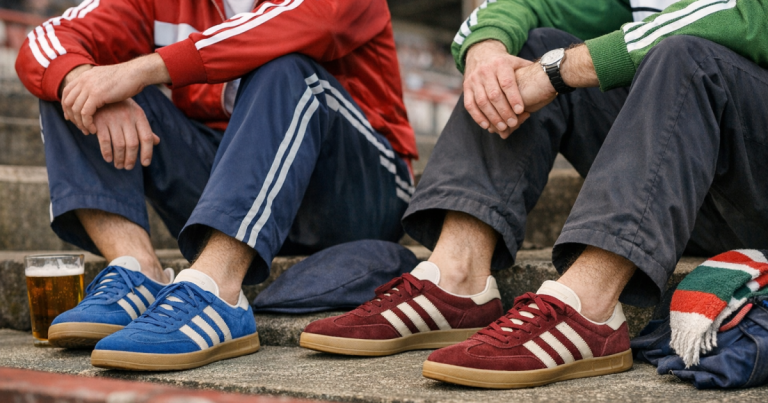
With something low and close to the foot, such as adidas Gazelle Indoor, a narrower cuff can sharpen the silhouette without looking fussy. You can show the collar of the shoe, keep the tongue visible, and stop the fabric from collapsing over the laces.
With a chunkier runner such as Nike Air Max 90, go easier. The shoe already carries volume, so a very tight cuff can make the ankle look squeezed and the trainer look oversized. A soft single turn or a relaxed elastic tuck usually works better. If Air Max is the direction you lean towards, the trainer-to-tracksuit balance is covered in more detail in how to style Nike Air Max 90s with a retro tracksuit.
Leather terrace trainers sit somewhere in the middle. A shoe like a Diadora B. Elite or a PUMA Palermo has enough structure to hold its own, but not so much bulk that it needs a loose hem. A clean cuff that stops just above the shoe collar is usually enough.
Step 1: set the natural break first
Before you roll anything, stand in front of a mirror with the bottoms sitting where you actually wear them. Do not pull the waistband high just to fake a cleaner line, because it will drop again as soon as you walk.
The natural break is where the fabric meets the trainer when unrolled. For terrace trainers, you usually want the hem to land at the top of the shoe or just brushing it. If the fabric is pooling over the laces, you need a cuff. If it is already sitting above the ankle, cuffing may make it look cropped rather than casual.
Check the side view as well as the front. A lot of tracksuit bottoms look acceptable head-on but bunch heavily at the heel. That rear bunching is what makes otherwise decent sportswear look untidy.
Step 2: choose the cuff method
The clean single turn
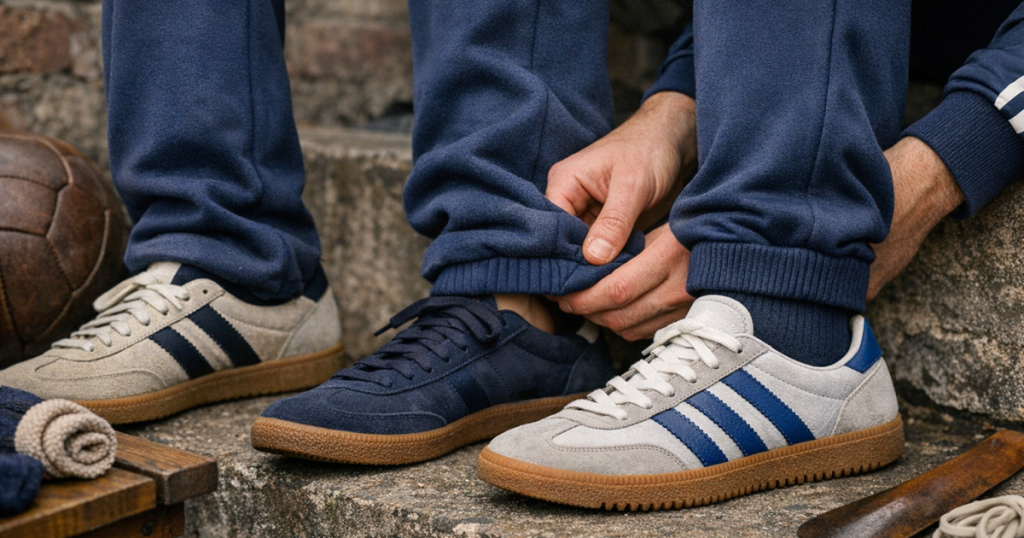
This is the safest option for most retro tracksuit bottoms. Turn the hem up once by about 2 cm to 4 cm, then smooth the fabric around the ankle. It works well with nylon, polyester and lightweight cotton blends because it does not create too much bulk.
Use this when the bottoms are only slightly too long, or when you want a casual pub-to-ground look rather than a styled shoot effect. It is also the least likely cuff to fight with zip hems, press studs or contrast piping.
The narrow pin-roll
The pin-roll is sharper, but it needs restraint. Pinch a small amount of fabric at the inner ankle, fold it backwards, then roll the hem up once or twice to hold it. Keep the roll narrow and low; the moment it climbs too high, it starts to look more fashion-week than terrace.
This works best with straighter legs and low-profile trainers. It is useful when the bottoms are a little wide at the opening and you want to stop them swallowing the shoe. Avoid it on very slippery shell fabric unless the roll holds naturally, as constant re-adjusting ruins the ease of the outfit.
The relaxed elastic tuck
If the bottoms already have elasticated hems, do not overcomplicate it. Let the elastic sit on or just above the trainer collar, then gently pull a small amount of fabric over it so the ankle does not look strangled.
This method suits fuller retro silhouettes, especially if you are wearing a matching track top. The trick is to create a soft stack rather than a balloon. If the fabric puffs out dramatically, pull less material over the elastic or lower the waistband slightly.
The sock-supported cuff
For cold matchdays, a slightly thicker sock can help hold a loose cuff in place. This is not about showing off a loud sock; it is about giving the hem something to sit against.
Keep the sock colour connected to the outfit. White sports socks can work with classic trainers, but black, navy or grey often looks cleaner with darker tracksuits. Avoid novelty patterns if the rest of the outfit is doing the heritage work.
Step 3: match the cuff to the fabric
Fabric makes a big difference. Old-school shiny nylon, modern recycled polyester, cotton fleece and tricot all behave differently around the ankle.
- Light nylon: Use a shallow single cuff. Hard rolls can spring open or crease sharply.
- Tricot polyester: A clean turn usually holds well, but avoid bulky double cuffs unless the leg opening is very long.
- Cotton fleece: This can take a chunkier cuff, but too much roll adds weight around the ankle.
- Zip-hem bottoms: Keep the cuff below or clear of the zip hardware. Do not force a roll through a stiff zip section.
- Elasticated cuffs: Shape the fabric rather than rolling it. The built-in cuff is already doing part of the job.
British weather matters here. Damp pavements, wet pub gardens and train platforms are not kind to hems dragging near the ground. If your bottoms are long enough to touch the pavement at the heel, cuff them before you leave rather than trying to rescue a muddy hem later.
Step 4: balance the top half
A cuff changes the whole silhouette, not just the ankle. Once the trainers are visible, the outfit can look sharper, shorter and more deliberate. That means the top half needs to sit naturally with it.
If you are wearing a retro track top, keep the zip position and hem length in mind. A boxier top with neatly cuffed bottoms gives a strong casuals-era shape without turning into costume. A very slim top with a tight ankle cuff can look too gym-led for terrace style.
Outerwear matters too. A lightweight cagoule, Harrington-style jacket, wax jacket or simple overshirt can make cuffed tracksuit bottoms feel more wearable away from the ground. For the full pub stop, walk to the stadium and post-match train home scenario, see the guide to picking a track jacket for pub-to-ground wear.
Step 5: use the mirror checks that actually help
Once you have cuffed both legs, do not judge the look while standing rigidly. Move around. Sit down. Walk a few metres. Terrace style has to survive real movement, not just a hallway mirror.
- Front check: Can you see the trainer shape, tongue and laces without the trouser looking cropped?
- Side check: Does the cuff follow the line of the shoe, or does it flare out awkwardly?
- Heel check: Is any fabric touching the floor at the back?
- Sitting check: Does the cuff shoot halfway up your shin when you sit down?
- Walking check: Does one leg unravel faster than the other?
If one side keeps dropping, the issue is usually uneven rolling or fabric weight. Re-roll both sides from scratch rather than endlessly adjusting one ankle.
Common mistakes to avoid
- Rolling too high: A high cuff can make tracksuit bottoms look like cropped trousers. Terrace trainers usually need a flash of shape, not a bare ankle statement.
- Over-tight pin-rolls: If the fabric is gripping your ankle, it is too tight. It should sit, not squeeze.
- Ignoring the trainer volume: Slim trainers can take a sharper cuff; bulky runners need a softer break.
- Forcing zip hems: Hardware creates lumps when rolled. Work around it rather than fighting it.
- Using the same cuff on every pair: A nylon track pant and a fleece jogger will not behave the same way.
When not to cuff them
Not every pair of tracksuit bottoms needs altering at the ankle. If the hem already sits cleanly on the trainer, leave it alone. Some classic silhouettes are meant to fall slightly fuller, particularly with a matching top and old-school runner shape.
You should also skip a cuff if the bottoms have strong design details at the hem, such as contrast taping, zips or branded panels that look odd when folded. In that case, it is better to wear them at their intended length or choose a trainer profile that can handle the extra fabric.
Helpful questions
Should tracksuit bottoms sit above or on terrace trainers?
For most terrace outfits, they should sit on the top edge of the trainer or just above it. You want the shoe visible without making the bottoms look cropped.
Can you cuff tracksuit bottoms with leather trainers?
Yes, but keep it neat. Leather terrace trainers often look best with a single cuff or narrow pin-roll that shows the shoe collar without exposing too much sock. If new leather shoes are rubbing, sort that first with sensible wear-in steps such as breaking in leather terrace trainers without blisters.
Is a pin-roll still terrace style?
It can be, provided it is subtle. A low, narrow pin-roll can tidy the ankle; a high, tight roll usually drifts away from classic terrace proportions.
What socks work best with cuffed tracksuit bottoms?
Plain sports socks are the easiest option. White works with many retro trainers, while black, navy or grey can look cleaner with darker tracksuits and bad weather.
How do you stop cuffs coming loose?
Use fewer, cleaner folds and make both legs even. If the fabric is slippery, a shallow single turn usually holds better than an overworked double roll.
Why it matters
Cuffing tracksuit bottoms is a small detail, but it changes the whole read of an outfit. Done well, it shows the trainer, cleans up the line, and keeps the sportswear rooted in real terrace style rather than fancy-dress nostalgia.
The best cuff is the one that disappears into the outfit. It lets the trainers do their job, keeps the bottoms off wet pavements, and gives a retro tracksuit the relaxed confidence it needs in 2026: sharp enough to look considered, loose enough to still feel casual.