Understanding terrace tracksuit codes is less about memorising a rulebook and more about reading context: the brand, the fit, the era reference, the ground, the weather and the attitude of the wearer. Get those things right and a track top feels lived-in and culturally aware. Get them wrong and it can drift into costume, logo-chasing or vague retro pastiche.
Main points
- Brands mattered because they carried associations with sport, travel, music, class, local scenes and personal taste.
- Fit is one of the strongest signals: relaxed but deliberate usually reads better than either baggy fancy dress or sprayed-on gymwear.
- Matchday meaning changes by setting. What works in a pub before kick-off may feel too loud for a train, a neutral ground or a midweek casual outfit.
- The best modern terrace looks borrow codes rather than copying a full archive photo.
Why the codes mattered in the first place
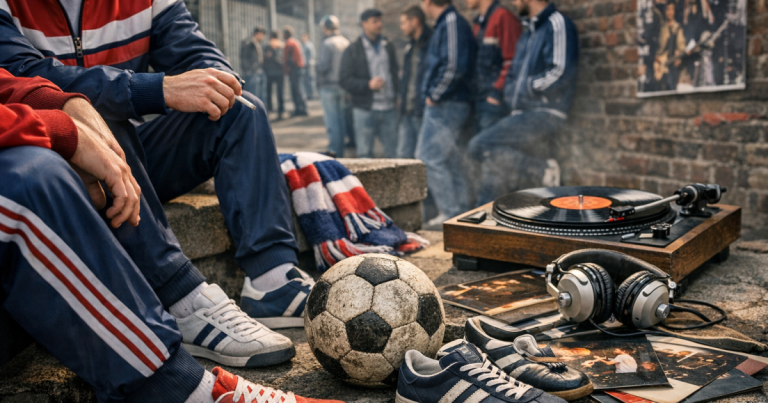
Terrace style has always worked through quiet recognition. A jacket, track top or trainer could say something before anyone spoke: where you had been, what you listened to, whether you knew the references, and how hard you were trying not to look like you were trying. The clothing was visible, but the meaning sat underneath it.
That is why tracksuits became more than sports kit. In Britain, they crossed between football, tennis, athletics, clubs, holidays, market stalls, independent sports shops and imported gear. The football casuals movement gave certain labels extra charge, but the codes were never identical everywhere. Liverpool, Manchester, Glasgow, London, Cardiff and Leeds all had their own currents, mixed with local shops, away-day stories and music scenes.
The key point is that terrace clothing was rarely just about the item itself. It was about timing, scarcity, recognition and confidence. A track top could look ordinary to one person and very specific to another. That tension is still the appeal.
How terrace tracksuit codes work today
The modern version is less secretive but still layered. Most people can recognise a big Trefoil, a side stripe or a vintage tennis silhouette now, so the subtlety has moved elsewhere. The difference lies in how pieces are worn: whether the colours are grounded, whether the trainers make sense, whether the fit suits the era, and whether the outfit has enough restraint.
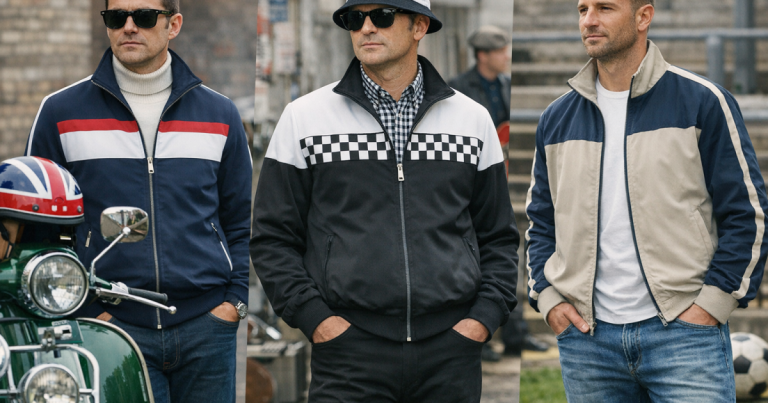
There is no single correct uniform. A full two-piece tracksuit can work, but it needs the right setting and balance. A track top with denim, cords or plain track pants is often easier. A zip-neck top under a simple jacket can nod to the terraces without announcing itself from across the road.
For current wear, think in signals rather than costumes. One strong heritage piece is usually enough. Let the track top, jacket or trainers carry the reference, then keep the rest simple. This is where terrace style becomes wearable rather than theatrical.
Brand signals: what the labels tend to suggest
Different brands carry different memories. None of these meanings are fixed, and regional taste always complicates the picture, but the associations below help explain why some tracksuits feel more terrace-coded than others.
adidas Originals
adidas has the broadest terrace footprint, partly because of its football, indoor sports and trainer heritage. A Trefoil track top can suggest late 1970s and 1980s casuals, Britpop, hip-hop, student nights or modern football nostalgia depending on colour and styling. A full Adidas Originals Trefoil Tracksuit is instantly recognisable, so it works best when worn cleanly: simple trainers, no overload of extra logos, and colours that suit your own wardrobe rather than simply chasing archive photos.
Puma
Puma often reads sharper and slightly more understated than the biggest adidas references. The T7 stripe is one of the clearest examples: graphic, athletic and recognisable without needing huge branding. A Puma T7 Tracksuit can sit comfortably between sportswear and casualwear, especially when the fit is tidy through the leg and the colours are not too novelty-led. For the deeper background, the story of Puma T7’s terrace legacy explains why the silhouette still feels relevant.
Fila, Sergio Tacchini and the Italian tennis thread
Fila and Sergio Tacchini bring a different mood: tennis clubs, leisurewear, European holidays, aspirational casuals and 1980s sports glamour. These labels can look brilliant on a track top, especially with a polo, knit or clean white trainer, but they can also tip into fancy dress if everything is oversized, shiny and loudly colour-blocked. The stronger move is usually to let one piece do the talking.
Kappa, Ellesse and continental sportswear
Kappa and Ellesse sit close to football, ski, tennis and club culture depending on the garment. Kappa’s football kit history gives it a natural terrace connection, while Ellesse often brings a brighter leisurewear feel. With both, colour discipline matters. A bold sleeve logo or panelled jacket needs calmer trousers and trainers unless you are deliberately going for a rave-influenced look.
Fit: the difference between authentic and awkward
Fit is where many modern attempts either land or fail. Original terrace looks were shaped by the clothes available at the time: wider track pants, shorter jackets, looser shells, heavier cotton blends, high waists, ribbed cuffs and a different idea of smart-casual. Copying those proportions exactly is not always flattering in 2026, but ignoring them completely removes the cultural shape.
A good terrace fit usually has room without sloppiness. Track tops should sit naturally on the shoulder, zip without pulling, and finish around the hip rather than hanging like a long hoodie. Track pants can be relaxed, but they should not pool heavily over the trainer unless the whole outfit is intentionally 1990s. A slight taper often makes retro sportswear easier to wear today.
Colour and fabric affect fit as much as size. Shiny polyester exaggerates every crease and bulk point. Heavy cotton jersey hangs differently. Nylon shells move differently again. If the fabric is loud, keep the silhouette cleaner. If the colour is quiet, you can get away with a fuller shape.
Matchday meaning: why setting changes everything
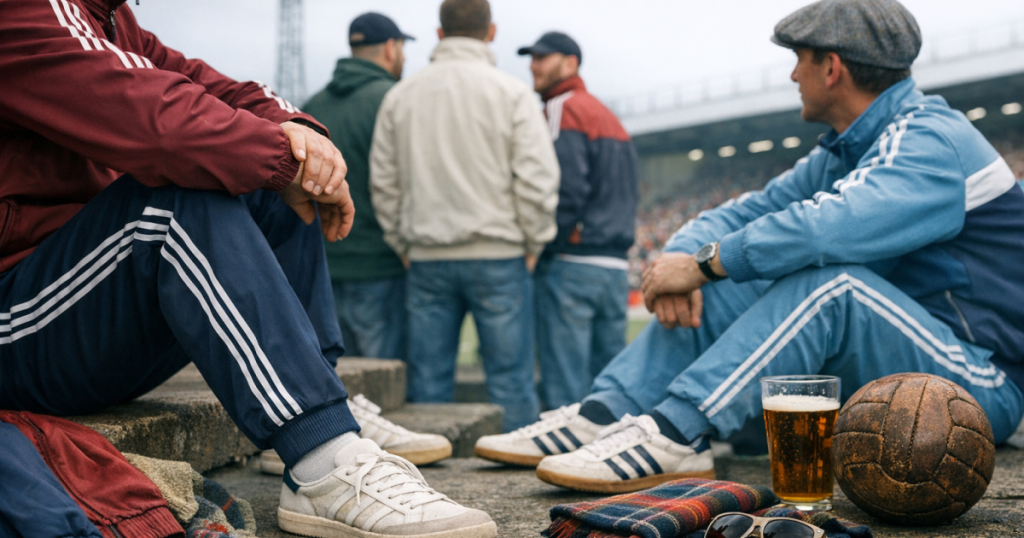
Terrace clothing has always been social clothing. It is worn in motion: on trains, in pubs, outside grounds, at service stations, on wet pavements, in queues and on the walk back after the match. That practical reality shapes the codes.
On matchday, a track top can signal allegiance without wearing a replica shirt. It can show a taste for football culture rather than club merchandise. It can also keep an outfit flexible: smart enough for a pub, comfortable enough for travel, and layered enough for British weather. A zipped track jacket under a waterproof shell is often more realistic than a pristine archive set worn with no thought for rain, mud or crowded concourses.
There is also a social judgement at play. Too much brand-new matching gear can look like a themed outfit. Too much distressed vintage can look forced. The sweet spot is usually a mixture: one heritage sportswear piece, plain layers, sensible outerwear and trainers that fit the era without shouting for attention.
Music, nightlife and the weekend crossover
Tracksuit codes did not stay inside football. Soul, disco, hip-hop, acid house, Madchester, indie dance and later Britpop all changed how sportswear was worn. The same track top could mean something different in a club queue than it did outside a ground. Looser shells and bolder colours lean more towards late 1980s and early 1990s club culture; cleaner tennis-style tops can feel more casuals-influenced; minimal monochrome pieces can read more modern streetwear.
This is why a good outfit needs a clear centre of gravity. If the reference is early 90s Manchester, looser proportions, bucket hats, track tops and worn-in trainers make sense. If the reference is 1980s Italian sportswear, a neater top, polo collar and cleaner trouser line may work better. Mixing every era at once usually weakens the signal.
Reading the signals without overdoing it
The most useful test is whether the outfit would still work if nobody recognised the reference. If the answer is yes, the code is doing its job. If the outfit only makes sense as a recreation of an old photograph, it may need stripping back.
- Start with one reference. Choose the track top, jacket or trainers as the anchor, then build around it.
- Keep club colours in mind. Red, blue, green or claret can carry unintended football meanings depending on where you are wearing them.
- Balance logo weight. A large chest logo, sleeve tape and branded trainers can be too much together.
- Respect the weather. A great matchday outfit still needs to cope with rain, cold platforms and long walks.
- Keep condition believable. Box-fresh is fine, battered is fine, but fake distressing and over-styled vintage can look contrived.
Care as part of the code
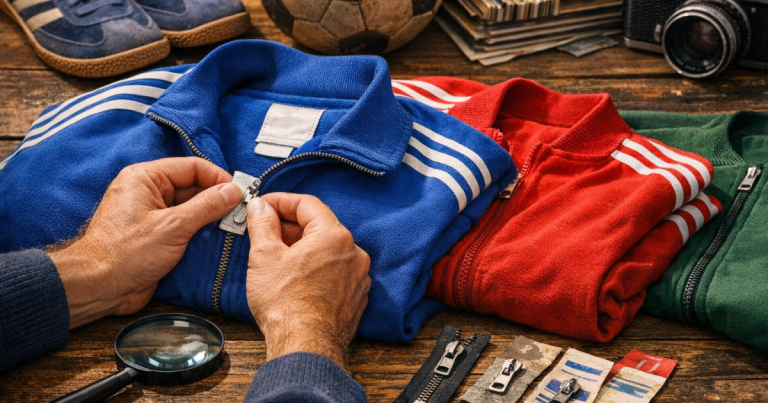
Care matters because terrace sportswear often relies on crisp lines, clean colour blocks and tidy cuffs. A wrinkled nylon jacket or misshapen track top can change the whole mood. That does not mean everything should look museum-kept; it means the garment should look worn with intent rather than rescued from the bottom of a bag.
Check care labels carefully, especially on older polyester, nylon, flock prints, embroidered badges and contrast piping. Gentle washing, air drying and careful steaming can help keep the shape without flattening the character. If you are trying to revive creased synthetic gear, our notes on using a steamer on retro tracksuits explain the kind of garment-care checks worth making before applying heat.
What to remember
Terrace style is not just a list of approved brands. It is a way of putting sportswear into a social setting with some awareness of history, place and proportion. The best outfits feel casual in the old sense of the word: unforced, selective and quietly specific.
If you are building a look now, do not start by asking which label is most authentic. Start with the occasion, the fit and the balance. A modest track top worn well will usually say more than a rare piece worn like a costume. The code is in the judgement.
What people usually ask
Does terrace style have to include a full tracksuit?
No. A track top with denim, cords, plain track pants or a simple jacket can feel more natural than a full set, especially away from matchday.
Are modern reissues acceptable in terrace style?
Yes, if the shape, colour and styling make sense. Reissues are often easier to wear and care for than fragile vintage originals, but avoid looking too coordinated.
Which brands are most associated with terrace tracksuits?
adidas, Puma, Fila, Sergio Tacchini, Kappa and Ellesse all have strong links, though the meaning changes by era, region and how the garment is worn.
Can you wear terrace-inspired tracksuits if you do not go to football?
Yes. The look also connects to music, nightlife and British sportswear history. Just keep it respectful, wearable and clear rather than cartoonish.
What is the easiest mistake to make?
Overloading the outfit with logos and era references. One strong piece, good proportions and clean trainers usually work better than a head-to-toe recreation.