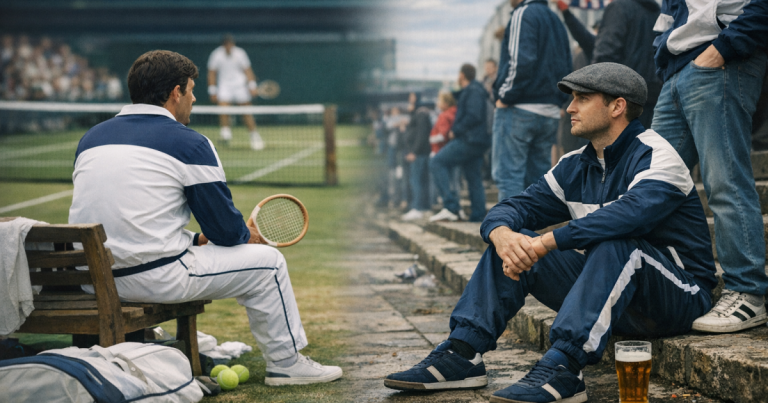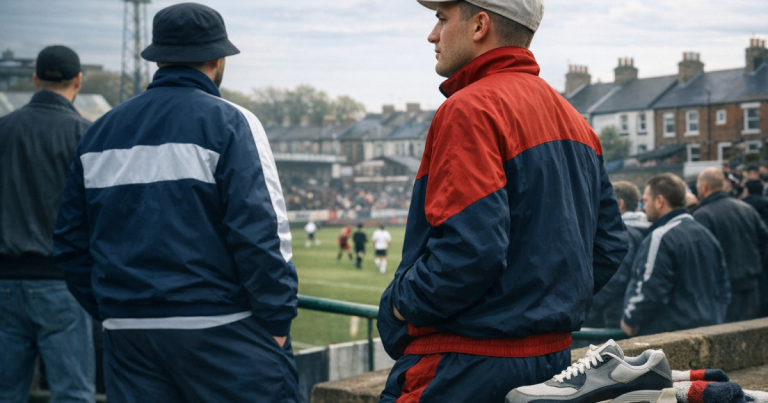
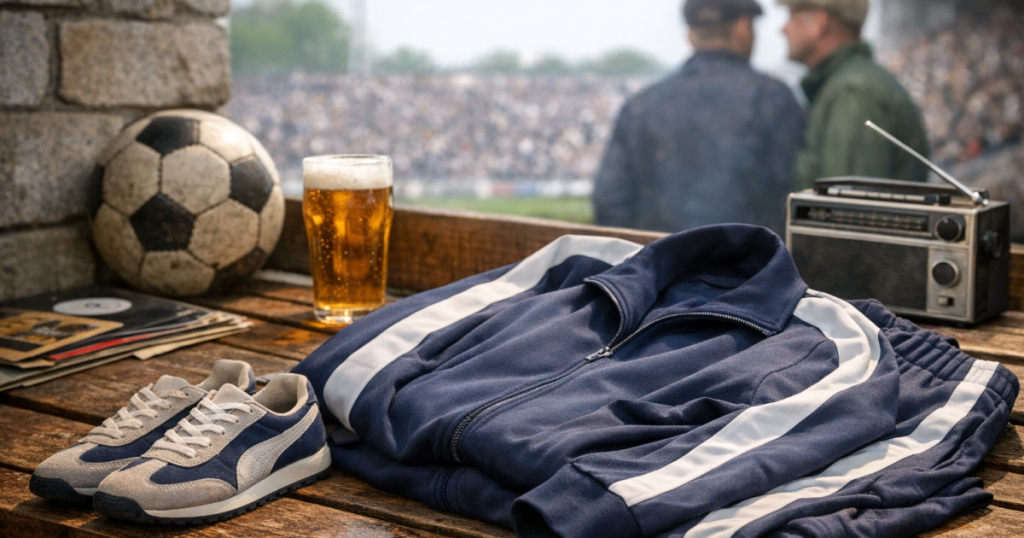
When a track top looks right with denim, trainers and a rain-darkened walk to the ground, there is usually more going on than nostalgia. Puma T7 tracksuit history explains why one narrow stripe detail became a recognisable sportswear code, moving from training kit into street, music and terrace wardrobes without losing its athletic edge.
The short version
The Puma T7 is best understood as a heritage sportswear design rather than a one-season fashion item. Its identity comes from the contrast stripe running down the sleeves and trouser legs, traditionally linked to the “T7” name through the seven-centimetre width of that tape detail. It began as practical athletic clothing, then found second lives in streetwear, football-adjacent dressing and retro revival wardrobes.
For terrace style, the T7 is not quite the same story as a rare Italian tennis top or an archive adidas shoe. It is cleaner, more athletic and often easier to wear casually. That is its strength: it can sit with a pair of suede trainers, a plain tee and straight-leg denim without looking like costume. It also carries enough sporting heritage to make sense alongside the broader track top culture explored in 1970s tracksuit style.
Step 1: Understand what made the T7 distinctive
Puma was founded in Herzogenaurach, Germany, by Rudolf Dassler in 1948, and the brand built much of its early reputation through performance sport. The T7 track suit belongs to that world: a functional warm-up and training shape with a strong graphic marker. The key detail is not a huge chest logo or an elaborate pattern, but a simple contrast stripe placed with discipline.
That matters because the best terrace-friendly sportswear often works through recognition rather than volume. A T7 sleeve can be spotted quickly, but it does not need to dominate the whole outfit. The stripe gives structure to the arms and legs, while the zip front, ribbed trims and track collar keep it grounded in sport rather than pure fashion.
Modern versions vary by season and collection, so it is worth checking the fabric, fit and stripe placement before buying. Some feel closer to a classic track top; others lean more towards lifestyle sportswear. If you want the archive feeling, look for a clean colour split, minimal branding and a shape that works over a T-shirt rather than a bulky hoodie.
Step 2: Place it in the wider casuals story
In Britain, terrace style was never only about wearing sports kit. It was about selection, codes and timing: the right jacket, the right trainers, the right level of effort. Football casuals took sportswear out of its original context and turned it into a social language. European labels, tennis brands, ski jackets, running shoes and track tops all became part of that shifting wardrobe.
The T7 sits neatly in that history because Puma already had football credibility through boots, trainers and team connections, while the track suit itself had the visual discipline that casual dressers appreciated. It was not just “gym gear”. Worn correctly, it became a sharp, unfussy layer that could sit between matchday practicality and off-pitch identity.
This is also where it is important not to flatten terrace style into stereotype. The culture crossed football, music, travel, nightlife and class expression, with different cities and clubs developing their own preferences. For a fuller view of the clothes, music and matchday identity around the scene, the wider football casuals movement gives useful context.
Step 3: Know the difference between archive mood and wearable reality
Old sportswear photos can be misleading if you copy them too literally. A full bright T7 set may look superb in a period image, but in a normal UK high street setting it can easily become too themed. The smarter move is to borrow the code rather than recreate the entire frame.
Start with one strong Puma piece. A PUMA T7 Track Jacket can work as the focal point, while the rest of the outfit stays quiet: plain white or navy T-shirt, straight denim, cords or understated track pants. If you prefer the full set, keep the trainers simple and avoid piling on extra logos. Let the stripe do the talking.
Fit is the big difference between looking considered and looking like you have raided a fancy-dress rail. A track top should sit comfortably on the shoulders, zip without pulling and finish around the hip. Trousers should have enough room to move, but not so much length that they pool heavily over the shoe. With retro sportswear, neatness often looks more authentic than exaggerated sizing.
Step 4: Use colour like a terrace dresser, not a mannequin
The strongest T7 looks usually keep to disciplined colours. Navy and white, black and white, bottle green, burgundy, red, cream and royal blue all make sense within the broader retro sportswear palette. The stripe should create contrast, but the whole outfit should still feel wearable in real life.
For a low-risk approach, treat the T7 top as you would a casual jacket. Wear it open over a plain tee with mid-blue denim and suede trainers. For a sharper pub-to-ground look, zip it halfway, add a light jacket over the top if the weather needs it, and keep the trousers plain. For a more athletic look, pair the top with matching PUMA T7 Track Pants, but avoid adding a loud cap, graphic tee and statement trainers all at once.
Footwear can shift the whole mood. A Puma Suede or similar low-profile trainer keeps the outfit close to the brand’s own sporting and street heritage. Chunkier running shoes push it towards a later retro sportswear look. Minimal white trainers make it cleaner and more modern, though they can remove some of the terrace flavour.
Step 5: Check whether a T7 piece has genuine terrace energy
Not every striped track top carries the same feeling. The terrace appeal comes from proportion, restraint and cultural fit, not just from having a line down the sleeve. Use these checks before treating a T7 piece as part of a proper retro casual wardrobe:
- Stripe discipline: the sleeve or leg tape should look integrated into the design, not like a decorative afterthought.
- Branding level: small or balanced logos generally feel more wearable than oversized chest graphics.
- Colour control: classic two-tone combinations tend to age better than novelty colourways.
- Fabric feel: check whether the material drapes like sportswear or feels too stiff for casual layering.
- Outfit compatibility: a good T7 top should work with denim, cords, simple track pants and lightweight outerwear.
- Era balance: if every item is retro at once, the look can turn theatrical. Mix one archive-coded piece with modern basics.
These checks are similar to how you would judge any revival track top: look for design honesty, not just nostalgia. If you are building a broader wardrobe, the same logic applies to jackets, knitwear and trainers in terrace style essentials.
Examples that work now
The pub-and-matchday layer
Wear a navy T7 track top over a plain grey tee, with straight-leg jeans and low-profile suede trainers. This keeps the outfit grounded and avoids the “full kit” problem. Add a simple jacket if the weather turns, but keep the colours quiet so the sleeve stripe remains the main reference point.
The full-set approach
A matching T7 track suit can still work, but it needs restraint. Choose a colour you would genuinely wear outside a retro event, keep the T-shirt plain and avoid clashing trainer colours. The cleaner the set, the less it feels like a costume.
The modern sportswear mix
Pair a black T7 jacket with relaxed trousers, a heavyweight tee and understated trainers. This loses some of the old terrace sharpness, but it makes the piece easier to wear day to day. It is a good route if you like the history but do not want to look as though you are recreating an old matchday photograph.
Why the T7 still earns its place
The Puma T7 has lasted because it is simple, recognisable and adaptable. It does not rely on a complicated backstory every time you wear it. The stripe gives it a clear identity; the athletic shape makes it practical; the brand’s football and streetwear associations give it cultural depth.
Its terrace legacy is not about being the rarest item in the casual wardrobe. It is about being one of those pieces that understands the rules: strong line, clean colour, easy pairing, no need to shout. That makes it especially useful for anyone who likes retro sportswear but wants to wear it in a current, unfussy way.
Common questions
Is the Puma T7 a true terrace piece?
Yes, but with nuance. It belongs naturally within the broader terrace sportswear conversation, though it is not the only or defining garment of the scene. Its strength is that it bridges athletic kit, football-adjacent style and casual everyday wear.
Should you wear the full T7 tracksuit or just the jacket?
The jacket is easier for most people. A full set can look excellent, but it needs careful colour choice, neat fit and restrained footwear. If you are new to the look, start with the top and build around it.
What trainers suit a T7 track top?
Low-profile suede or leather trainers usually work best. A PUMA Suede Classic is an obvious brand-consistent option, while other terrace-style trainers can work if the colours are controlled and the silhouette is not too bulky.
What to remember
The enduring appeal of the T7 comes from restraint. It is a stripe, a shape and a sporting reference point that can still look sharp without needing a full retro performance. Get the colour right, keep the fit tidy and treat the track top as part of an outfit rather than the whole point of it. That is where the Puma T7 tracksuit history still feels alive: not as a museum piece, but as wearable sportswear with proper cultural memory.