Creased track tops, packable shells and polyester tees can make an otherwise sharp terrace fit look tired. This Philips 3000 Series Handheld Garment Steamer review looks at whether a compact steamer is a sensible care tool for retro sportswear, rather than another gadget that lives in a cupboard. The short answer: it is useful for light creases and quick refreshes, but it is not a replacement for washing, pressing or careful storage.
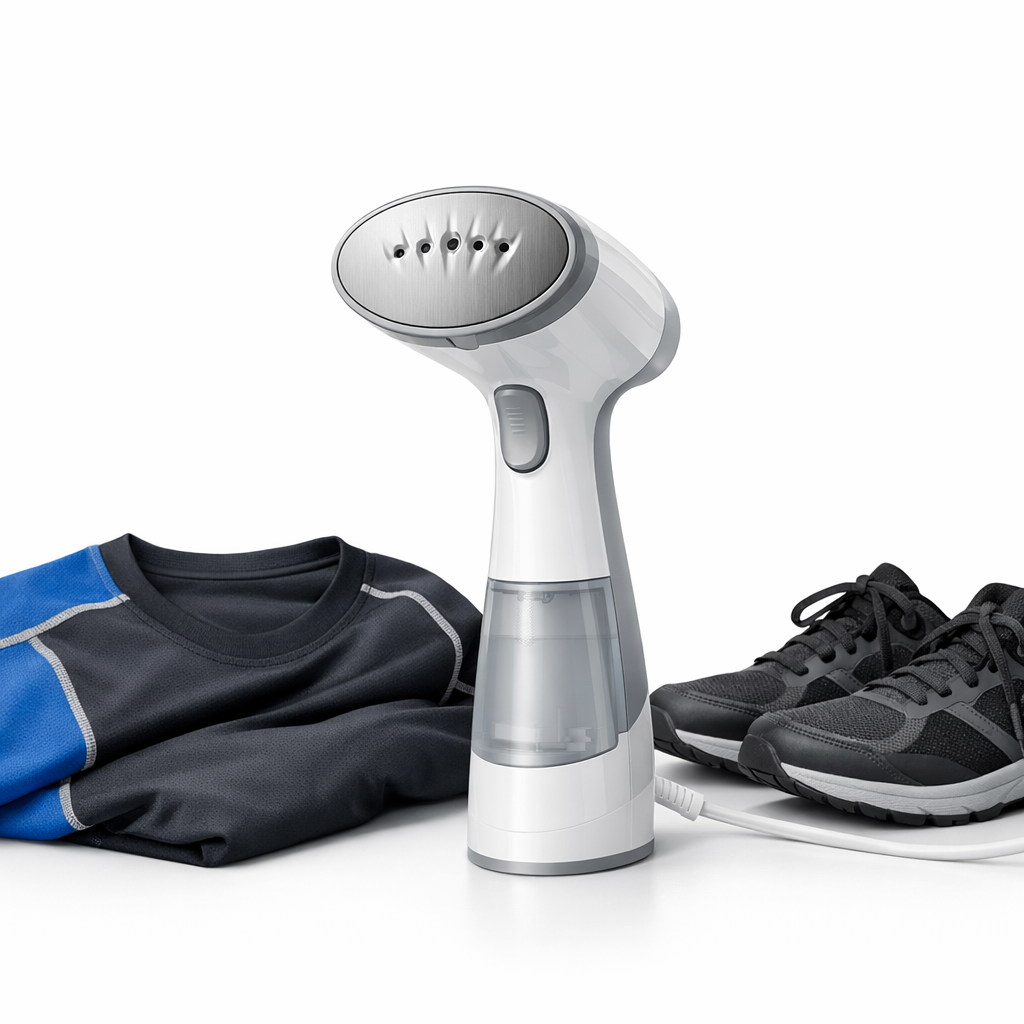
Series Handheld Garment Steamer — Philips — garment steamer — Garment steamers suitable for synthetic sportswear
A sensible choice for keeping track tops, shells and synthetic layers presentable between proper washes
For a wardrobe built around track jackets, windbreakers, football-casual layers and logo tees, the appeal is obvious. Many pieces are awkward to iron safely, especially when they have embroidered badges, printed branding, ribbed cuffs or synthetic panels. A handheld steamer offers a gentler, more flexible way to tidy garments before wearing them, provided you follow the care label and avoid blasting heat directly into delicate trims.
Product overview
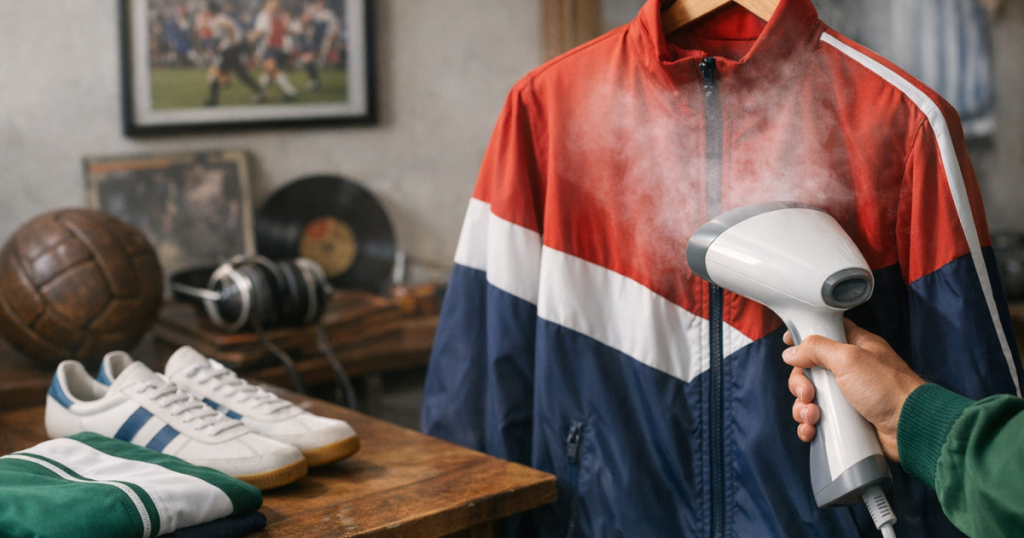
The Philips 3000 Series Handheld Garment Steamer is a compact garment steamer designed for clothing care rather than laundry replacement. Its job is straightforward: use steam to relax light creasing on garments hanging up, helping them look more presentable without setting up an ironing board. For the retro sportswear crowd, that makes most sense on track tops, overshirts, polos, lightweight jackets and travel-creased pieces pulled from a wardrobe or weekend bag.
The strongest argument for it is convenience. Terrace-inspired wardrobes often mix old and new fabrics: polyester track tops, nylon shells, cotton T-shirts, ribbed collars and branded patches. An iron can work well on some items, but it also brings pressure, direct contact and the risk of shine or damage if used carelessly on synthetics. A steamer still needs sensible handling, but it gives you a less aggressive route for tidying up garments that are better treated with a lighter touch.
It fits neatly into the kind of kit-care routine that sits alongside washing inside out, drying properly and storing jackets on decent hangers. If your wardrobe leans heavily towards outer layers, the care angle pairs naturally with our guide to terrace style jackets, Harringtons, windbreakers and track tops, where fabric choice and layering matter as much as the badge.
If you are shopping now, compare the current UK retailer listing carefully before buying. Philips product bundles and regional listings can vary, so check the exact model name, plug type, included attachments, tank arrangement and manufacturer fabric guidance rather than relying on assumptions from photographs.
Key specs
- Product type: handheld garment steamer for clothing care.
- Brand: Philips.
- Reviewed product name: Philips 3000 Series Handheld Garment Steamer.
- Best suited to: light crease removal and quick garment tidying on suitable fabrics.
- Use case for this site: retro tracksuits, terrace-style layers, football-casual jackets and synthetic sportswear that should not be treated roughly.
- Before buying, verify: current model code, water tank details, heat-up information, cable and plug format, accessories, warranty terms and Philips care guidance.
- Before steaming, verify: the garment care label, print or embroidery sensitivity, and whether the fabric tolerates steam.
Pros and cons
Pros
- More convenient than setting up an ironing board for one track top or lightweight jacket.
- Useful for garments that look tired from storage rather than genuinely dirty.
- A gentler-feeling option than direct ironing for many synthetic sportswear pieces, provided care labels allow steaming.
- Compact enough to make sense in smaller UK flats, shared houses or wardrobes without much utility space.
- Good fit for matchday, gig or weekend routines where you want a layer to look presentable quickly.
Cons
- Will not replace proper washing when a garment has sweat, food marks or embedded odour.
- Deep creases, heavy cotton and structured garments may still need an iron, press or professional cleaning route.
- You need to be careful around heat-sensitive prints, badges, flocking, glued details and vintage trims.
- Value depends heavily on the current UK price and whether you will use it regularly.
- Specifications and bundle contents can differ by listing, so buyers need to check the exact version.
Performance in real use
Where this Philips steamer makes the most sense is in the gap between washing and wearing. Think of a track jacket that has been folded in a drawer, a windbreaker pulled from a holdall, or a cotton tee sitting under a zip-through layer. The garment is clean enough, but the creasing makes it look neglected. In that situation, a handheld steamer can lift the overall finish quickly and make the outfit feel more intentional.
On synthetic sportswear, the big advantage is control. You can hang the garment, work section by section and avoid pressing a hot plate directly onto the fabric. That matters for shiny polyester, nylon shells and older pieces where the surface can mark or distort if treated aggressively. The sensible method is to keep the steamer moving, avoid lingering over one spot, and treat logos, heat transfers and embroidery with extra caution. For anything vintage, rare or sentimental, test an inside area first and do not assume all panels behave the same way.
It is also useful for layering pieces that sit close to the jacket: polos, plain tees and lighter overshirts. A low-key branded tee can ruin a clean outfit if the front is badly creased, especially under an open track top. The same thinking applies to modern workwear-leaning basics such as the type covered in our Carhartt WIP Logo T-Shirt review: simple pieces rely on fit, condition and finish because there is nowhere for sloppy care to hide.
The limitation is that steam is not magic. It will not rebuild a tired collar, remove pilling, erase shiny wear patches or make a cheap fabric look premium. It may soften creases, but a sharp pressed line or stubborn fold can need a different approach. If you expect it to rescue every neglected garment, you will be disappointed. If you use it as a quick finishing tool before leaving the house, it is far easier to appreciate.
Maintenance is simple in principle but worth taking seriously. Use water in line with Philips guidance, empty the tank after use if instructed, allow the unit to cool before storing it, and avoid letting moisture sit against garments in a closed wardrobe. With synthetic sportswear, let the item dry properly after steaming before putting on a jacket over the top. Damp fabric under outerwear is uncomfortable and can make a clean outfit feel clammy rather than crisp.
Who it’s best for / who should skip it
This steamer is best for people who actually wear their retro sportswear rather than simply archive it. If your week involves track tops over tees, lightweight shells for changeable weather, or smart-casual terrace styling without going full costume, it gives you a quick way to improve presentation. It is particularly useful if you dislike ironing, lack space for a board, or often find garments creased just before heading out.
It is also a sensible option for readers who buy reissues, newer branded sportswear and everyday terrace-inspired layers. Those garments are usually worn regularly, washed more often and treated as part of a live wardrobe. A steamer can help keep them looking sharper between full laundry cycles, as long as the care label allows it.
Skip it if most of your clothing is heavy denim, thick cotton sweatshirts or formal shirts needing crisp structure. You should also be cautious if your collection is mainly fragile vintage sportswear with delicate prints, ageing adhesives or unknown fabric behaviour. In those cases, gentle storage, specialist cleaning advice and minimal heat exposure may matter more than convenience.
Alternatives
The closest alternative is not necessarily another gadget; it is a better care routine. Good hangers, prompt drying, careful folding and not overpacking wardrobes prevent many creases before they happen. For packable shells and lightweight outerwear, prevention is often easier than correction. If your issue is choosing a jacket that works with everyday UK weather as much as caring for one afterwards, the Adidas Originals Windbreaker Jacket review is a useful next read.
If you want to compare another handheld option, the Tefal Access Steam Easy is a recognisable alternative to look at, but check current specifications and fabric guidance side by side rather than assuming one is automatically better. For heavier garments, a traditional steam iron may still be the more effective tool, provided the care label and fabric type make ironing appropriate.
Helpful questions
Can I use it on vintage track jackets?
Only with caution. Check the care label, avoid direct steam on prints or fragile trims, and test a discreet inner area first. Some older garments are better left alone than risk heat or moisture damage.
Does it replace washing a tracksuit?
No. It can help a clean garment look fresher, but it does not replace washing when fabric is dirty, sweaty or stained.
Is it better than ironing for synthetic sportswear?
For many lightly creased synthetic pieces, steaming can be a gentler option than direct ironing. For sharp creases or heavy fabrics, an iron may still work better if the care label allows it.
Should I steam over logos and badges?
Avoid holding steam directly over printed logos, flocking, glued badges or delicate embroidery. Work around details carefully and keep heat exposure minimal.
Is it worth buying for one jacket?
Probably not. It makes more sense if you regularly wear track tops, shell jackets, polos and tees that need quick tidying before use.
Verdict + score
The Philips 3000 Series Handheld Garment Steamer is a good, practical fit for a wearable retro sportswear wardrobe. It is not a miracle fix for deep creases, tired fabric or delicate vintage pieces, and buyers should verify the exact current listing before purchase. Used sensibly, though, it earns its place as a quick finishing tool for track jackets, windbreakers and everyday terrace layers that need to look sharper with minimal fuss. Score: 8.1 out of 10.
Final thoughts
Overall, Philips 3000 Series Handheld Garment Steamer earns a score of 8.1/10. It is a strong option for readers who want the benefits discussed above, while still being worth comparing against the alternatives before buying.
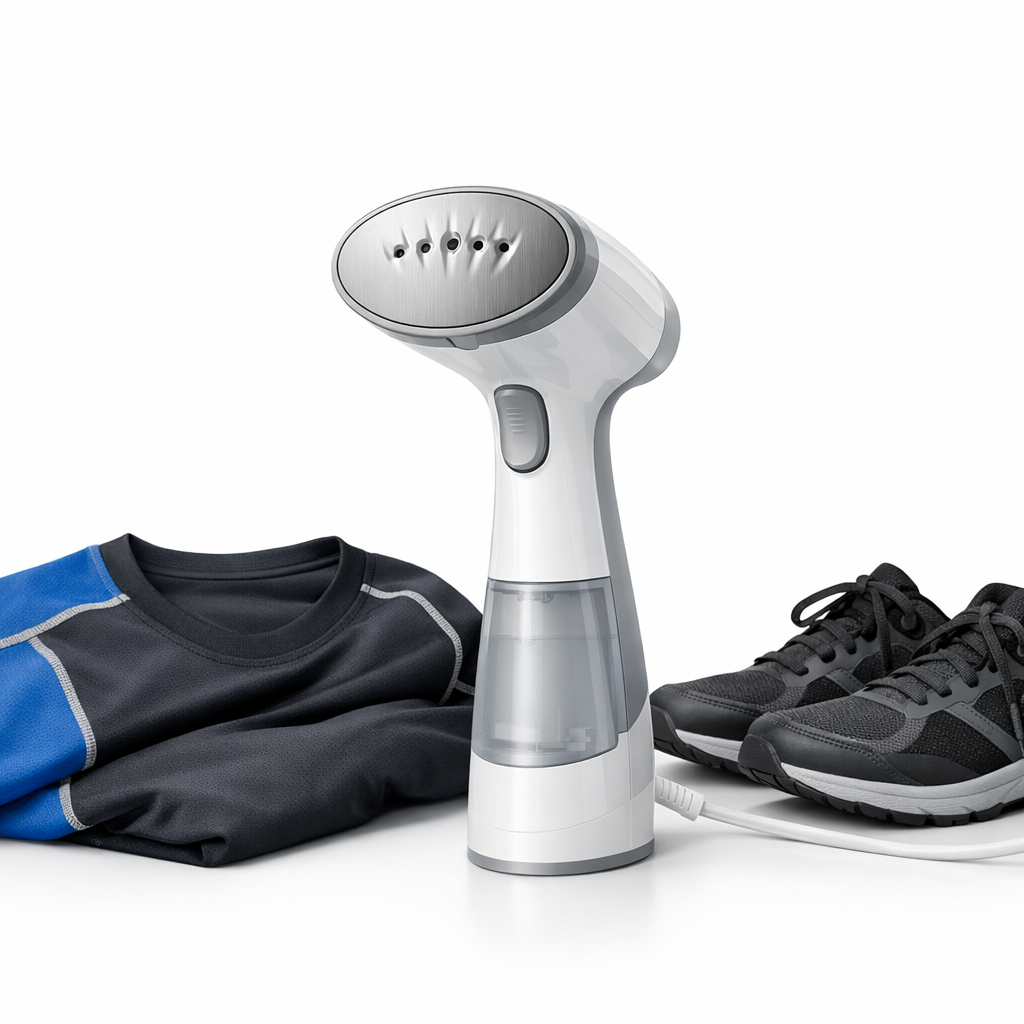
Series Handheld Garment Steamer — Philips — garment steamer — Garment steamers suitable for synthetic sportswear
A sensible choice for keeping track tops, shells and synthetic layers presentable between proper washes