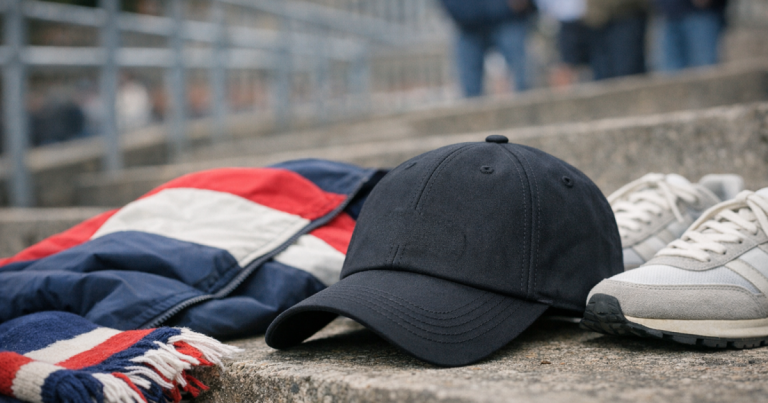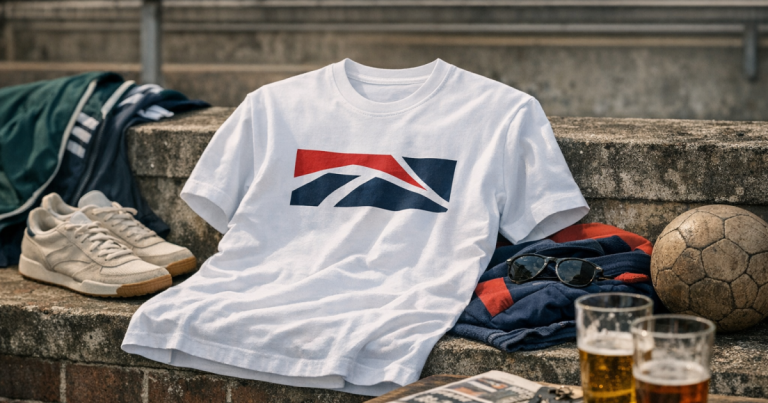
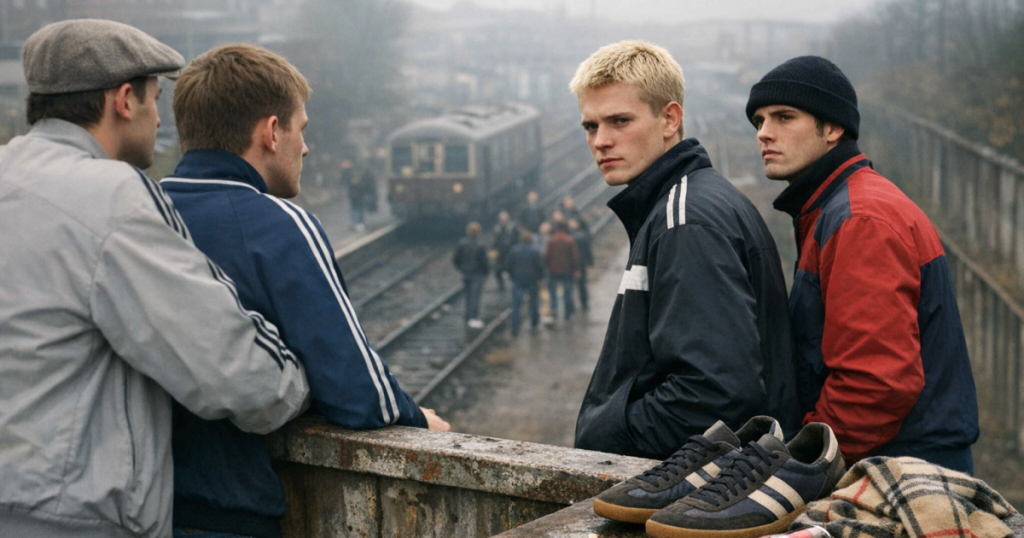
Some terrace films are watched for plot, others for atmosphere. This Awaydays review sits firmly in the second camp: the film matters because of how it frames clothes, music, belonging and menace around a very specific corner of British casual culture. It is not a cosy nostalgia watch, and it is not a simple style mood board either. Its value is in the tension between wanting the look and seeing the damage around it.
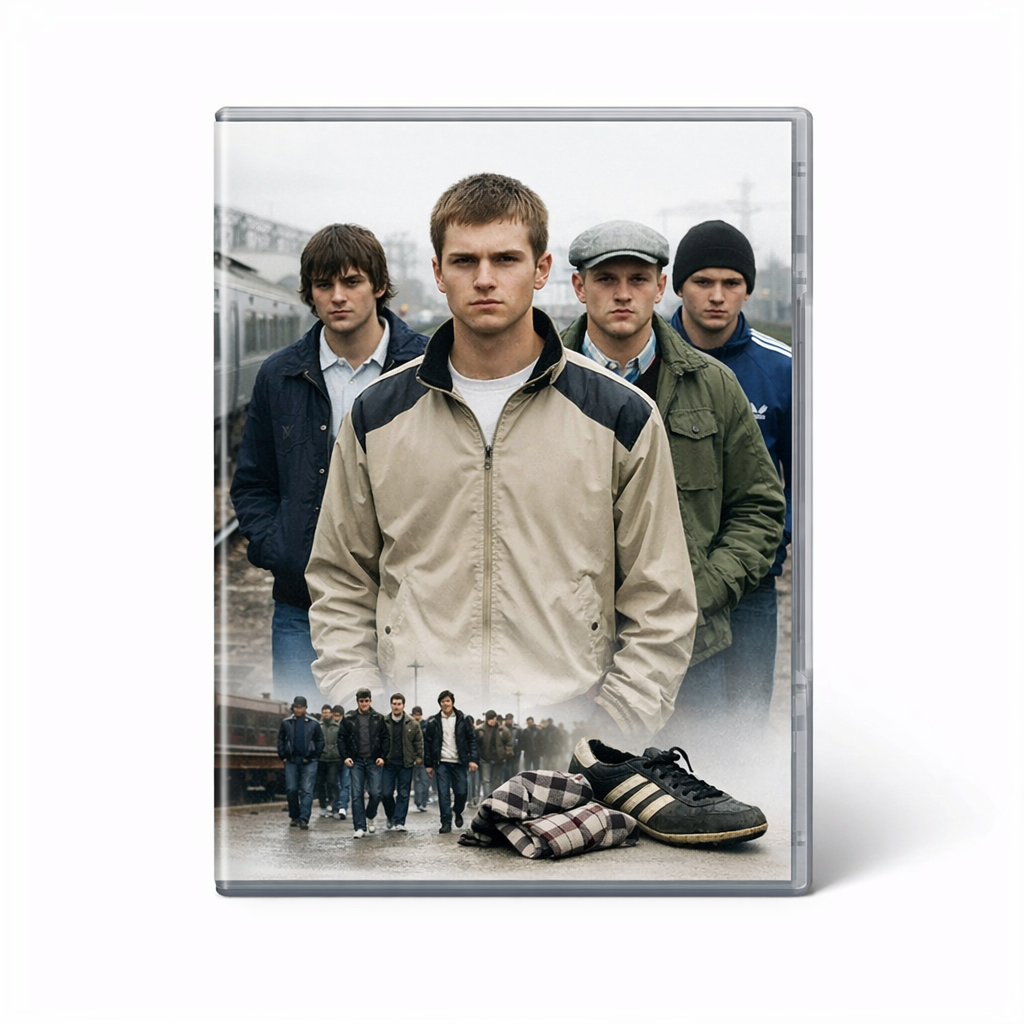
Awaydays — Revolver Entertainment — film — Documentaries and films connected to football casual and sportswear culture
A worthwhile watch for terrace-culture fans who value atmosphere, wardrobe detail and period mood over comfort
At a glance
Awaydays is a British drama associated with Revolver Entertainment, adapted from Kevin Sampson’s novel and set around the late-1970s Merseyside football-casual scene. For readers interested in terrace clothing, it is most useful as a mood piece: sharp outerwear, wiry energy, post-punk sound, youth boredom, and the early codes that later hardened into a recognisable casual uniform.
The quick verdict: it is a strong watch if you care about the roots of football-casual style and the emotional charge behind it. It is less satisfying if you want a broad, balanced history of the scene or a film that explains every reference as it goes.
Product overview
Awaydays is not a documentary. That distinction matters. It uses fiction to get at the feeling of a scene: young men trying to become someone through music, match days, clothes, friendship and intimidation. The film follows Carty, an outsider drawn towards The Pack, a group attached to the football and casual world of the time. The result is more claustrophobic than celebratory.
For a terrace-style audience, the appeal is obvious but not straightforward. The film shows clothes as social signals rather than simple costume. A jacket, a pair of trainers, the cut of a top, the confidence of someone walking into a pub or station: these details carry weight. They help explain why British football style became so bound up with status, movement and risk, a theme explored more broadly in why tracksuits became British terrace uniforms.
It is also a film worth approaching with a bit of caution if you are using it for style research. The wardrobe is part of a cinematic world, not a catalogue. Use it to understand mood, proportions and attitude, then verify details against books, archive photographs, and contemporary reissues before trying to recreate a look. That is especially true if you are buying vintage sportswear, where condition, authenticity and sizing can vary sharply.
Key specs
- Product: Awaydays
- Associated distributor: Revolver Entertainment
- Product type: British feature film
- Source material: Adapted from Kevin Sampson’s novel of the same name
- Core setting: Late-1970s Merseyside football-casual and youth culture
- Main style relevance: Early casual codes, post-punk mood, terrace outerwear, trainers and group identity
- Buying checks: Confirm the edition, disc region, format, subtitles, extras and seller condition before purchase
- Best viewed as: A fictional drama with strong cultural texture, not a complete historical account
Pros and cons
Pros
- Excellent atmosphere: The film captures a cold, wired, slightly dangerous mood that suits the subject better than glossy nostalgia would.
- Useful clothing reference: The styling gives terrace fans plenty to study, particularly outerwear shapes, darker colour palettes and the way status is communicated through restraint.
- Strong music-cultural overlap: It understands that football style was never only about the match; records, clubs, pubs and movement through the city all mattered.
- Does not romanticise everything: The film makes the appeal visible without pretending the violence and emotional damage are harmless.
- Good companion to wider casual reading: It works well alongside books and photo archives because it gives movement and sound to a culture often studied through still images.
Cons
- Narrow perspective: The story is focused on a tight male world, so it does not give a rounded account of wider terrace culture.
- Bleak tone: It can feel deliberately grim, which may put off viewers looking for an easier style-led watch.
- Not a buying guide: The clothing is inspiring, but the film will not tell you which modern track top, trainer or jacket to buy.
- Edition uncertainty: Availability and formats can vary, so collectors should check exactly what they are getting rather than assuming every listing is identical.
Performance in real use
As a terrace-culture film
Awaydays performs best when judged as a cultural mood piece. It is interested in the pull of the group: how the right clothes can make someone feel initiated, how music can sharpen that feeling, and how quickly identity can become performance. The film’s world feels tight, local and charged, which suits the late-1970s setting. It avoids the later, more obvious shorthand of casual style and spends more time in the awkward earlier moment when codes were still forming.
That makes it valuable for viewers who already know the broad casual story and want something more atmospheric. It will not hand you a neat lecture on brands or eras. Instead, it shows how a look can become a passport into a scene, and how that scene can become a trap.
As a style reference
The film is genuinely useful, but only if you read it properly. The strongest style lessons are about proportion, mood and social signalling. There is a lot of dark outerwear, slim silhouettes, unfussy layering and a sense that clothing is being worn to belong rather than to pose for a camera. That is a useful corrective to modern retro styling, which can sometimes turn terrace references into bright, logo-heavy costume.
If you are building a wearable modern version of the look, take the restraint rather than copying everything literally. A clean adidas Originals track top, a plain polo, straight-leg jeans, understated trainers and a good jacket will usually look better in everyday Britain than a full head-to-toe reconstruction. For readers comparing screen style with real archive cues, reading a casual look for terrace style cues is a more practical next step.
As a piece of storytelling
The film’s storytelling is more divisive. It has energy, but it is not especially warm. The characters often feel trapped by the codes they are trying to master, and that can make the drama compelling rather than pleasurable. Carty’s attraction to The Pack gives the film its shape, but the emotional world is intentionally limited. That limitation is part of the point, though it may frustrate viewers who want more background, more explanation or a broader social picture.
Where it succeeds is in making style feel consequential. Clothes are not decorative. They affect access, confidence and danger. That is exactly why the film still has value for terrace-style enthusiasts: it reminds you that the look did not emerge from a neutral fashion environment. It came from travel, rivalry, music, money, aspiration and pressure.
As a physical purchase
If you are buying Awaydays as a disc, treat the listing carefully. Check whether it is DVD or another format, whether it suits your player, what condition the case and disc are in, and whether any extras or booklets are included. Used film listings can be perfectly worthwhile, but they are not all equal. For collectors, the condition and edition may matter nearly as much as the film itself.
If you are buying mainly for style research, do not overpay just because a listing looks scarce. The smarter approach is to compare editions, check seller descriptions properly, and think about whether you want the film for repeat viewing, collection value or a one-off watch.
Who it’s best for / who should skip it
Best for: Awaydays suits viewers who already have some interest in football casuals, British youth culture, post-punk atmosphere and the darker side of terrace identity. It is also useful for anyone trying to understand how early casual style felt before it became a neatly packaged retro aesthetic.
Also worth it for: style-minded readers who want comparison points for low-key outerwear, understated sportswear and the social role of clothes. If your wardrobe leans towards adidas Originals, Fred Perry, vintage-inspired trainers and muted jackets, the film will give you ideas without turning into a shopping list.
Skip it if: you want a documentary, a cheerful football film, or a complete guide to casual brands. It is also not the best starting point for someone who wants the difference between football casuals and wider terrace style explained from scratch. In that case, a clear explainer or brand history will be more useful before watching the film.
Alternatives
If Awaydays feels too narrow, there are two sensible routes. For another fictional look at football violence and identity, The Firm is the obvious comparison point, though its tone and period focus are different. For a more investigative, institutional angle, I.D. offers a separate kind of British football-culture tension. Neither replaces Awaydays as a style reference, but both help frame how film has handled the uglier edges of the scene.
The better alternative for pure research is not necessarily another film. Books, photo diaries and archive-led articles are often stronger for checking details, dates and clothing context. Awaydays gives you atmosphere; research gives you accuracy.
Things readers ask
Is Awaydays a documentary?
No. Awaydays is a fictional feature film adapted from Kevin Sampson’s novel. It can feel culturally observant, but it should not be treated as a complete factual record.
Is it useful for understanding football casual style?
Yes, with limits. It is useful for mood, silhouettes, restraint and social codes, but you should verify specific clothing details through archive sources and brand histories.
Can you use the film as outfit inspiration today?
Yes, but avoid copying it too literally. Take the muted palette, clean layers and understated sportswear references rather than recreating the full screen look.
What should UK buyers check before ordering a copy?
Check the format, region compatibility, condition, seller notes and whether the listing includes any extras. Do not assume every edition is the same.
Verdict + score
Awaydays is a flawed but valuable terrace-culture film: too narrow to work as a full history, too bleak to be casual comfort viewing, but strong enough in mood, music and clothing language to justify its place on a retro sportswear shelf. Its best quality is that it understands style as pressure, not decoration. For readers interested in British casual identity, it remains a worthwhile watch, provided you treat it as fiction with sharp cultural instincts rather than a definitive archive. Score: 8.1 out of 10.
Final thoughts
Overall, Awaydays earns a score of 8.1/10. It is a strong option for readers who want the benefits discussed above, while still being worth comparing against the alternatives before buying.
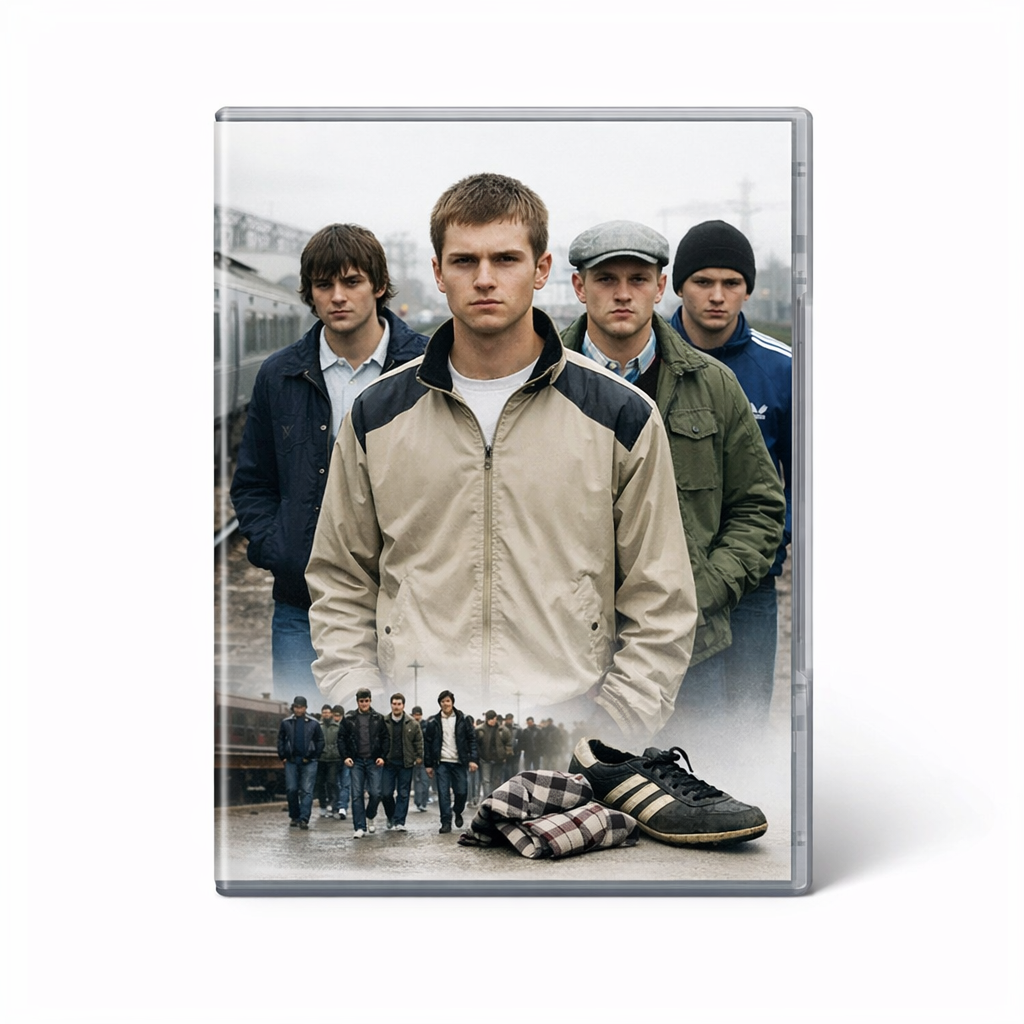
Awaydays — Revolver Entertainment — film — Documentaries and films connected to football casual and sportswear culture
A worthwhile watch for terrace-culture fans who value atmosphere, wardrobe detail and period mood over comfort
You might also like: Philips Series Handheld Garment Steamer review: better crease control for retro track tops.