A vintage tracksuit can look perfect in the listing and still arrive with sleeves that stop short, bottoms that pull at the seat, or a waistband that has lost its snap. Getting vintage tracksuit sizing right is less about trusting the label and more about checking the garment as it exists now. The aim is to confirm fit before money changes hands, not to rescue a poor fit afterwards.
Old sportswear sizing varies by brand, decade, country of manufacture and previous wear. A medium in a 1990s Kappa set, an adidas track top from a European release and a later reissue can all sit differently, even when the label seems familiar.
What to know first
- Do not buy from the size tag alone; treat it as a clue, not a guarantee.
- Ask for flat garment measurements in centimetres, including chest width, length, sleeve length, waist, rise and inside leg.
- Compare those numbers with a tracksuit you already like, not just with your body measurements.
- Check whether the item is men’s, women’s, youth or unisex, because vintage labels are not always obvious.
- Expect tops and bottoms to age differently, especially when a set has been worn often or stored badly.
Step 1: Start with a garment you already wear
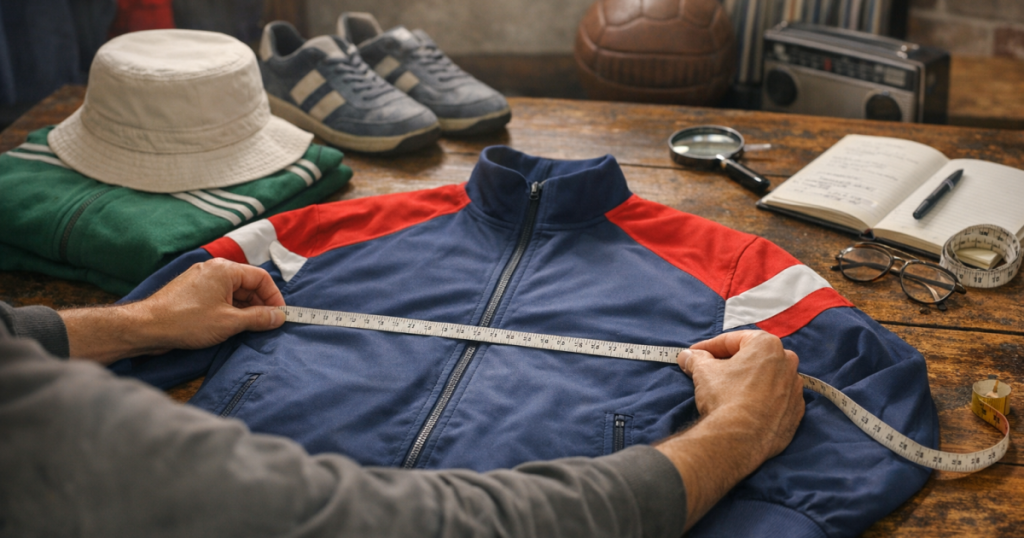
The most reliable way to judge fit is to measure a track top and bottoms you already own and like. Lay them flat, smooth the fabric without stretching it, and write down the key measurements in centimetres. This gives you a personal reference point rather than relying on a brand’s old size chart, which may not match the garment in front of you.
For a track jacket or track top, measure pit-to-pit across the chest, back length from the base of the collar to the hem, shoulder width if there is a clear seam, and sleeve length from shoulder seam to cuff. If the sleeve is raglan, measure from the collar seam down to the cuff instead. For bottoms, measure the relaxed waist, stretched waist, inside leg, outside leg, front rise, thigh width and hem opening.
Keep the notes on your phone. When a seller says “fits like a large”, you can answer with numbers rather than guesswork.
Step 2: Read the size label with suspicion
Vintage sportswear labels can be useful, but they are not definitive. A tag marked M, L or XL may reflect a different fit standard from the one most UK buyers expect now. Continental European sizing, Italian-made sportswear, Japanese-market pieces and youth sizing can all confuse the picture.
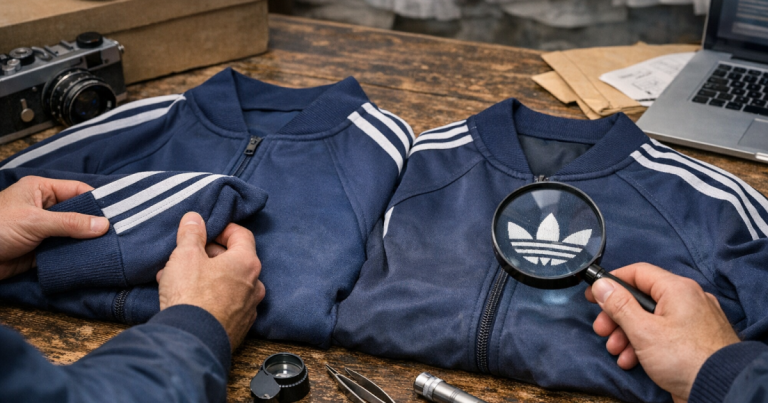
Look for supporting clues: brand label style, country of manufacture, care label language and whether the garment is marked with EU, UK, IT or FR sizing. If a seller has photographed only the main logo and not the inner labels, ask for more images. This is also sensible for authenticity, particularly on sought-after adidas pieces; our guide to how to spot fake Adidas Originals track tops online explains the label and construction details worth checking before you commit.
Be careful with listings that describe an item as “oversized” or “slim” without measurements. Those words depend heavily on the seller’s own build and taste.
Step 3: Check the top like a terrace jacket, not a formal jacket
A retro track top should usually allow movement through the chest and shoulders without ballooning at the waist. Terrace style often looks best when the jacket sits cleanly over a T-shirt, polo or thin knit, rather than pulling across the zip or collapsing into too much spare fabric.
Chest and zip tension
The pit-to-pit measurement is your main check. Compare it with a jacket that zips comfortably. If the measurement is too close to your preferred fit, remember that nylon and polyester track tops often have limited give. A zip that strains when standing will feel worse when seated at the match, on the train or in the pub.
Length and waistband
Many older track tops were cut shorter than modern casual jackets. That can look sharp with straight-leg jeans or track bottoms, but it can also ride up if the ribbed hem has tightened or warped. Ask whether the hem sits flat, curls under, or has lost elasticity. A slightly short jacket can work; a short jacket with tired ribbing usually looks less intentional.
Sleeves and cuffs
Sleeve length is where many online buys go wrong. Check whether the cuff reaches your wrist on a similar jacket and compare that number with the listing. Loose cuffs can make a sleeve feel longer and messier, while tight cuffs can pull the sleeve up. If you already own a top with tired cuffs, our guide on how to fix loose ribbing on a retro track jacket is useful, but sizing decisions should still be made before purchase.
Step 4: Measure the bottoms properly
Tracksuit bottoms are harder to judge from photos because sellers often focus on the jacket. Do not assume the bottoms match the top size, especially with vintage sets. Pieces are sometimes paired from different owners, altered, or stretched differently through wear.
- Waist: ask for relaxed and gently stretched waist measurements in centimetres. A relaxed-only measurement does not tell you whether the elastic still works.
- Rise: a higher rise can feel more old-school and comfortable, while a low rise may sit awkwardly with a shorter track top.
- Inside leg: compare against bottoms you wear with terrace trainers. Too long can stack heavily; too short can look accidental unless the cut is intended to sit cropped.
- Thigh width: important if you prefer a straight or relaxed casual fit. Old tapered bottoms can feel tighter than they look.
- Hem opening: zip hems, elastic cuffs and open hems all behave differently over trainers.
If your main concern is how the bottoms sit over shoes, especially with Sambas, Gazelles, Air Max or New Balance-style terrace looks, the guide to cuff tracksuit bottoms with terrace trainers gives a more detailed breakdown of shape and break.
Step 5: Ask for the right photos
Measurements tell you the numbers; photos show the garment’s behaviour. Ask for images laid flat and, if possible, hanging naturally. A flat photo can reveal twisted legs, uneven hems, zip puckering, sagging waistbands and stretched cuffs.
Useful photos include the front zipped up, the back laid flat, close-ups of cuffs and waistband, the inside care label, the zip pull, any ankle zips, and the crotch seam on bottoms. This is not being awkward; it is the online equivalent of turning the garment over in a vintage shop.
For full sets, ask for a photo of the top and bottoms together in the same frame. Colour fade can differ between pieces, and a navy top with slightly purple-worn bottoms may only show when they are side by side.
Step 6: Factor in fabric, age and previous wear
Polyester, nylon, cotton-blend jersey and velour do not age in the same way. Nylon shells may hold their shape but show creasing and shine. Polyester tricot can drape nicely but may snag. Cotton blends can shrink or lose structure. Velour can look rich in photos but may flatten at elbows, knees and seat.
Ask whether the garment has been tumble dried, altered, repaired or stored for a long period. Sellers may not know the full history, but direct questions often reveal more than the listing description. Smoke, storage odours and heavy washing do not always change the measurements, but they can affect how wearable the item feels when it arrives.
Step 7: Treat brand and era as fit clues
Different brands carry different expectations. Kappa sets are often associated with a closer, athletic silhouette, while some Fila, Sergio Tacchini and Ellesse pieces can feel more relaxed depending on era and cut. Adidas Originals reissues may nod to archive shapes without fitting exactly like an older piece.
If you are looking at a pre-owned Kappa set, sizing and condition need to be judged together. The side taping, waistband, ankle shape and fabric stretch all influence the fit, so it is worth reading our deeper guide to buying a second-hand Kappa tracksuit before deciding.
Era matters too. A sharp football-casual look is not always about going bigger. Many of the best terrace outfits work because the proportions are controlled: jacket length, trouser break, trainer profile and layering all sit together.
Step 8: Spot warning signs before paying
- The seller refuses to provide measurements or gives only the labelled size.
- The top and bottoms are photographed separately with different lighting or backgrounds.
- The waistband is described as “still stretchy” but no stretched measurement is given.
- The cuffs look wavy, thin or over-stretched in close-up photos.
- The listing says “fits everyone” or “one size” for a garment that clearly has structured seams.
- The seller cannot say whether the tracksuit is adult or youth sizing.
- The returns position is unclear, especially on marketplace or private-sale listings.
None of these automatically means the tracksuit is bad. They simply mean you need more evidence before treating it as wearable rather than collectible.
Helpful questions
Why is vintage tracksuit sizing so inconsistent?
Old sportswear was made for different markets, body shapes and style preferences. Add shrinkage, stretched elastic and mismatched sets, and the label becomes only a starting point.
Should I size up in a vintage tracksuit?
Not automatically. Size up only if the actual garment measurements are smaller than your preferred fit, or if you plan to layer underneath the top.
What measurements matter most for a track top?
Pit-to-pit, back length and sleeve length are the big three. For a clean terrace fit, also check whether the hem and cuffs still hold their shape.
What measurements matter most for bottoms?
Relaxed waist, stretched waist, inside leg, rise and hem opening. These decide whether the bottoms sit comfortably and work with your trainers.
Is it worth buying if the measurements are slightly off?
Only if the issue suits your style. A slightly short jacket can look intentional; a tight chest, dead waistband or awkward rise is much harder to style well.
What to remember
The safest way to buy vintage tracksuits online is to ignore confidence and chase evidence. Measure something you already wear, ask for clear centimetre measurements, study the labels and check the condition of ribbing, cuffs, waistbands and hems.
A good vintage tracksuit should feel wearable, not just nostalgic. When the numbers, photos and proportions all line up, you are far more likely to end up with a piece that belongs in your wardrobe rather than another nearly-right listing you wish you had questioned.